

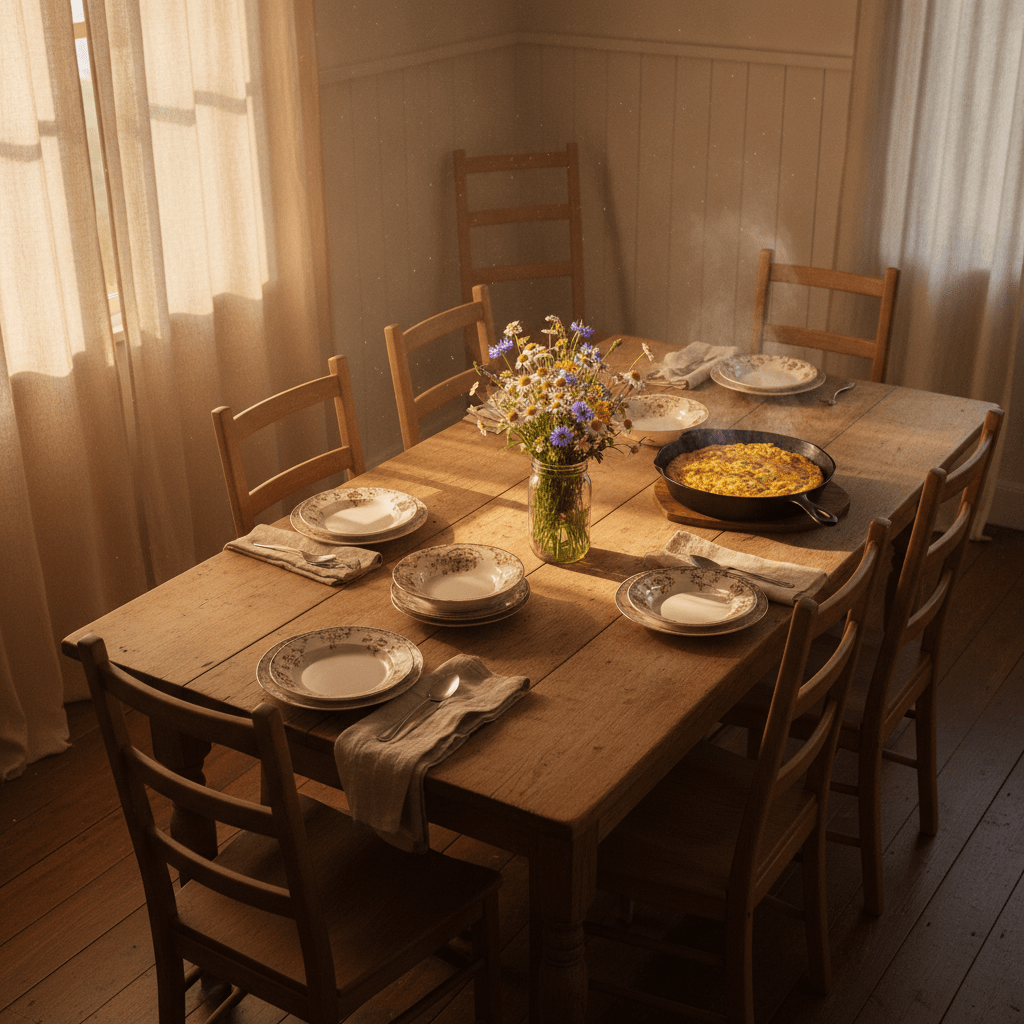
What to Cook for Sunday Supper: The Southern Tradition of Sunday Dinners
Sunday dinners don't announce themselves. They just happen — the smell of something slow-cooking drifting through the house by ten in the morning, the sound of a screen door, somebody's car in the gravel. If you grew up in the South, you know the feeling before you can name it. And if that feeling has gone a little quiet in your house lately, you're not alone. Life got busy. Sunday became errand day. But the tradition didn't disappear — it just needs someone to pick it back up.
This is a guide to doing exactly that. What to cook, how to think about it, and why the table still matters more than the menu.
Where Sunday Dinners Actually Come From
The Southern Sunday dinner has roots that run deeper than nostalgia. Before refrigeration, before the five-day workweek, Sunday was the one day the fire could stay on all morning. Church let out around noon, and the meal that followed was the social anchor of the week. Neighbors came. Extended family came. The table was long because it had to be.
There's also a practical history here. Roasting a whole chicken or a pork shoulder required time, not skill — the kind of low, slow cooking that worked while you were occupied elsewhere. The South's most iconic dishes weren't born from leisure. They were born from necessity and a wood-burning stove that couldn't be rushed.
Research on family meals consistently shows that regular shared meals — not fancy ones, just consistent ones — have measurable effects on everything from children's vocabulary to adult stress levels. The old-timers didn't need a study to tell them that. They just knew the table was where the family actually talked.

Building a Sunday Dinner Menu That Actually Works
The mistake most people make is trying to cook everything at once. Sunday dinners are not about culinary acrobatics. They're about abundance and ease — a spread that looks generous because it is, not because you spent six hours sweating over it.
Start with one anchor dish. Something that goes in the oven or on the stove early and doesn't need you hovering over it.
- Pot roast with root vegetables — chuck roast, carrots, potatoes, onions, low heat, four hours. Done.
- Baked chicken thighs — seasoned with garlic, paprika, and a little butter, roasted at 375 until the skin crisps. Forgiving and hard to ruin.
- Pinto beans with ham hock — a Sunday staple across Appalachia and the Deep South. Start them after breakfast and they're ready by noon.
- Pulled pork shoulder — if you have a slow cooker, this is the easiest impressive thing you can make. Season it Friday night, start it Saturday morning, shred it Sunday.
Build your sides around what's already in season and what can cook alongside your anchor. Green beans with bacon. Skillet cornbread. Mashed potatoes if you've got the energy. Sliced tomatoes from the garden in summer — no cooking required, and they belong on every Southern table from June through September.
Dessert doesn't have to be elaborate. A pound cake from a good recipe. A cobbler with whatever fruit is ripe. Chess pie, which requires ingredients you already have and forgets to be difficult.
The Unwritten Rules of Sunday Dinners
Every family has them, even if nobody ever said them out loud.
The first rule is that there's always enough. You don't plan for exactly the right number of people. You plan for two or three more than you expect, because someone always shows up, and running short is the one thing you don't do. This is not wastefulness — it's hospitality with a margin built in.
The second rule is that everyone eats together. Not in shifts, not in front of the television. At the table, at the same time. This sounds obvious until you realize how rarely it actually happens anymore. Sunday dinners are one of the few occasions where it's still expected, and that expectation is worth protecting.
The third rule is that the food doesn't have to be perfect. It has to be present. A pot of beans that's a little salty is still a pot of beans on the table. Nobody went home from their grandmother's house and complained that the cornbread was slightly overdone on the bottom. They went home full and feeling like they belonged somewhere.
If you're working on getting the kitchen itself to feel like a place worth gathering, we wrote a piece on why the kitchen became the heart of the home — the history is more interesting than you'd think.

◆ From the Workshop: Here's something old finishers called 'ghosts' — when you're gluing up a large panel and clamp pressure squeezes glue out of every joint, don't wipe it while it's wet. That just smears diluted glue deep into the open pores of the wood, and no stain or finish will penetrate those spots evenly afterward. Let the squeeze-out gel to a rubbery consistency, about 20 to 30 minutes, then pop it off with a chisel in one clean piece. You don't see the damage until the stain goes on — same way you don't notice a kitchen's soul until it's already gone.
Frequently Asked Questions
How far in advance can I prep a Sunday dinner without losing quality?
Most casseroles, braises, and slow-cooked dishes actually improve overnight as the flavors settle. Collard greens and beans can be made two days ahead and reheated low and slow. Biscuits and cornbread are best made day-of, but the dry ingredients can be measured and combined the night before to save time Sunday morning.
What's the best way to scale a Southern Sunday dinner for a large crowd without losing your mind?
Pick one anchor protein that holds well — a pork shoulder or whole chicken — and build sides that are forgiving at volume: mashed potatoes, green beans, and a big pan of cornbread. Avoid dishes that require precise timing or last-minute attention, like fried chicken for twenty, unless you have a second set of hands and two skillets going at once.
Are there any Southern Sunday dinner traditions tied to specific regions or denominations?
Yes, quite a few. In the Appalachian foothills, 'dinner on the grounds' after church was a potluck tradition where every family brought a covered dish and the spread was laid out on outdoor tables. Baptist and Methodist communities in the Deep South often had specific post-service meal customs tied to the church calendar — ham at Easter, turkey near Thanksgiving, and fried chicken almost every other Sunday in between.
Sunday Dinners and the Kitchen That Holds Them
There's something about a kitchen that's been cooked in — really cooked in — that you can feel when you walk through the door. It's not the appliances. It's the seasoned cast iron on the stove, the worn spot on the counter where someone always sets the cutting board, the smell that lives in the walls because good food has been made there for years.
A kitchen like that earns its character. And a lot of people want to honor that feeling with something on the wall that says what the room actually means. That's the kind of sentiment our carved solid-wood kitchen signs are built around — not decoration for decoration's sake, but something that names what the room already is.
If you want one specific sign that fits the spirit of a Sunday supper kitchen, the carved wooden sign about life being short earns its place on a kitchen wall — it's warm, it's a little funny, and it says exactly what a Sunday table is supposed to remind you of.
How to Make Sunday Dinners a Habit Again
The hardest part isn't the cooking. It's the deciding. Once you decide that Sunday is the day, the rest follows. You start thinking about it on Thursday. You check what's in the freezer on Friday. By Saturday morning, you know what you're making.
Start smaller than you think you need to. One good dish, one or two sides, something sweet if you have time. Invite one family or one couple the first time. Don't wait until you have the right dishes or the right table or the right house. The right house is the one you're already in.
Sunday dinners work because they're regular. Not because any single one of them is memorable. The ritual is the point. Show up at the table every week, and eventually the table becomes the thing your family talks about when they're grown and gone and trying to explain to someone else where they came from.
That's worth a pot of beans and a skillet of cornbread. Every single week.
The table is only half of it — the other half is what southern hospitality actually means once company's on the porch.
Share:
Dog Said I Love You: The Real Reason Your Dog Won't Let You Go to the Bathroom Alone
Why Cats at Halloween Take Over the Holiday (And What That Says About October) | Bluegrass Gifts