

Southern Hospitality Meaning: What You Were Shown, Not Told
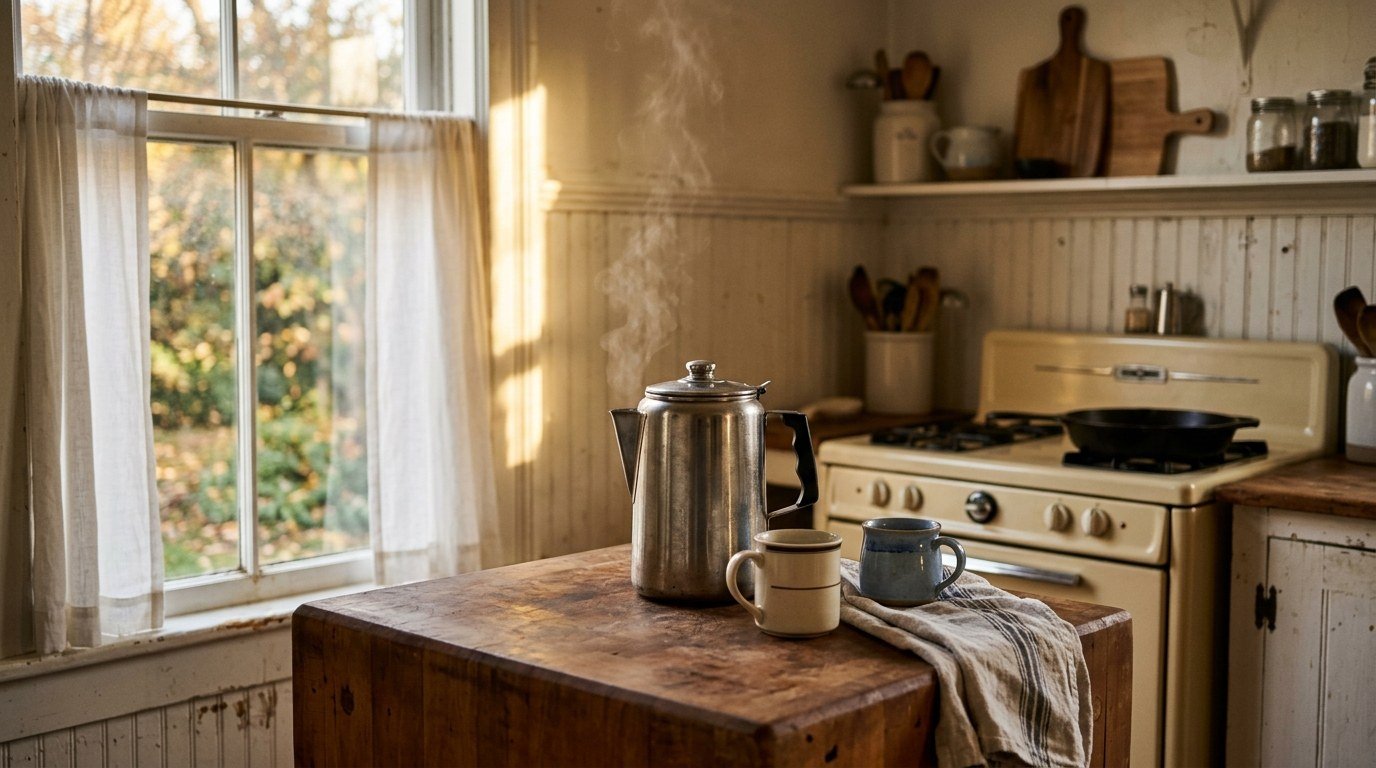
Your grandmother never sat you down and explained southern hospitality meaning in so many words. She just handed you a dish towel when company was coming, told you to go put on something decent, and started a second pot of coffee before the first car pulled in the driveway. The lesson was in the doing. That's how it has always worked down here — absorbed through repetition, not instruction.
The phrase gets thrown around a lot by people who have never had to live it. They picture sweet tea on a wraparound porch, which is accurate as far as it goes, but it misses the weight of the thing. Southern hospitality is closer to a code than a personality trait. It has rules. They are unspoken. And if you grew up here, you already know most of them — you just may never have seen them written out.
So here they are.

The Food Rules of Southern Hospitality Nobody Announced
You do not show up to someone's home empty-handed. This is not a suggestion. It does not matter if you were told not to bring anything — that statement is a formality, not a directive. You bring something. Flowers from your yard. A jar of jam. A pound cake you made yesterday. The object is almost secondary to the gesture, which says: I thought about you before I got here.
The kitchen is the center of the house, and whoever is in it is doing an act of love. You do not criticize the food. You do not offer unsolicited substitutions. You eat what you are served, and you say it is good, and if it genuinely is not good, you find the one thing on the table that is and you talk about that instead. We actually wrote a whole piece about why your opinion is not part of the recipe, and it holds up.
There are also rules about quantity. You make too much. Always. Running out of food when you have guests is a specific kind of shame that a Southern woman carries for years. The goal is abundance — not extravagance, but the clear message that there is enough and then some, and you are welcome to all of it.
The Door Is Open — But the Timing Still Matters
Southern hospitality has a reputation for being unconditional, and in a crisis that is true. Death, illness, a bad storm — you show up without being asked, and you stay as long as you are needed. But on an ordinary Tuesday, you call before you come. Or you text. Dropping in unannounced is a privilege reserved for very close family and the kind of neighbor who has known you for thirty years. Everyone else gives notice.
This is not unfriendliness. It is respect. A Southern hostess takes genuine pride in her home being ready for guests, and if you rob her of the twenty minutes she needs to feel prepared, you have not complimented her with your spontaneity. You have put her at a disadvantage. She will feed you anyway. She will be warm. But she will also remember.
The flip side: if someone does drop in and you are the host, you receive them graciously regardless. You do not say the house is a mess in a way that requires them to reassure you. You offer them something to drink within the first two minutes. You sit down with them, even if you have things to do, because making a person feel like an interruption is the cardinal sin of southern hospitality.
◆ From the Workshop: Attention to surface prep shows up in unexpected places — old instrument makers who lined their cases with flock knew that any dust or oil left on bare wood would create a dead spot where the fibers simply would not stick, and you would see it the moment light hit at an angle. They used a tack cloth first, then a second wipe with a clean dry rag, because flock is unforgiving: it shows every fingerprint you left behind three steps ago. Hospitality works the same way — the invisible preparation is what makes the welcome feel effortless to the person receiving it.
Frequently Asked Questions
Is southern hospitality actually different from hospitality in other regions, or is that just a stereotype?
Research from cultural geographers suggests it is measurably distinct — not because Southerners are inherently kinder, but because the South developed a hospitality culture rooted in scarcity and rural isolation. When your nearest neighbor was miles away and travel was hard, you fed whoever showed up because someday you'd need the same. That practical origin shaped habits that outlasted the conditions that created them. The warmth is real; the roots are just more pragmatic than the mythology admits.
What do you actually bring when someone in the South has a death in the family?
Food, almost always — but the unwritten rule is that it should require nothing of the grieving family. That means no dish that needs to be returned right away, no casserole that requires a specific reheating instruction, and ideally something that can sit on a counter and be picked at all day. Pound cake, a spiral ham, a pan of biscuits. Practical comfort, not a culinary statement. If you bring a dish you want back, leave your name on a piece of tape on the bottom and don't mention it for at least two weeks.
How do you handle a guest who overstays their welcome without being rude about it?
The Southern method is indirect but unmistakable to anyone paying attention. You start cleaning up around them. You offer one final round of something — coffee, sweet tea — and when it's gone, you don't offer another. You say 'Well...' with a slight exhale and let it hang in the air. If none of that works, you mention that you have an early morning. A truly oblivious guest may require a more direct nudge, but the Southern hostess will exhaust every subtle option first, because the goal is always to let the guest leave feeling like they chose to go.

What Southern Hospitality Says About Grief and Hard Times
This is where the code gets serious. When someone loses a person they love, the Southern response is immediate and physical. You cook. You drive over. You sit in the kitchen and you do not expect to be entertained. You wash dishes without asking. You make sure there is food for the next three days and you leave before you become one more person the grieving family has to manage.
The instinct to feed people in sorrow is not accidental. It is the most concrete way to say: you do not have to think about survival right now, because we are thinking about it for you. That is southern hospitality at its most essential — removing the small burdens so people can carry the large ones.
There is also a rule about what you say. You do not say everything happens for a reason. You do not offer a silver lining. You say you are sorry, you say you loved them too if that is true, and then you get quiet and let the other person lead. Knowing when to stop talking is a hospitality skill that takes years to learn and is worth every one of them.
The Porch, the Goodbye, and the Art of the Gracious Exit
Leaving a Southern home takes longer than leaving anywhere else. This is by design. The goodbye starts inside, moves to the front door, continues on the porch, and may well finish at the car. There are things that still needed to be said. There is one more story. There is the moment someone remembers to ask about your mother.
The long goodbye is not inefficiency. It is the host signaling that your presence was genuinely valued and your absence will be felt. It is the guest signaling the same thing back. Both parties are performing a small ceremony that says: this mattered. Rushing it is rude. Letting it breathe is the whole point.
We wrote about the lost art of porch sitting a while back, and it gets at something real — the porch is not just architecture, it is a transitional space that Southern culture uses to soften arrivals and departures both. The front door welcome sign hanging beside it is doing the same work in a different medium. A carved hardwood welcome sign on a Kentucky porch is not decoration so much as a standing invitation — the kind of thing the entryway and porch signs in our collection are built to say out loud, permanently, without the homeowner having to repeat it every time.
The Rule That Holds All the Others Together
Every unwritten rule of southern hospitality points back to the same principle: the comfort of your guest matters more than your convenience as a host. Not your ego. Not your schedule. Not your preference for how the evening goes. The guest's ease comes first.
This sounds simple. It is not simple. It requires a particular kind of attention — noticing when someone's glass is getting low before they notice it themselves, reading the room to know when a conversation has run its natural course, understanding that a guest who feels like a burden will not come back. The goal is always that they leave feeling lighter than when they arrived.
If you grew up watching a woman run a household this way, you know what it costs. It is not effortless. It just looks that way, because she practiced until it did. That practice — quiet, unglamorous, repeated ten thousand times over a lifetime — is what southern hospitality actually means. And if you want a reminder of that on your wall in a house that still lives by these rules, a carved Southern home sign says it without a word of explanation needed.
The rules were never written down because they did not need to be. They were demonstrated. Every pot of coffee, every long goodbye, every dish brought to a grieving neighbor was the lesson. You just had to be paying attention.
Share:
Grace Is What? The One Word Christians Say Every Day and Almost Never Stop to Define | Bluegrass Gifts
The Oldest Old Trees in America: What Was Happening When They Were Planted