

The Dog Said I Love You — You Just Didn't Recognize the Language
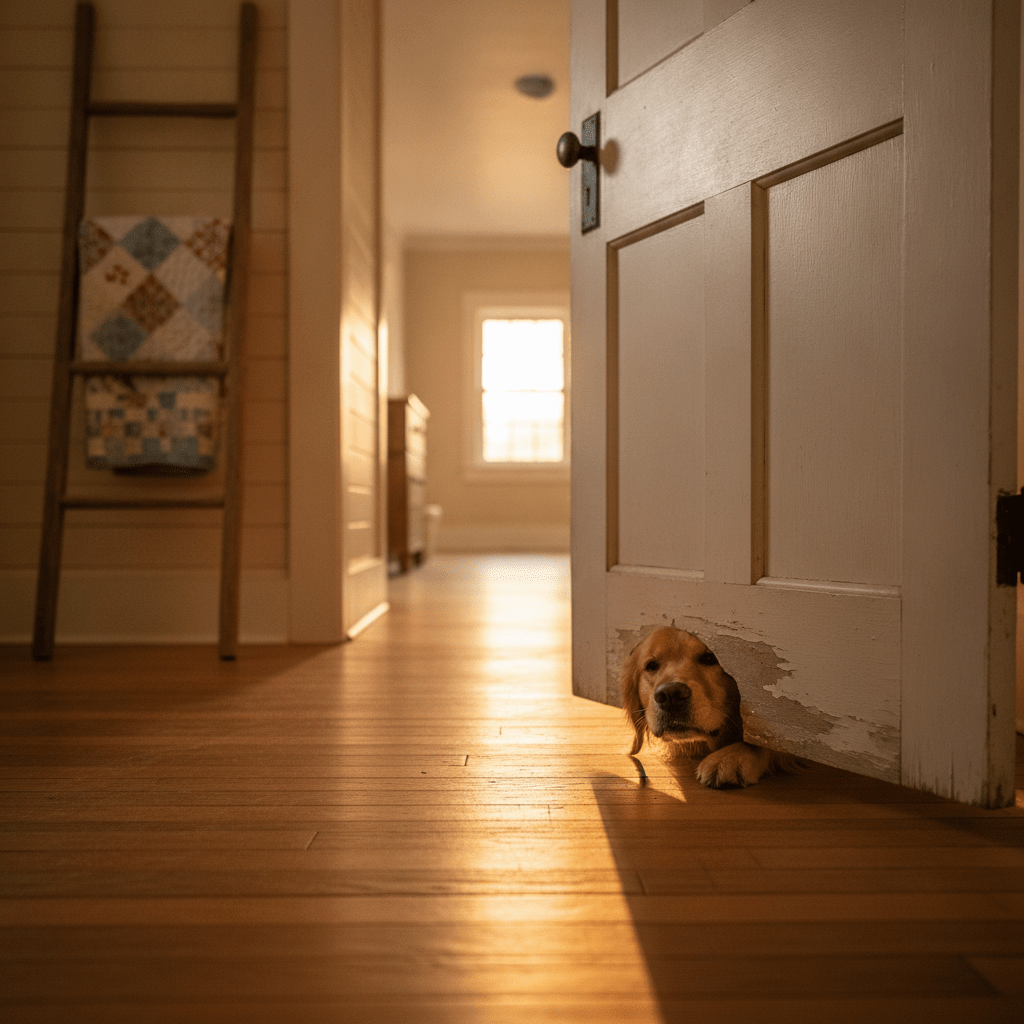
You got up to refill your coffee and before you cleared the kitchen doorway, you heard the familiar click of nails on hardwood behind you. You went to the laundry room. Click, click, click. You attempted — attempted — to use the bathroom alone. The door barely latched before a wet nose appeared in the gap at the floor. Your dog has never once said the words, but if a dog said i love you in plain English, it would sound something like: I am aware of your location at all times and I prefer to keep it that way. The following behavior is not random, not neurotic, and not your dog being weird. It is deeply intentional, and the science behind it is genuinely interesting.

Pack Logic: Why Alone Feels Wrong to a Dog
Dogs are descended from animals that lived and hunted in social groups. Isolation, for a wolf or an early domestic dog, wasn't just unpleasant — it was dangerous. A lone animal is a vulnerable animal. That wiring didn't disappear when dogs moved indoors. It just redirected toward you.
Your dog has essentially reassigned you as their pack. You are the group. When you move to another room, you have, from the dog's perspective, fragmented the group. The following behavior is their way of keeping the pack intact. It is not clinginess in the human sense. It is an ancient, deeply embedded instinct that says: where the group goes, I go.
Researchers at the Family Dog Project in Budapest have documented that dogs track their owners' movements with a level of attention that rivals what human infants show toward their caregivers. The same attachment system. The same comfort derived from proximity. Your dog isn't being dramatic. They're being exactly what evolution made them.
How Following Became Their Way of Saying I Love You
Here's where it gets genuinely touching. Dogs don't just follow out of instinct — they follow because being near you feels good to them on a neurological level. A 2015 study published in Science found that when dogs and their owners make eye contact, both species experience a rise in oxytocin — the same hormone associated with bonding between human parents and infants. Physical proximity triggers a version of the same response.
So when your dog follows you into the kitchen, they're not hoping you'll drop a piece of cheese (though they're not ruling it out). They're seeking the low-grade warmth that comes from being close to the person they're attached to. Every room they follow you into is, functionally, a small act of affection. The dog said i love you with their feet before they ever got a chance to say it with their face.
There's also a learned component. Dogs are exceptional at reading human routine. They know that you picking up your keys means you're leaving. They know that you walking toward the kitchen at 6 p.m. often means dinner is coming. Following you is partly how they stay informed. You are the most interesting and consequential thing in their environment, and they don't want to miss anything.
◆ From the Workshop: When you're cutting a groove with a wooden plow plane, the fence that rides against the board's edge is held on with wooden arms you tighten by hand — no screws, no metal clamps, just wood wedged against wood. Those arms will shift on you mid-cut if the grain in the fence swells from humidity, and suddenly your groove wanders a sixteenth of an inch off where you wanted it. Old plane makers dried the fence stock for years before shaping it, because a plow plane is only as accurate as the wood it's made from. Precision, it turns out, requires patience long before the first cut.
Frequently Asked Questions
Is it unhealthy for a dog to follow their owner everywhere, or does it signal anxiety?
Velcro behavior is normal for most dogs, but there's a line between affection and separation anxiety. A dog that follows you is content; a dog that panics, destroys things, or refuses to eat the moment you leave the house may be dealing with genuine anxiety. Signs to watch: excessive drooling or panting when you grab your keys, destructive behavior only when alone, or nonstop vocalization after you leave. A veterinary behaviorist can help distinguish the two and suggest a graduated desensitization plan if needed.
Do certain dog breeds follow their owners more than others?
Yes, noticeably so. Breeds selectively developed for close human cooperation — Border Collies, Australian Shepherds, Labrador Retrievers, Vizslas — tend to be the most persistent followers because generations of breeding reinforced attentiveness to human movement and cues. Independent breeds like Basenjis, Chow Chows, and some sighthounds are more likely to pick a comfortable spot and wait for you to come back to them. Neither is better; they're just wired differently.
Can you teach a dog to stop following you without hurting the bond?
You can, and it doesn't damage the relationship at all. The most effective approach is teaching a solid 'place' command — a specific mat or bed the dog learns to stay on while you move around the house. Pair it with high-value rewards and build duration gradually. Dogs that have a clear job (stay on your place until released) are often calmer overall because the ambiguity of what they're supposed to do is gone. The bond stays intact; you just negotiate a little personal space.

The Bathroom Situation, Specifically — and Why I Love You Gets Louder There
The bathroom is its own category of dog behavior, and it deserves a dedicated explanation because it confuses people more than any other room. You close a door. The dog loses their mind. Why that door?
A few things are happening at once. First, dogs have no concept of privacy. The idea that a human would voluntarily separate themselves from the group for a few minutes, for reasons the dog cannot smell or hear or understand, is genuinely baffling to them. Second, bathrooms often have no windows or limited sight lines from outside, which means the dog can't even confirm through a crack in the door that you're still in there. You have simply vanished into a small room and the door is closed.
Third — and this one is a little humbling — your dog may actually be guarding you. In the wild, a vulnerable moment is a dangerous moment. Your dog sitting outside that door, or pressing their nose under it, is performing a protective function. They are on watch. They are keeping you safe from threats that, thankfully, do not exist in your bathroom, but their instincts don't know that.
The whole sequence — the following, the waiting, the nose under the door — is i love you expressed as vigilance. It's the dog equivalent of someone sitting up until you get home safe.
When I Love You Becomes Too Much: Reading the Difference
Most following behavior is completely benign. But it's worth knowing the difference between a dog that loves your company and a dog that genuinely cannot cope without it.
- A content follower will settle when you settle. They follow you to the couch, circle twice, and lie down near your feet. Peace.
- A dog with separation anxiety doesn't just follow — they escalate. Panting, pacing, whining, and destructive behavior when left alone are the signals to watch.
- True separation anxiety often requires a structured behavior modification plan, sometimes in partnership with a veterinarian. It's not a character flaw in the dog; it's a condition with real treatment options.
- If your dog follows you but is otherwise calm, eats well, and settles when you leave, you almost certainly just have a dog that likes you. That's the good news.
We wrote about how dogs and their people show up for each other in all kinds of ways — including out on the water and in the marsh — in our piece on dogs, ducks, and the Kentucky marsh, which is a different kind of dog loyalty story but a good one. And if you've ever wondered whether your cat operates on a completely different emotional frequency (spoiler: yes), the honest field guide to cat people on the blog covers that particular territory with appropriate candor.
The following, the waiting, the nose under the door — none of it is a problem to be solved. It is a dog doing the only thing they know how to do with a feeling they have no words for. Every step behind you is a small, sincere declaration. The dog said i love you in the only language available, and they said it about forty times before lunch.
If you want something on the wall that says the quiet part out loud, this carved solid-wood dog lover welcome sign does it with the right amount of humor — the kind of thing that makes guests laugh and dog owners nod. We carve them in Kentucky from Amish-sourced lumber, and they hold up about as well as a good dog does. The rest of that world lives in our pet signs collection, if you want to browse — no pressure, just good wood and honest sentiment.
Share:
What Your Coffee Mug Says About You: Morning with Coffee Quotes and a Little Science | Bluegrass Gifts
What to Cook for Sunday Supper: The Southern Tradition of Sunday Dinners | Bluegrass Gifts