

The Oldest Old Trees in America: What Was Happening in History the Year They Were Planted
You drive past a big oak on a country road and think, that thing is old. Then you look up what old actually means, and the oak starts to feel like a sapling. The oldest old trees in America were already ancient when the first English colonists were still arguing about whether Virginia was a good idea. Some of them were standing when the Roman Empire had a pulse. A few were alive before anyone in Europe had written down the alphabet they used to record history. That is the kind of old we are talking about here.

The Oldest Old Trees Still Standing — and What Year They Began
The title holder, as of the last confirmed measurement, is a Great Basin bristlecone pine in California's White Mountains known as Methuselah. Core samples put its age at around 4,789 years old when it was last dated in 1957, which means it germinated somewhere around 2832 BCE. To put that in human terms: the Egyptian pyramids at Giza were not yet built. The wheel had been invented less than a thousand years prior. Stonehenge was still under construction. Methuselah was a seedling when the Bronze Age was getting started.
There is also a bristlecone in the same range — unnamed, location kept secret by the Forest Service — that some researchers believe is over 5,000 years old, which would push its birth back to around 3000 BCE. That is older than written language. Older than the oldest known city. The tree was already middle-aged by the time Moses is said to have parted the Red Sea.
Old trees of this caliber survive not because of ideal conditions but because of terrible ones. Bristlecones grow at elevations above 10,000 feet, in thin rocky soil, with brutal wind and almost no rainfall. Slow growth means dense wood. Dense wood resists rot and insects. The harshest real estate on the continent turned out to be the best insurance policy a tree could buy.
What the World Looked Like When These Old Trees Were Young
The bristlecones get the headlines, but they are not the only record-holders worth knowing. A few others worth placing in time:
- Senator Cypress, Florida (3,500 years old before it burned in 2012): It was alive during the reign of Ramesses II in Egypt. Tutankhamun had been dead for about a century. The Trojan War, if it happened, was roughly contemporary.
- Jurupa Oak, California (estimated 13,000 years old): This one is technically a clonal colony — the same root system, not a single trunk — but it has been regenerating continuously since the end of the last Ice Age. Woolly mammoths were still walking the continent when this organism first took hold.
- Alerce trees, Chile (over 3,600 years confirmed): Technically South American, but worth the mention for scale. The oldest confirmed alerce was alive when the Olmec civilization was just beginning in Mexico.
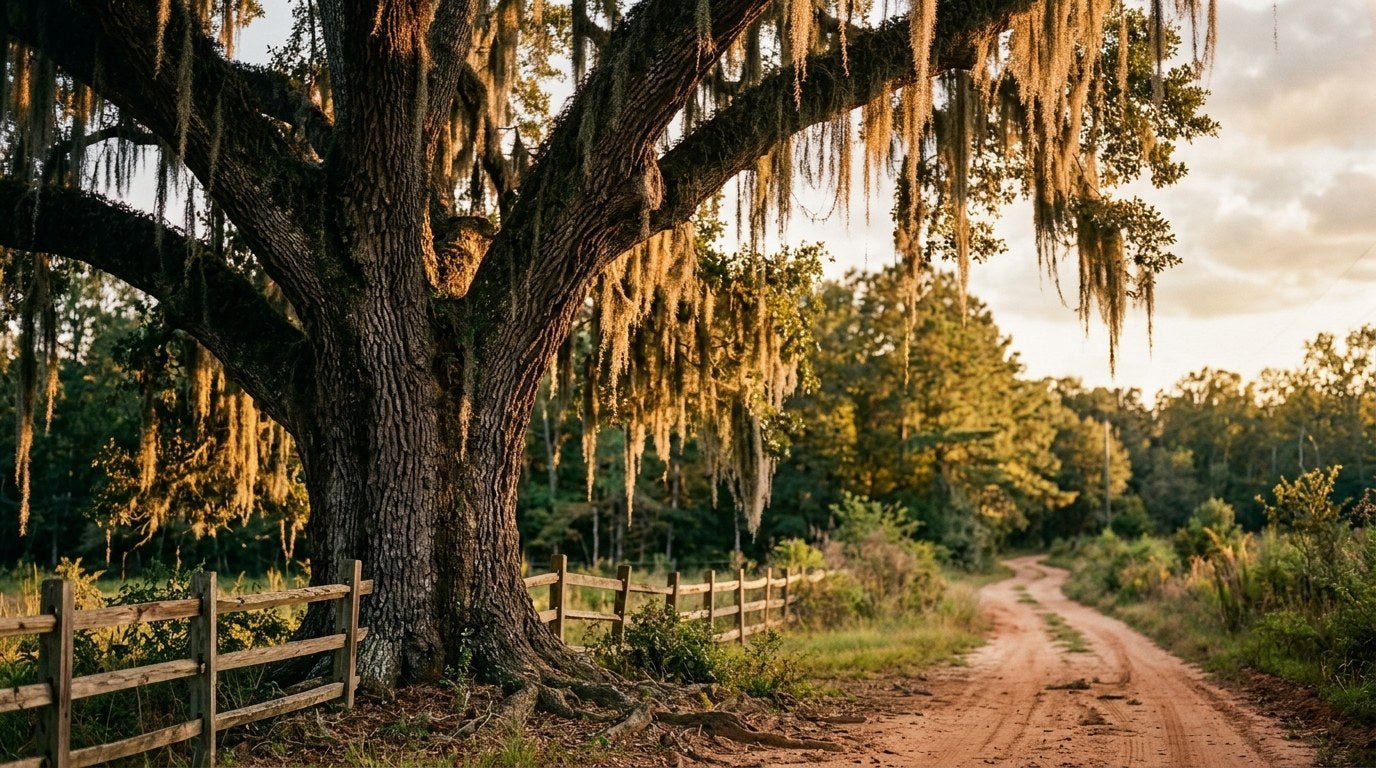
- Angel Oak, South Carolina (estimated 400-500 years old): A youngster by bristlecone standards, but it was a mature tree when the first English settlers arrived in North America. It watched the entire colonial period, the Revolution, and the Civil War from the same spot on Johns Island.
The character differences between wood species start to make a lot more sense when you consider that some of these trees have been shaped by thousands of years of specific pressures — altitude, drought, cold, fire — while others grew fat and wide in coastal humidity. The wood reflects the life.
Why the Ancient Ones Survived When Everything Around Them Didn't
Here is the part that surprises most people. These are not the biggest trees, the tallest trees, or the trees growing in the richest soil. Methuselah is gnarled and low to the ground, twisted by wind into something that looks more like driftwood than a living organism. The bristlecone's survival strategy is essentially radical self-denial. It grows so slowly — sometimes less than an inch in diameter over a century — that its wood becomes nearly impenetrable.
Compare that to a fast-growing poplar, which can shoot up thirty feet in three years and be rotted out in fifty. Speed costs longevity. The trees that outlasted everything else did it by barely moving at all.
There is also the matter of location. The ancient bristlecones grow where almost nothing else can compete with them, which means no shade from taller neighbors, no root competition from aggressive species, and — crucially — no loggers. The wood is so dense and resinous it was never commercially valuable enough to harvest. Their uselessness to industry is part of why they are still here.
◆ From the Workshop: Old furniture makers understood something about wood that still holds true today: when you buy hardwood lumber, you're paying for the rough-sawn volume before the mill planes it flat. A 4/4 board — one inch nominal — comes to you closer to 13/16 of an inch thick after surfacing, and that missing thickness is gone but not refunded. They always bought a little extra and budgeted for the loss, because the price on the tag is for wood you'll never actually use.
Frequently Asked Questions
Can you visit Methuselah, the oldest known bristlecone pine in California?
You can hike in the Ancient Bristlecone Pine Forest in the White Mountains of California, but the Forest Service does not publicly mark which tree is Methuselah. The exact location is kept quiet on purpose — too many visitors over the years caused soil compaction around the root zone, and the rangers decided the tree's survival mattered more than the photo opportunity.
How do scientists date a living tree without cutting it down?
They use an increment borer — a hollow drill about the diameter of a pencil — to extract a thin core sample from the trunk without killing the tree. The core shows every growth ring from bark to center, and a dendrochronologist can count and measure them to determine the tree's age and even reconstruct past climate conditions year by year. The hole left behind seals over naturally in most healthy specimens.
Are there any old trees in the eastern United States that rival the ancient bristlecones in age?
A few come close. A bald cypress in North Carolina's Black River was confirmed at over 2,600 years old in 2019, making it the oldest known wetland tree in the world and one of the oldest living trees on the continent. Eastern trees face more disease, storm, and human pressure than the high-altitude bristlecones, so extreme age is rarer — but the Black River stand proves the East still holds surprises.

The Trees That Almost Weren't — Close Calls and Near Losses
In 1964, a graduate student and researcher named Donald Currey was studying ice-age climate data in Nevada's Wheeler Peak area. He needed core samples from a bristlecone pine. His borer got stuck. He got permission from the Forest Service to cut the tree down to retrieve it. The tree, later designated WPN-114 and nicknamed Prometheus, turned out to be at least 4,862 years old — older than Methuselah at the time of its death. It remains the oldest tree ever confirmed by direct ring count, and it was cut down by accident during a research project.
That story still makes foresters wince. It also led directly to stronger protections for bristlecone groves and a much more careful approach to studying living ancient specimens. Sometimes the loss is what finally makes people take the thing seriously.
The Senator Cypress in Florida burned in 2012 when a woman lit a fire inside the hollow trunk to see better while she was smoking methamphetamine. A tree that had survived 3,500 years of hurricanes, floods, and development was gone in a few hours. A clone grown from the Senator's own branches was planted nearby. It is now about twelve feet tall.
What Old Trees Actually Tell Us — and Why It Matters Beyond the Numbers
Dendrochronology — the science of reading tree rings — has become one of the most reliable tools historians and climate scientists have. Each ring is a year. Wide rings mean good growing seasons. Narrow ones mean drought, cold, or stress. Bristlecone pine ring sequences have been cross-referenced and stacked into a continuous record going back over 8,000 years, which is used to calibrate radiocarbon dating for archaeological sites worldwide. Old trees are not just old. They are the most detailed climate diary the planet kept before humans started writing things down.
A single cross-section from an ancient tree can show you the year a distant volcano erupted, the decade a prolonged drought reshaped a civilization, the summer a fire swept through the valley. The rings do not editorialize. They just record.
That kind of patient, physical record-keeping — the idea that what endures says something true about the world it lived through — is part of what draws people to wood in the first place. We wrote a bit about how wood ages beautifully over time, and the ancient trees are the extreme end of that same truth. Wood that survives earns its character.
If you find yourself wanting something carved from hardwood that carries a little of that same permanence — a piece meant to last on a wall the way a good tree lasts in a field — our inspirational hardwood signs are made here in Kentucky from Amish-sourced lumber, built to be the kind of thing your grandchildren argue over. And if you want one specific piece that captures the spirit of endurance without getting preachy about it, this carved hardwood sign about overcoming challenges says what it needs to say and then gets out of the way — which, come to think of it, is exactly what a 5,000-year-old tree does too.
The old woods keep other kinds of lore too — like what it means when a bear crosses your path, which people have argued about for as long as those trees have stood.
Share:
What Southern Hospitality Actually Means: The Southern Hostess Rules Nobody Wrote Down
What Your Birth Order Actually Did to You: The Real Science Behind Birth Order Theory | Bluegrass Gifts