

Bear Spirit Animal Meaning: Why That Encounter Stops You Cold
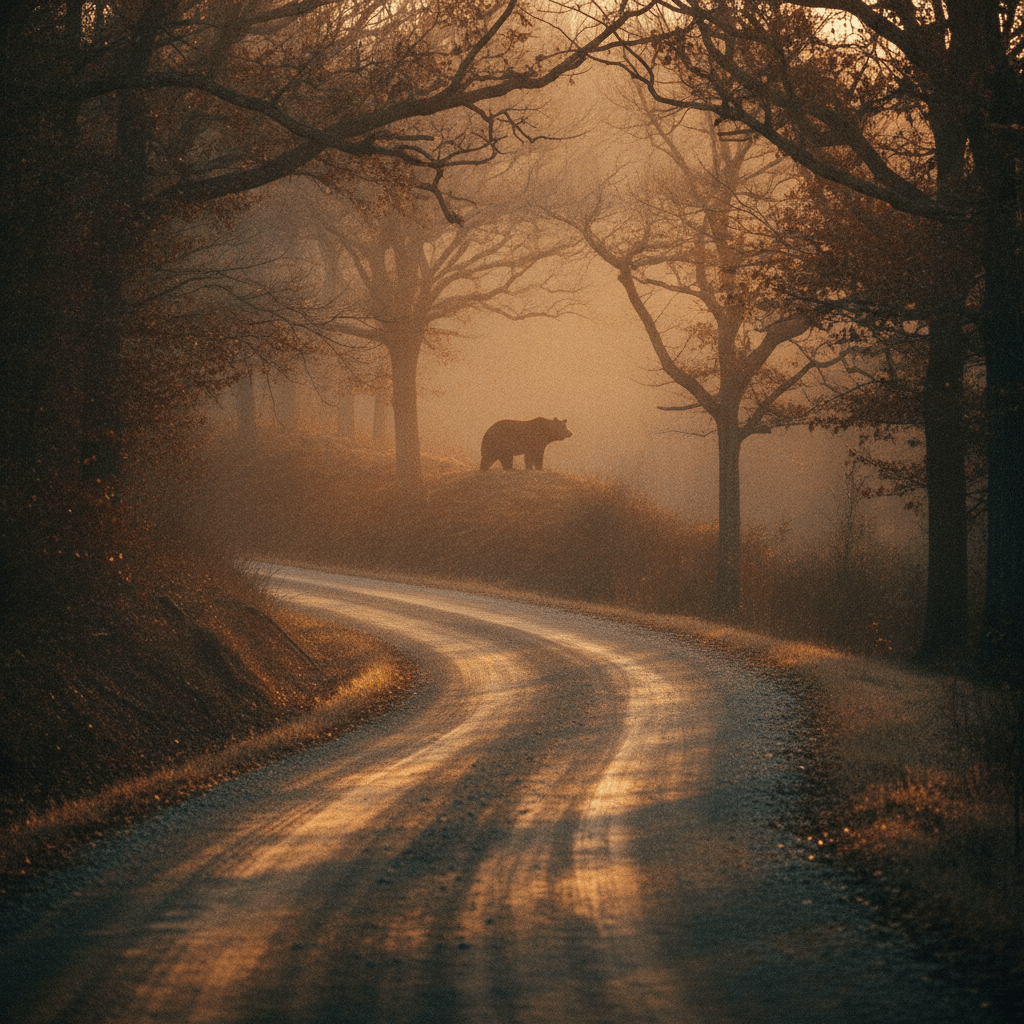
You are driving a back road at dusk, or hiking a ridge you have hiked a hundred times, and a bear steps out of the tree line and looks straight at you. Not through you. At you. Your hands go still on the wheel. Your feet stop on the trail. Something old in your nervous system wakes up, and for about four seconds you forget everything else you were thinking about. That is not nothing. The bear spirit animal meaning has been argued over, prayed over, and carved into stone by cultures on every continent that has bears — and the fact that you felt something is exactly the point.
This is not a post about what crystal to buy or which chakra the bear governs. It is a genuine look at what people across history have believed about bear encounters, what science says about why we react the way we do, and what the folklore actually holds up when you press on it.

What Indigenous and Ancient Traditions Say About the Bear Spirit Animal
The bear shows up in more spiritual traditions than almost any other animal. That is partly because bears live everywhere humans have lived — the Appalachians, the Rockies, Scandinavia, Siberia, Japan, the Korean peninsula. Proximity breeds mythology.
In many Algonquian-speaking nations, the bear was considered a powerful mediator between the human world and the spirit world. Encountering one was not random. It was a message that you were being asked to pay attention to something you had been avoiding — usually something internal. The bear does not chase. It waits. It watches. Then it goes back into the woods.
Norse tradition gave us the berserkers, warriors who wore bear skins and called on the bear's ferocity before battle. The word itself likely comes from ber (bear) and serkr (coat). The bear was not gentle symbolism to the Norse. It was power you borrowed at a cost.
In Ainu culture in northern Japan, the bear — specifically the brown bear — was considered a god wearing an animal suit, a divine visitor temporarily in physical form. Encountering one was a sacred event that required acknowledgment, not fear.
- Cherokee tradition associates the bear with medicine and healing, particularly the knowledge of plants.
- In Celtic lore, the bear was linked to sovereignty and the warrior class — the name Arthur may derive from the Brythonic word for bear.
- Russian folk tradition treated the bear as a kind of rough uncle figure: powerful, unpredictable, but not without warmth.
- Ancient Greeks connected bears to Artemis, goddess of the hunt and the wild.
The thread running through all of it is this: the bear spirit animal is never trivial. No culture looked at a bear and thought, well, that means nothing. Every tradition treated the encounter as a moment that deserved a response.
◆ From the Workshop: Reading a surface for truth takes patience. When we are fitting a wooden plane's wedge by hand, we press the sole flat against a piece of glass and read where the light leaks under the toe or heel — that tells you exactly where the wood is still proud. The fix is not sandpaper but a router plane or a sharp float file taken to the high spot only, one shaving at a time, until the sole sits dead flat in the dark. A plane that does not sit flat cannot cut flat, no matter how sharp the iron is — and most things worth doing have that same rule buried somewhere inside them.
Frequently Asked Questions
Does the direction a bear is traveling when it crosses your path change the meaning in folklore?
In several European folk traditions, a bear crossing from right to left was considered an ill omen, while left to right signaled good fortune ahead — the same directional logic applied to black cats and ravens. Indigenous traditions varied widely by nation and rarely reduced the encounter to a single directional rule; the context, season, and the observer's own spiritual state were all factored in.
Are black bears and grizzly bears associated with different spiritual meanings?
Generally, yes. Grizzlies — larger, more aggressive, associated with the mountains and the West — tend to appear in traditions as symbols of raw power, the warrior archetype, and the untamable wild. Black bears, which live closer to human settlements and are more adaptable, more often carry meanings tied to introspection, cycles of rest, and the domestic-spiritual boundary. The bear you encounter geographically tends to be the one woven into the local folklore.
What should you actually do if a bear crosses your path in the wild?
Stand your ground and make yourself look large. Do not run — bears can sprint at 35 mph and a fleeing human triggers pursuit instinct. Speak in a calm, low voice so the bear knows you are human and not prey. Back away slowly once it loses interest. The National Park Service recommends carrying bear spray in grizzly country and knowing how to use it before you need it. Black bear encounters rarely escalate if you give the animal space and do not approach.
The Science Behind Why a Bear Encounter Feels Spiritual
Here is what your brain is actually doing in those four seconds. The amygdala — the part of your brain that handles threat detection — fires before your conscious mind has processed what you are seeing. You feel the bear before you think the bear. That gap between feeling and thought is where folklore lives.
Researchers studying awe — the psychological state triggered by encounters with things vast and powerful — have found that it reliably produces a sense of smallness, a suspension of self-consciousness, and a temporary quieting of the default mode network, which is the part of your brain that runs your internal monologue. In plain language: a bear encounter shuts your inner chatter off. That silence feels significant. It is significant.
Bear biology itself is worth knowing if you spend time in bear country — and the facts are stranger and more interesting than most people expect. Bears are not the simple aggressive predators of movie shorthand. They are curious, highly intelligent, and deeply seasonal creatures whose entire psychology is organized around cycles of abundance and withdrawal. That rhythm — full engagement in summer, deep rest in winter — is exactly what the bear spirit animal represents in most traditions that have thought carefully about it.
The science and the folklore are, for once, pointing at the same thing. The bear is genuinely a creature of cycles, genuine power, and genuine solitude. You are not projecting that onto it. It is actually there.

What It Might Mean for You, Practically Speaking
If you are someone who finds meaning in wildlife encounters — and there is nothing superstitious about that, humans have been doing it for forty thousand years — here is a reasonable framework that does not require you to believe anything specific.
Ask what the bear was doing. A bear moving with purpose, crossing your path and continuing on, is different from a bear that stops and looks back. A bear that stands up is not attacking; it is trying to get a better smell. A bear that holds eye contact longer than it needs to is genuinely curious about you. These behaviors mean different things in folklore, and they mean different things to a wildlife biologist, and neither reading cancels the other out.
Ask what you were thinking about when it happened. This is the oldest part of the interpretive tradition — the encounter arrives in a context, and that context is yours. The bear does not know you are worried about your mother's health or your job or whether you made the right call last Tuesday. But you do. The jolt of an encounter has a way of clarifying what was already on your mind.
The bear spirit animal, in most traditions, asks one central question: are you being honest about your own strength? Bears do not bluff about what they are. They are not subtle. They are not performing. That directness is the quality most traditions ask you to borrow from them.
Superstitions, Signs, and the Stories People Still Tell
Appalachian folklore — which is the tradition closest to home for us in Kentucky — has its own bear lore, most of it practical and a little dry. Seeing a bear before a hunt was a good sign in some counties and a bad one in others, depending on which family you asked. Seeing a bear cross a road heading east was sometimes read as weather coming. None of it was written down with any consistency, which is how oral tradition works: it belongs to the people who carry it.
There is a persistent piece of European superstition that a bear crossing your path means you will need your courage before the week is out. Not that something bad will happen — that you will be called on to be brave. That framing is more useful than most superstitions manage to be.
The idea of the bear as a domestic guardian also shows up in folk tradition — the bear that lives near the homestead, the old bear who keeps his ground. If you have ever seen a carved rustic bear couple sign and felt something right about it, that instinct has roots going back further than you might expect. The bear as protector of home and family is not a modern invention.
For those who keep the spirit of the wild close — on a trail, in a cabin, or just in the way they think about the world — our nature and wildlife magic mugs carry that same energy into the everyday, the kind of quiet reminder that the wild is always closer than the calendar makes it feel.
Whatever you believe about what it means when a bear crosses your path, the honest answer is this: it means you were paying attention. And in a world that works very hard to keep you from doing exactly that, that is worth something on its own.
Share:
The Theology of the Messy House: Theology and the Body Behind 'Bless This Mess' | Bluegrass Gifts
Godfidence Meaning: Where the Word Came From and Why Good Encouraging Bible Verses Are Ending Up on Walls