

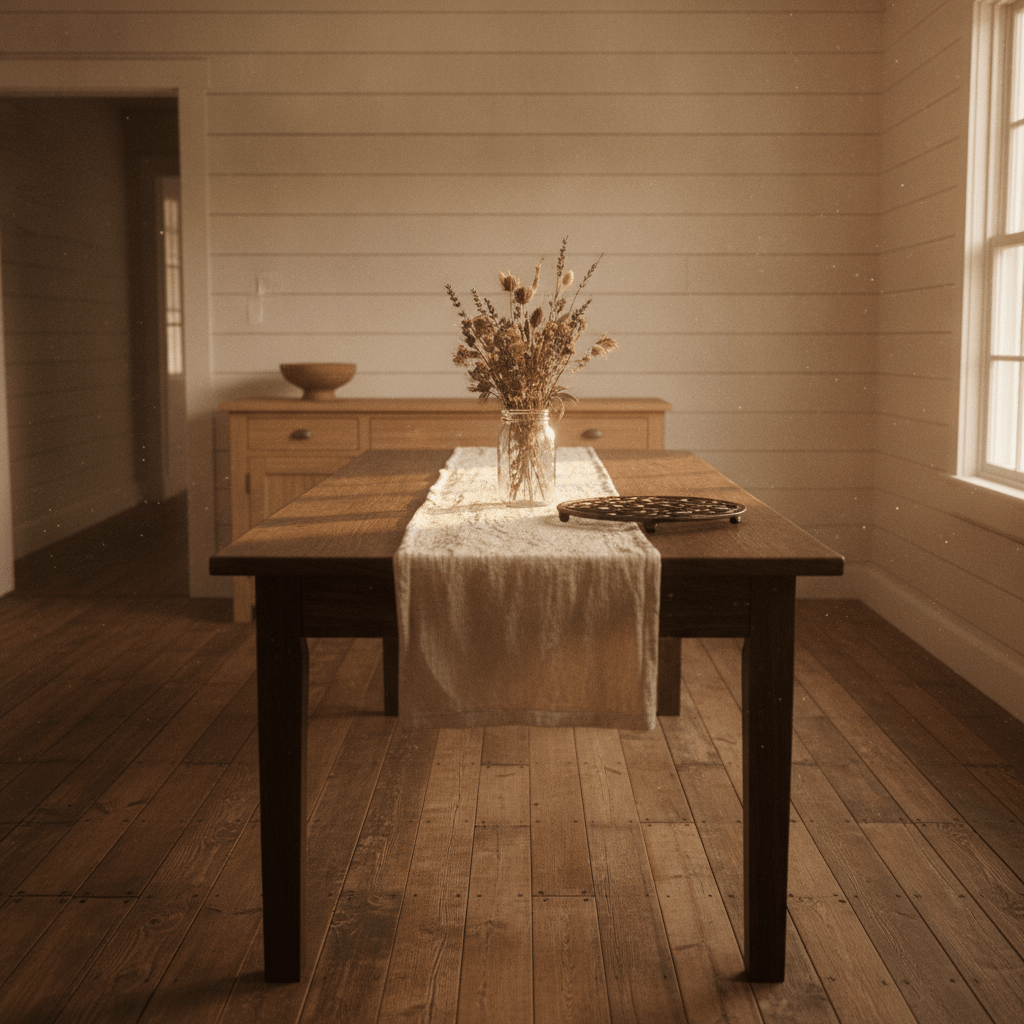
Walnut vs Oak, Pine, and Cherry: What Every Wood Species Says About the Home It Lives In
You walked into somebody's house last week and felt something before you could name it. Maybe it was warm. Maybe it was serious. Maybe it was the kind of lived-in comfortable that made you want to stay for supper. Odds are, the wood had something to do with it. The walnut vs oak debate gets a lot of attention from furniture shoppers and woodworkers, but the real conversation is bigger than that — every species that comes through your front door carries a personality, a set of associations, a mood. And whether you chose it deliberately or inherited it from the previous owners, it's shaping how your home feels right now.
Walnut vs Oak: The Two Personalities That Define American Homes
These are the two heavyweights, and they could not be more different in what they project.
White oak is the wood of institutions and old money. It's the species that built courthouse floors, church pews, and the kind of farmhouse kitchen that's been in the same family for four generations. The grain is open and pronounced — you can see the medullary rays running through a quartersawn board like a fingerprint. Oak says: this place has been here a while, and it intends to stay. Homes with oak floors tend to belong to people who buy things once and keep them. They have cast iron in the kitchen and a porch that gets used.
Walnut is a different animal entirely. It's darker, smoother, and quieter in the grain. A walnut dining table doesn't announce itself the way oak does — it just sits there looking composed. The color ranges from a pale grayish-brown in the sapwood to a deep chocolate in the heartwood, and the contrast between the two can be genuinely beautiful. In the walnut vs oak comparison, walnut tends to attract people who think carefully about what they bring into their homes. Fewer things, better chosen. Mid-century modern furniture, a good turntable, books that have actually been read.
Neither one is better. They're just talking to different people.

Pine: The Wood That Doesn't Pretend to Be Anything It's Not
Pine is the most honest wood in the room. It's soft, it dents, it yellows, it shows every scratch your dog ever made and every chair leg that got dragged across it. And somehow that's exactly why people love it.
A pine floor in an old farmhouse is a record of everything that happened there. The dents aren't damage — they're data. Someone dropped a cast iron skillet in 1987. A kid learned to ride a bike inside during a February ice storm. Pine holds all of it without complaint.
Homes with pine tend to be homes where things actually happen. Baking. Projects. Loud Thanksgivings. The people who choose pine — or who choose to keep it when they move into a place that already has it — are generally not precious about their surroundings. That's a compliment. If you want to understand the lost art of living in a house rather than curating it, the lost art of porch sitting gets at the same idea — the value of spaces that are used, not staged.
Pine furniture, meanwhile, has a reputation problem it doesn't entirely deserve. Yes, the flat-pack stuff from the big box stores is forgettable. But a solid pine blanket chest or a hand-built pine workbench is a different thing. It'll outlast the people who made it, dents and all.
◆ From the Workshop: When you're storing a hand plane long-term, lay it on its side — never rest it sole-down on the bench. A plane left sitting on its iron will dull the edge just from the weight of the tool pressing the blade against whatever grit and dust has settled on the bench surface. Old toolmakers hung their planes on a nail through the tote, and a shop where the planes are all on their sides is a shop where somebody actually knows what they're doing.
Frequently Asked Questions
Can you mix walnut and oak in the same room without it looking like a mistake?
Yes, but the key is contrast with intention. Walnut and oak read as opposites — one dark and smooth, one golden and textured — so they work best when they're clearly playing different roles. Think walnut tabletop with oak flooring, or oak cabinetry with walnut hardware pulls. If they're too close in color or scale, the eye reads it as a mismatch rather than a choice. The trick is making sure each species has its own job in the room.
Which wood species holds up best in high-humidity rooms like kitchens and bathrooms?
White oak is the standout here — it has a closed grain structure that resists moisture better than red oak, walnut, or cherry. Teak is the gold standard for humidity resistance, but it's rarely used in American homes outside of outdoor furniture. Pine is the worst choice for damp spaces; it swells, stains, and warps faster than any of the hardwoods. If you're putting wood in a kitchen or bathroom, finish matters as much as species — a well-sealed walnut will outlast a bare oak every time.
Does cherry wood really darken that much over time, and can you slow it down?
It really does. Fresh-cut cherry is a pale, almost pinkish tan. Within a year of light exposure it shifts to a warm amber, and by ten years it can look like an entirely different species — a deep, reddish-brown that people often mistake for mahogany. You can slow the process slightly by keeping cherry furniture out of direct sunlight, but you cannot stop it entirely. Most woodworkers consider the patina the point, not the problem. If you want the wood to stay light, cherry is the wrong choice.

Cherry: The Wood That Ages Better Than You Will
Fresh cherry lumber is easy to underestimate. It comes out of the mill looking pale and a little pink — not particularly dramatic. Give it a year of light exposure and it starts to turn. Give it ten years and it's a deep, reddish-brown that people routinely mistake for mahogany. Cherry is the only common furniture wood that gets more beautiful the longer you ignore it.
That aging quality attracts a certain kind of homeowner. Cherry furniture tends to show up in houses where the residents are playing a long game — where the dining room table is meant to be passed down, not replaced when the style changes. It's a wood that rewards patience, which means the people who choose it tend to have some.
Cherry also has a refinement to it that oak and walnut don't quite match. The grain is subtle, the figure is gentle, and the finished surface has a warmth that photographs poorly but reads beautifully in person. It's a wood that shows better in the room than in the catalog. Homes with cherry tend to feel considered without feeling cold — there's a softness to it that keeps the space from tipping into formal.
One practical note: keep cherry out of direct sunlight if you want the patina to develop evenly. A dining table with one end near a window will age unevenly, and after a few years you'll have a two-toned piece that looks less intentional than it should.
What the Walnut vs Oak Choice Actually Tells Your Guests
Here's the thing nobody says out loud: the wood in your home is communicating before you open your mouth. It's not about status — it's about values. The species you live with, whether you chose it or not, says something about what you find worth keeping.
A quick read of the four main personalities:
- Oak — built to last, rooted in tradition, not interested in trends. The wood of people who fix things rather than replace them.
- Walnut — deliberate, calm, edited. The wood of people who'd rather have one good thing than five adequate ones.
- Pine — unpretentious, lived-in, welcoming. The wood of people who measure a good day by what got made, not what got preserved.
- Cherry — patient, refined, long-view. The wood of people who think in decades rather than seasons.
Most homes are a mix, of course. Oak floors with walnut furniture. Pine in the mudroom, cherry in the dining room. The combinations tell their own story — usually a more honest one than any single species could manage alone. If you're thinking about how wood and words work together in a space, this room-by-room farmhouse decor guide is a practical place to start.
We carve solid wood signs here in Kentucky, and the species question comes up more than you'd think. People want to know whether walnut or oak will look right in their kitchen, their entryway, their bedroom. The honest answer is that it depends less on the room and more on the personality of the people in it. A carved rustic farmhouse sign reads differently on oak than it does on walnut — warmer and rougher on one, quieter and more deliberate on the other. Both are right. They're just right for different houses.
The wood species in your home are not decoration. They're character witnesses. Pay attention to what they're saying, and you'll know a lot more about what your home actually is — and what you want it to be. If you're drawn to signs that say something worth reading, the inspirational signs collection has pieces that work with the grain, not against it.
Share:
Funny Sayings About Motherhood to Steal for Your Mother's Day Card | Bluegrass Gifts
Front Door Welcome Sign Rules Every Southern Family Lived By | Bluegrass Gifts