

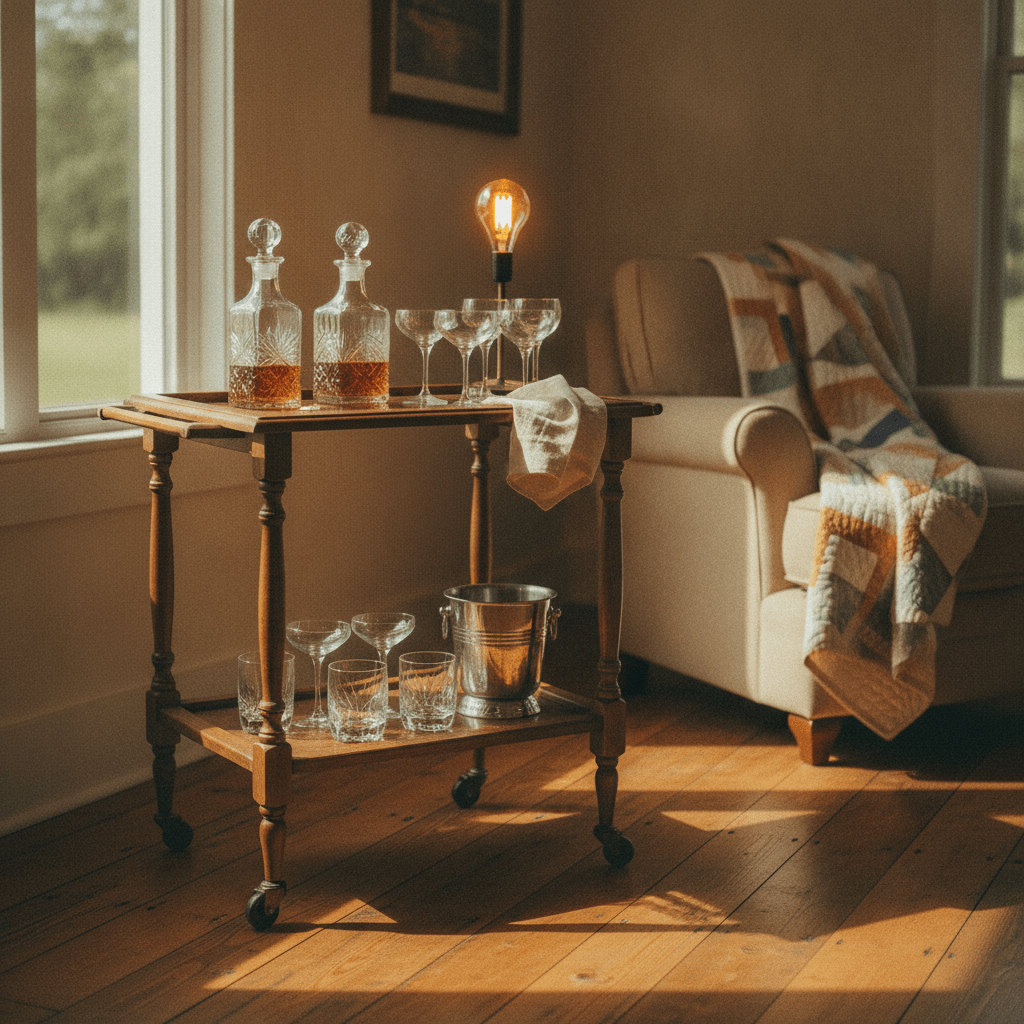
Bar Basics: What You Actually Need Before You Buy a Single Bottle
You cleared a corner of the living room, maybe picked up a secondhand cart at an estate sale, and now you're standing in the liquor store aisle staring at forty-seven bottles of gin wondering where to start. That's the moment most home bars go sideways. Getting the bar basics right isn't about having the most bottles or the fanciest glassware. It's about knowing what you actually drink, what your guests will reach for, and how to build something that functions well enough that you'll use it every weekend instead of just on New Year's Eve.
This is a room-by-room problem that most people treat like a shopping list. It isn't. It's a system. And once you understand the system, the rest — the bottles, the tools, the look — falls into place without much fuss.
The Bar Basics: Spirits, Mixers, and the Ratio That Works
The classic advice is to stock one bottle of each major spirit category: whiskey, vodka, gin, rum, tequila. That advice will leave you with five half-empty bottles and a lot of mediocre cocktails. Better approach: pick two or three spirits your household actually drinks and go deeper on those.
If you and your people are bourbon drinkers, stock two bourbons — one everyday, one worth sipping neat — and build your mixer shelf around that. You'll want:
- Simple syrup (make it yourself: equal parts sugar and hot water, stir, done)
- Angostura bitters
- A good vermouth if you do Manhattans
- Club soda and ginger beer for highballs
- Fresh citrus — lemons and limes — because bottled juice is a sin
If gin is your thing, swap in a dry vermouth and tonic water. The point is the same: build around what you pour, not around what looks impressive on a shelf. A bar stocked with intention beats a bar stocked for performance every single time.
For a deeper look at how the mini bar became a fixture in Southern living rooms, the history of the mini bar in Southern homes is genuinely interesting reading — turns out the tradition goes back further than most people expect.

Tools: The Short List That Actually Gets Used
Bar tools multiply like coat hangers. You start with a shaker and end up with a muddler, a channel knife, a Hawthorne strainer, a julep strainer, a bar spoon shaped like a trident, and a thing you can't identify. Keep it tight.
The tools that earn their counter space:
- A two-piece cobbler shaker or a Boston shaker — pick one style and commit
- A jigger with both 1-ounce and 1.5-ounce sides marked clearly
- A strainer that fits your shaker
- A long bar spoon for stirred drinks
- A vegetable peeler for citrus twists (more useful than a channel knife for most people)
- A small cutting board and a sharp paring knife dedicated to the bar
That's it. Everything else is situational. Buy the specialty tools when a specific recipe calls for them, not in advance. A bar that's easy to use gets used. A bar that requires a scavenger hunt through a drawer of gadgets gets avoided.
Glassware follows the same logic. Rocks glasses handle bourbon, whiskey sours, and Negronis. Highball glasses handle anything long and bubbly. Coupes handle everything that used to go in a martini glass and look better doing it. Three glass types. That's your foundation. Add wine glasses if you serve wine. Add pint glasses if you serve beer on draft. Stop there unless you have a specific reason not to.
◆ From the Workshop: If you're building a bar top or picking up a slab to set your setup on, flip that board up on edge and sight down the length like a rifle barrel before you commit to it. What looks flat lying on a stack will show a twist — called wind, rhymes with kind — the second you get one eye low and look down the grain. Lay two winding sticks across the board, one at each end, and even a quarter-inch of twist looks like a ramp. A twisted top is the kind of problem no amount of clamps fixes after the glue dries.
Frequently Asked Questions
How much space do I actually need to set up a home bar?
Less than you think. A 24-inch-wide console table or a single floating shelf can hold everything you need for a functional bar. The real space requirement is vertical — you want enough clearance above your bottles to grab them without knocking things over, so aim for at least 18 inches between shelves. A dedicated corner or a 3-foot section of wall is genuinely enough for most home setups.
Should I refrigerate my spirits, or is room temperature fine?
Most spirits — whiskey, bourbon, rum, gin, tequila — are perfectly happy at room temperature and actually open up in flavor that way. The exceptions are vermouth and any wine-based liqueurs, which oxidize quickly once opened and should be refrigerated and used within a month or two. Beer and white wine obviously need cold. If your bar doesn't have a mini-fridge, keep a small cooler nearby for party nights and store your vermouth in the kitchen fridge between uses.
What's the right order to stock a bar — spirits first, or mixers?
Start with two or three spirits you actually drink, then work backward to the mixers those spirits need. Buying a bottle of gin before you know whether you like gin-and-tonics means that bottle collects dust. The practical sequence: pick your preferred base spirit, stock the one or two classic cocktails it anchors, buy those mixers fresh, then expand from there. A bar built around what you drink beats a bar stocked for every hypothetical guest.
The Furniture Question: Cart, Cabinet, or Built-In
Most people overthink this. The bar furniture decision comes down to one question: is this space permanent or provisional?
If you're renting, moving in the next few years, or just not sure you want a home bar long-term, a rolling bar cart is the right call. It costs less, moves with you, and doesn't require a single hole in the wall. A good one runs $80 to $250 and holds everything a two-to-three spirit setup needs.
If the space is yours and you're staying, a dedicated cabinet or sideboard gives you storage for bottles you're not currently using, room for extra glassware, and a surface that looks intentional rather than improvised. Thrift stores and estate sales are genuinely the best source here. A solid wood sideboard from 1970 will outlast anything flat-packed, and it usually costs less.
Built-in bars are a whole other conversation — one that involves a contractor, probably some permits, and a budget that starts around $3,000 and climbs fast. They look great. They also require you to be very certain about where you want your bar to live for the next decade. Most people are better served by a good piece of furniture they can move.
Once the furniture question is settled, if you're working with a tight budget, the post on decorating a home bar without overspending covers the practical decisions in the right order.

The One Thing That Makes It Feel Like Yours
Here's where most home bar guides stop giving useful advice. They've told you what to stock and what to buy, and then they say something like "add personal touches" and move on. That's not help. That's a placeholder.
The thing that makes a bar feel like yours — not a hotel lobby bar, not a Pinterest recreation, but yours — is something on the wall that says something true about the people who drink there. Not a generic "Cheers" print. Not a stock photo in a frame. Something that names your actual sensibility.
Maybe that's a sign that makes a specific joke your whole friend group has been making for years. Maybe it's something that references the bourbon you always pour first. Maybe it's something that just says out loud what everyone already knows about the household. The sign is the punctuation. Everything else is the sentence.
We make carved solid-wood signs out of a shop in Kentucky, and the ones that end up on bar walls tend to be the ones people point at when they walk in — the thing that gets a laugh or a nod before anyone's even poured a drink. If you're looking for something with that kind of personality, the bar sign collection is a good place to start browsing.
A sign like this carved bar wall sign is exactly the kind of thing that earns a laugh the first time someone sees it and still works two years later — because it's specific enough to feel intentional, not generic enough to disappear into the wall.
And if you want to understand why a funny sign does more work than it appears to, the piece on how a funny bar sign changes the energy of a gathering gets into the actual psychology of it, which is more interesting than it sounds.
The bar basics — the right bottles, the right tools, the right furniture — get your bar functional. The sign on the wall is what gets it finished. Those are different things, and both of them matter.
New from the workshop: we now engrave bourbon barware — whiskey glasses with original Kentucky sayings, hidden bottom messages, and personalized groomsmen sets. A home bar deserves glassware with an opinion.
Share:
Toilet Paper Invented When? The Surprisingly Long History of the Outhouse | Bluegrass Gifts
Why Cooking Together as a Couple Is the Secret to a Stronger Marriage | Bluegrass Gifts