

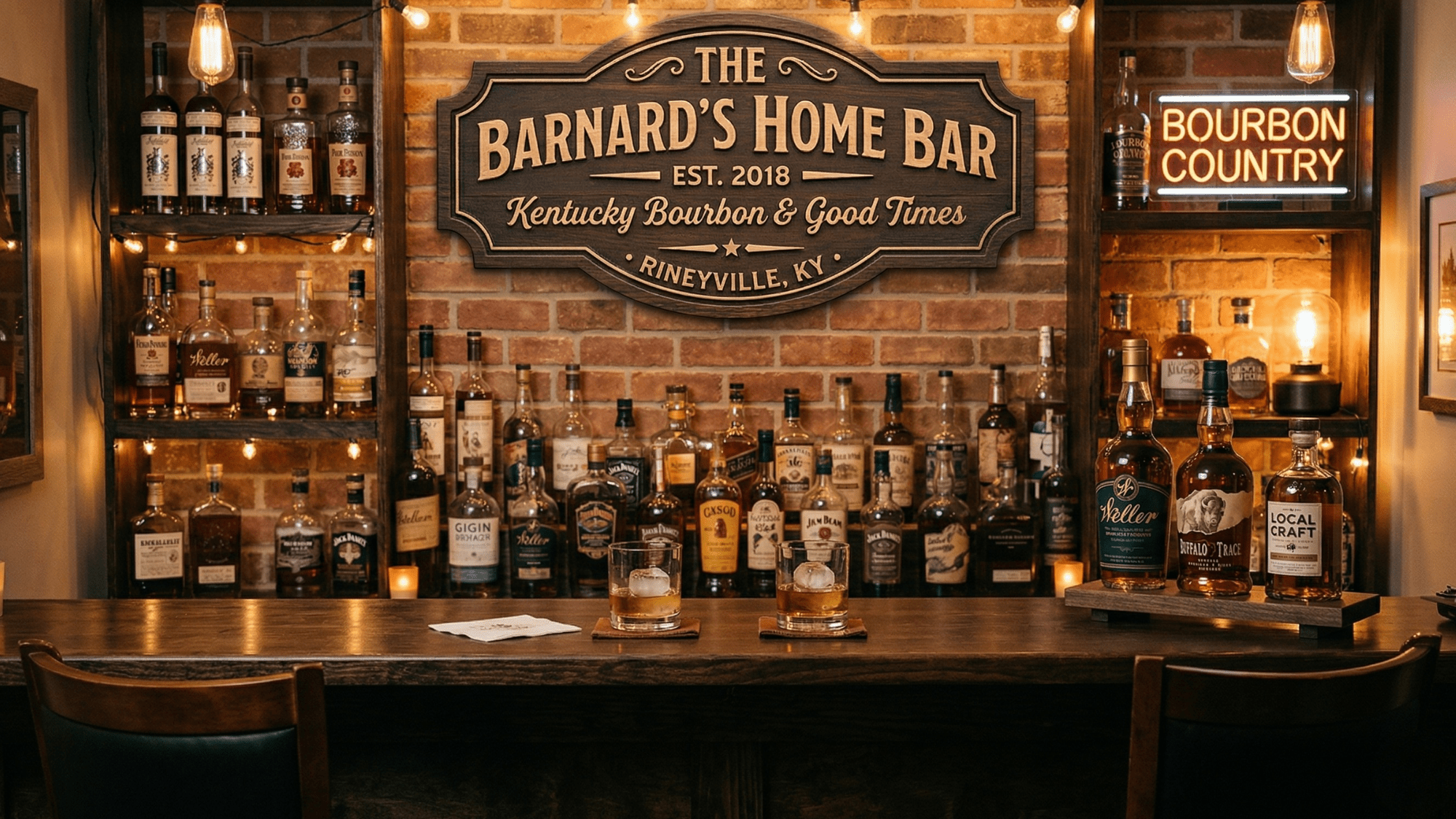
How to Decorate a Home Bar on a Budget
Walk into a home bar that actually works — the kind people drift toward at parties and don't particularly want to leave — and try to identify what makes it feel that way. It's not the liquor selection. It's not the quality of the glassware or the brand of the barstool or how recently the mini fridge got cleaned out. It's the walls. It is almost always the walls.
The walls of a bar do something walls in any other room don't have to do: they establish an identity. A living room can be neutral and still be perfectly pleasant. A bedroom can be minimal and still feel right. A bar with nothing on the walls doesn't feel neutral — it feels unfinished, like a restaurant that forgot to hang anything and is hoping nobody brings it up. The walls of a bar are where the room decides what it is, and every bar that has any real personality has walls that made that decision first.
Here's how to make that decision — and how to do it without spending a fortune. For context on how this same principle plays out across every room in the house, the complete farmhouse home decor guide gives you the full picture before you focus in on any single space.
The Bar Space Most People Actually Have
The bars in magazines are wet bars in custom-built entertainment rooms with built-in cabinetry, pendant lighting, and a dedicated space that was planned to be a bar from the day the house was drawn up. That's not most people's situation, and that's fine. Most people have a bar cart in a living room corner, or a basement utility space that got cleared out and claimed over a couple of weekends, or a section of garage with a mini fridge and a few barstools and about fifteen feet of wall that hasn't had anything on it since the previous owners left.
That's the bar to decorate. The real one. The imperfect space that started as something practical and became social because people kept ending up there. The goal isn't to make it look like a bar in a showroom — the goal is to make it feel like the specific bar it is, with the specific personality of the person who built it. That is a more interesting thing than a showroom bar, and it's completely achievable without a big budget.

The Anchor Sign: One Piece That Sets the Room's Entire Tone
Every bar worth spending time in has one piece on the wall that reads before everything else does. The piece you notice first when you walk in. The thing that tells you, before you've sat down, what kind of bar this is and what kind of time is supposed to happen here. Call it the anchor sign. It's the most important purchase you'll make for a bar space, and it's worth getting right.
The anchor sign doesn't need to be the most expensive thing in the room. It needs to be the most deliberate. Large enough to read from across the space — because people will stand across the room from it and read it, and if they have to squint, it's too small. It should say something specific about the person who owns the bar, not something generic about drinking. Generic is forgettable. Specific is the whole point.
"Whiskey Makes Me Frisky" is funny. "Smith Family Tap Room" is specific. Specific beats funny every time — and specific plus funny is the best possible outcome. A CNC-carved wood sign works better as a bar anchor than almost anything else you can put on a wall, for the same reason one works above a kitchen stove, as we cover in the guide to farmhouse kitchen decor ideas. The depth of the carving catches light. In a bar with warm Edison lighting, a carved sign throws tiny shadows from its letters that shift as the light moves. It looks like something that was installed, not just stuck up on the wall.
Sizing Your Bar Anchor Sign: The Question We Get Asked Most
For a standard basement or garage bar with a back wall between 8 and 12 feet wide, plan on an anchor sign that's at least 24 to 30 inches wide. If the back wall is your primary display surface and you want the sign to read as the focal point of the room, go 36 to 48 inches — especially if the bar has high ceilings or the wall is taller than eight feet. Bar signs that are too small for the wall end up looking like afterthoughts rather than anchors, and that's the exact opposite of what you're going for.
Mount the anchor sign at eye level for a seated guest when possible — typically between 48 and 60 inches from the floor to the center of the sign. A sign mounted too high above a bar reads as decoration rather than a room-defining piece. You want it in the sightline of people sitting at the bar, looking naturally forward. That's where it does the most work.
❖ From the Workshop: In the shop, there's a concept called "fitting a piece to its room" — the idea that a well-made piece of woodwork should look like it was made specifically for the space it lives in, not like it was manufactured somewhere else and relocated. The best bar signs work exactly this way. They look like they were put on that specific wall and the wall was built around them, not like something ordered online and hung wherever there was space. The way to achieve this: go bigger than feels comfortable, mount it at the right height, and don't put anything else on that wall that competes with it for attention.
Themes: Why Your Bar Needs One and How to Choose It
A bar without a theme is a bar that hasn't finished making up its mind. Most bars start without one and develop a point of view over time — the owner keeps adding things they love until something starts to cohere. But a bar that knows what it is and leans into that identity fully is a different experience from one that's still sorting itself out.
The theme doesn't need to be elaborate. Rustic Southern. Kentucky bourbon. Sports team. Craft cocktail lounge. Country music. The outdoors. Irish pub. Any one of these is a strong enough through-line to make every future decorating decision easier — because once you know the theme, the question for anything you consider adding is simply: does this fit? If yes, it earns a spot. If not, it doesn't matter how much you like it.
For a bar built around anything rustic, Southern, or country in character, natural wood decor is not a stylistic choice — it's a category requirement. It belongs there the way a neon beer sign belongs in a sports bar. If your bar space shares a wall or visual language with your main living area, our post on how to mix rustic and modern decor is worth reading before you commit to a direction — it helps you figure out which style leads and which plays a supporting role.

Supporting Signs: Less Is More, and Here's Why
Once the anchor sign is in place, the natural impulse is to keep adding. Another sign. And another one after that. A collection of signs wall to wall, each of them funny, each one in a different font, each one trying to be the first thing guests read when they walk in. This is exactly how a bar goes from having personality to having too much of it.
The rule for supporting signs is the same as for any secondary element: they should support the anchor without competing with it. Smaller. More specific. On the side walls rather than the primary display wall. A good supporting sign is the one a guest notices on their second visit to the bar, not their first. The anchor is for the first visit. The supporting details are for the people who come back. Two or three supporting signs maximum — and give each one space on its wall rather than clustering them together.
The Budget Breakdown: What Actually Moves the Needle
A bar space that looks intentional and personal doesn't require a large budget. The two elements that do the most work are also the most affordable: a great anchor sign and the right lighting. Edison string lights run fifteen to twenty dollars and change the entire atmosphere of a space in about thirty minutes of work. A well-sized carved solid-wood sign is a one-time purchase that lives on that wall for years and improves as the finish develops.
Everything else is supplementary. A second smaller sign on a side wall if it fits the theme. A repurposed whiskey bottle or two on a shelf for visual texture. A barstool upgrade if the existing ones are the wrong height or the wrong character. Build from the anchor out. The anchor sign is the investment. Everything else is a supporting decision made once you know what you're supporting.
Keep the Story Going
If your bar shares a room or a wall with a more modern space, the mixing guide will help you navigate that combination without losing the bar's character.
→ The Complete Farmhouse Home Decor Guide (Room by Room) — Hub Post
→ Farmhouse Kitchen Decor Ideas That Don't Require a Renovation
→ How to Mix Rustic and Modern Decor Without It Looking Messy
New from the workshop: we now engrave bourbon barware — whiskey glasses with original Kentucky sayings, hidden bottom messages, and personalized groomsmen sets. A home bar deserves glassware with an opinion.
Frequently Asked Questions
What is the cheapest way to decorate a home bar?
Start with the walls, not the furniture or glassware. One good anchor sign sets the tone for the whole space and costs less than a new barstool or fridge. Fill in around it with a few smaller pieces instead of buying everything at once. The walls do the heavy lifting, so spend there first and let the rest of the room catch up over time.
What should I put on the wall behind my home bar?
Put up one anchor sign first — something large enough to read from across the room that tells people what kind of bar this is. After that, add smaller pieces that support it: a few signs, some personal touches, maybe a shelf. Don't scatter random decor before the anchor piece is up, or the wall never reads as decided.
How do I make a basement or garage bar feel less unfinished?
Bare walls are the main reason a bar corner feels unfinished, not the barstools or the mini fridge. Hang one deliberate sign first to give the space an identity, then build out from there. A fifteen-foot stretch of empty wall reads as abandoned no matter how nice the setup is underneath it.
Share:
Farmhouse Kitchen Decor Ideas That Don't Require a Renovation | Bluegrass Gifts
Rustic Bathroom Decor Ideas That Make Small Spaces Feel Cozy | Bluegrass Gifts