

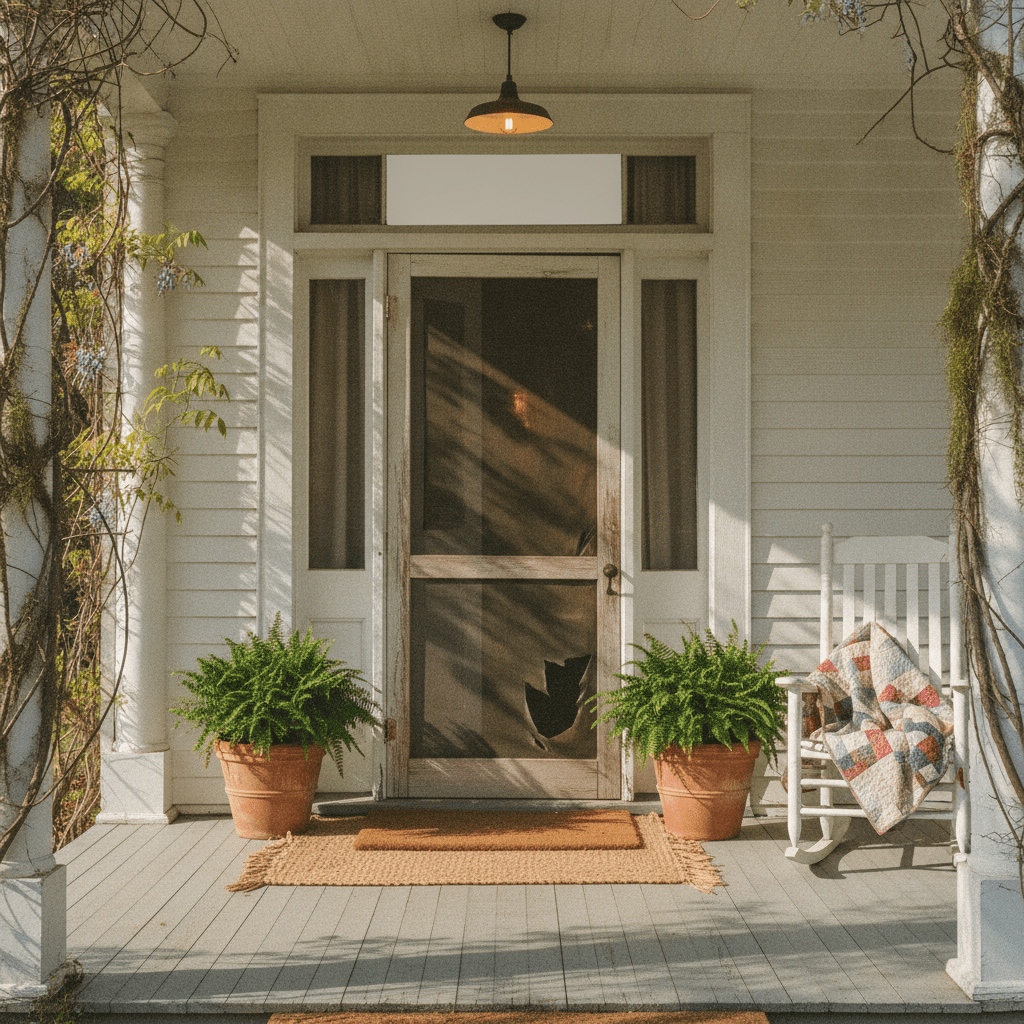
Front Door Welcome Sign Rules Every Southern Family Lived By — and Whether a Door Welcome Sign Still Says What It Used To
Your grandmother didn't need a posted policy. The rules were just known. Don't come to the table without washing your hands. Call before you come over. Take your shoes off at the door. And whatever you do, don't let the screen slam. These weren't suggestions — they were the operating system of the house, and the front door was where it all started. A funny farmhouse entryway sign sets the tone before a single word gets spoken, which is exactly what those unwritten rules were doing all along. The front door welcome sign is the modern version of something much older: the household announcing itself to the world.

The Rules That Ran the House — And Where They Came From
Southern household rules weren't invented by any one generation. Most of them are practical responses to the way life actually worked — small houses, big families, hot summers, and company that could show up any given Sunday. A few of them have roots older than anyone still living.
The no-shoes rule, for instance, traces back to a time when front porches served as the decompression chamber between the outside world and the home. You left the field, the barn, or the road behind you before you crossed the threshold. The door welcome sign — or whatever hung there before signs were a thing — was the marker of that transition.
Call before you come over sounds obvious now, but it was a genuine act of respect in an era when dropping by unannounced meant someone had to stop what they were doing, possibly change clothes, and produce something edible. The rule wasn't about being unwelcoming. It was about letting the house put its best face forward.
- No elbows on the table — posture as a signal of attention and respect
- Yes ma'am, no sir — not performance, just acknowledgment that adults had earned something
- Don't air family business — what happens at home stays at home
- Finish your plate — a rule born from genuine scarcity, not etiquette
- The oldest clears, the youngest sets — everyone has a job
Most of these rules were never explained. They were just enforced. And somehow that made them stick.
The Door Welcome Sign as a Household Statement — Then and Now
There's a reason the entryway has always been the most decorated space in a Southern home. It's the first thing a guest sees and the last thing a family member passes on the way out. A door welcome sign isn't decoration for decoration's sake — it's a declaration. It says who lives here, what they value, and roughly what kind of house you're walking into.
Older homes used painted wooden plaques, pressed tin numbers, or hand-lettered pieces that a relative made. The message was usually simple: a family name, a scripture verse, or a plain "Welcome." The craft was the point. Someone made that by hand, which meant someone thought you were worth the effort.
The modern door welcome sign carries the same weight, even when it's funny. Especially when it's funny, actually. A sign that makes a guest laugh before they knock tells them the people inside don't take themselves too seriously, which is one of the better things a Southern household can communicate. We wrote a whole piece on how to style a Southern entryway if you want to think through the whole picture — but the sign is where it starts.
A carved solid-wood door welcome sign — the kind made from real lumber, not printed vinyl — does something a mass-produced piece can't. It ages. It picks up a little character every year. That's not a flaw. That's the point.
◆ From the Workshop: Rounding a spindle or table leg with a rasp sounds simple until you realize most people are working against the tool. The rasp cuts on the forward stroke only — dragging it back just dulls the teeth for no reason. The real trick is angle: hold the rasp skewed about 45 degrees to the direction of travel so fresh teeth are always engaging, rather than the same few teeth grinding the same groove. You can hear the difference — a properly angled rasp hisses; a straight-on rasp just thuds.
Frequently Asked Questions
What material holds up best for an outdoor front door welcome sign in humid Southern climates?
Hardwoods like white oak, cherry, and hard maple resist moisture better than softwoods, but the finish matters just as much as the species. A penetrating oil finish or a UV-resistant exterior topcoat will outlast a basic polyurethane in high-humidity conditions. If your sign hangs directly in rain or afternoon sun, a covered porch placement extends its life considerably — even the toughest wood appreciates a little shade.
Is it considered rude in Southern etiquette to use a humorous welcome sign instead of a traditional one?
Not at all — in fact, a sign with a little wit on it tends to get more conversation than a plain 'Welcome' ever did. Southern hospitality has always had a humor streak running through it. The only real etiquette consideration is matching the tone to the household: a dry joke works on a laid-back family home, while a more formal property might suit something warmer and straightforward. The sign sets expectations before the door even opens.
How do you hang a wood welcome sign on a door without damaging the finish?
A wreath hanger that hooks over the top of the door is the most damage-free option for doors you want to keep pristine. For siding or a porch wall, adhesive exterior mounting strips rated for the sign's weight work well in mild climates, though they can fail in extreme heat. If you're drilling into brick or masonry, a masonry anchor with a stainless screw will outlast anything else — just use a carbide-tipped bit and go slow to avoid cracking the mortar.

Which Old Rules Still Hold — Honestly
Some of those childhood rules aged beautifully. Others are overdue for an honest conversation.
Still holds: Call before you come over. This one has only gotten more important. People's schedules are complicated in ways they weren't in 1975, and showing up unannounced — even with good intentions — can turn a Tuesday evening into a stress event. Text first. It takes four seconds.
Still holds: Yes ma'am and no sir. Not because it's required, but because it costs nothing and communicates everything. It tells the person you're talking to that you were raised somewhere that cared. That still matters.
Still holds, mostly: Don't air family business. The caveat is that some families used this rule to avoid accountability rather than protect dignity. There's a difference between private and secret. Private is healthy. Secret is how problems fester for thirty years.
Needs updating: Finish your plate. The instinct behind it — don't waste, be grateful — is sound. But forcing children to eat past fullness has a documented downside when it comes to how they relate to food later. The lesson is worth keeping. The enforcement method needs work.
Quietly retired: Children are seen and not heard. This one was never really about children. It was about adults not wanting to be inconvenienced. Most families have figured this out by now.
What a Front Door Welcome Sign Actually Communicates in 2024
The front door welcome sign has taken on a job that used to belong to the whole neighborhood. In an era when people spend less time on porches and more time behind closed doors, the sign is often the only outward signal a house sends. It's doing a lot of work for one piece of wood.
A plain "Welcome" says you're friendly and conventional, which is fine. A family name says this is our place, which is also fine. A scripture verse says something about what the household anchors itself to. A dry joke — "Nice People Only" or something in that vein — says the people inside have a sense of humor about themselves, which, in a neighborhood context, is genuinely reassuring.
The lost art of porch sitting is worth revisiting here, because the porch and the front door sign used to work together. The sign invited you in; the porch kept you a while. Bringing back even one of those traditions changes the feel of a home from the outside in.
If you want something that earns its place on the door — something with actual weight and grain and a little Southern character — a carved farmhouse entryway sign does the job without making the house look like it ordered everything from the same catalog. We make ours from solid wood up here in Kentucky, and the difference is something you notice the first time you hold one.
The entryway collection over at entryway, porch, and yard signs is worth a look if you're thinking about what the front of your house is saying — or what you'd like it to say instead.
The old rules weren't arbitrary. They were a household's way of saying: we've thought about how we want to live, and this is it. A good door welcome sign does the same thing in about six words or less. Some traditions don't need updating. They just need a better frame.
Share:
Walnut vs Oak, Pine, and Cherry: What Every Wood Species Says About the Home It Lives In | Bluegrass Gifts
Working Funny Quotes and the Long, Strange History of the Office Desk | Bluegrass Gifts