

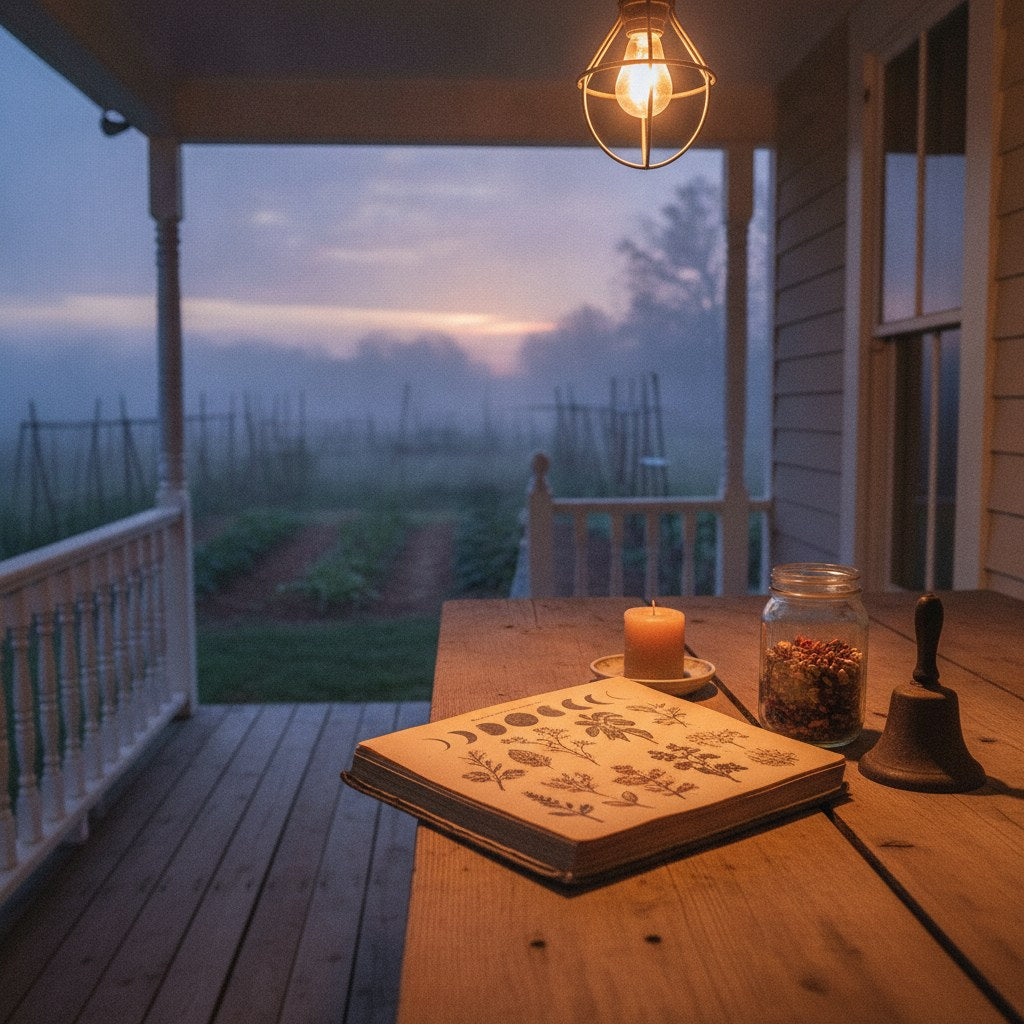
Planting by Moon: The Old-Timer's Southern Garden Calendar That Still Works
Planting by moon phases is either old-timer wisdom or old-timer superstition, depending on who you ask at the feed store. I lean toward wisdom — not because I think the moon is magic, but because the people who developed this calendar were working the same red clay and river-bottom soil for generations, and they kept notes. Planting by moon isn't astrology dressed up as agriculture. It's an observation system built by people who had nothing to go on but results. That's worth taking seriously.
The strongest counterargument is the obvious one: controlled studies on lunar gardening produce mixed results. Some university extension trials find measurable differences in germination rates and yield; others find nothing. That's a fair point, and I won't pretend otherwise. But here's what I'd push back on — the absence of a clean controlled study doesn't mean the effect isn't real. It means it's hard to isolate. Soil type, seed variety, rainfall, and planting depth all interact in ways that make lunar effects nearly impossible to separate out in a short-term trial. Old-timers weren't running controlled experiments. They were running the same garden for forty years and noticing what worked.

Why Planting by Moon Actually Has a Mechanism Behind It
The core claim is simple: the moon affects moisture. Just as it pulls ocean tides, it exerts a gravitational influence on groundwater and soil moisture — a subtler pull, but a real one. During a waxing moon (new moon to full moon), moisture is drawn upward toward the surface. During a waning moon (full moon to new moon), it recedes. The practical upshot: seeds planted in a waxing moon absorb more moisture during germination, giving them a faster, stronger start. Root vegetables planted in a waning moon go into soil where moisture is pulling downward — toward the roots, where you want it.
There's also a light component. A waxing moon reflects increasing light at night, and some researchers have looked at whether that additional low-level light affects germination. The evidence there is thinner, but it's not nothing. The University of Agriculture in Kassel, Germany ran biodynamic trials for years that found statistically significant differences in plant growth tied to lunar rhythm — not dramatic differences, but consistent ones. That's the kind of data that doesn't make headlines but should make you at least keep an open mind.
The Month-by-Month Southern Calendar
This is built for Zone 6 and 7, which covers most of Kentucky, Tennessee, the Carolinas, Virginia, and the upper South. Adjust a few weeks earlier if you're in Zone 8 or 9.
- January: Nothing goes in the ground. Use the waxing moon to start onion seeds and leeks indoors. Use the waning moon to plan, amend compost, and sharpen tools.
- February: Start cabbage, broccoli, and cauliflower indoors on a waxing moon. In the lower South, cool-season greens can go in the ground in the last two weeks — plant them on a waxing moon for leaf development.
- March: Direct-sow peas, spinach, and lettuce outdoors on a waxing moon as soon as soil is workable. Plant potatoes on a waning moon — they're a root crop, and you want that downward moisture pull working for you.
- April: Transplant tomato and pepper starts outdoors after last frost, ideally on a waxing moon. Direct-sow beets and carrots on a waning moon. This is the busiest month on the calendar.
- May: Plant corn, beans, and squash on a waxing moon. Set out sweet potato slips on a waning moon. Cucumbers go in on a waxing moon — they're a fruiting crop.
- June: Second planting of beans and squash on a waxing moon. Plant sweet corn for a fall harvest. Keep up with succession plantings of basil on a waxing moon.
- July: Start fall broccoli, cabbage, and kale indoors on a waxing moon. Direct-sow turnips on a waning moon toward the end of the month.
- August: Transplant fall brassicas outdoors. Plant garlic sets in the lower South on a waning moon — you want root establishment before winter.
- September: Direct-sow spinach, arugula, and lettuce on a waxing moon for fall harvest. Plant garlic in the upper South on a waning moon.
- October: Last call for garlic. Plant cover crops — winter rye, crimson clover — on a waning moon to encourage root anchoring before frost.
- November–December: The garden rests. Use the waning moon to till in amendments, pull dead plants, and let the soil breathe.
◆ From the Workshop: Old-timers understood something about giving things room to move — and it applies in the shop as much as the garden. When you're fitting a hand-cut wooden drawer bottom into its groove, always leave the panel a hair short of the full depth, and never glue it in. A solid wood panel glued tight into its groove has nowhere to go when humidity swells it, so it splits itself or blows the drawer front clean off. Old cabinetmakers ran the panel dry, pinned it at the center back only, and let the edges float free in the groove the same way a ship's hull floats in water — held, but never trapped.
Frequently Asked Questions
Does the moon phase affect seeds differently depending on whether they're started indoors versus direct-sown outside?
Most old-timer moon calendars were built around direct sowing, where the seed goes straight into soil that's subject to outdoor moisture and temperature swings. Indoor starting insulates seeds from a lot of those variables, so the gravitational and light effects that moon-phase gardeners point to are harder to observe. That said, some growers still time their indoor starts by the moon and transplant on a waxing moon — the idea being that the plant hits the ground during a period of rising moisture in the soil. Whether that edge is real or psychological, transplanting on a waxing moon at least puts you in the ballpark of good spring weather, which doesn't hurt.
Which moon phase calendar system should I actually use — biodynamic, the Farmers' Almanac, or something else?
They're not the same thing, and that's worth knowing before you buy a calendar. The Farmers' Almanac moon-sign system is based on which zodiac constellation the moon is transiting, not strictly the waxing-waning cycle — it divides days into 'fruitful' and 'barren' signs. Biodynamic gardening (developed by Rudolf Steiner) layers on root days, flower days, fruit days, and leaf days based on a combination of moon phase and lunar node position. If you're just starting out, the simpler waxing-for-above-ground and waning-for-below-ground rule is easier to apply and still captures the core of what old-timers practiced. The elaborate systems are worth exploring once the basics feel natural.
Are there any vegetables that experienced moon-phase gardeners say don't respond much either way?
Corn is one that comes up in older gardening literature as relatively indifferent to moon timing compared to something like tomatoes or root vegetables — possibly because it's so responsive to soil temperature and day length that those factors swamp any lunar signal. Garlic is another interesting case: most moon gardeners plant it on a waning moon in fall for root development, but garlic is so forgiving about timing that it's hard to plant it badly regardless of phase. Herbs grown primarily for leaf — basil, parsley, cilantro — are generally considered more phase-sensitive than corn, since the leaf-day theory aligns with their harvest goal.
Planting by Moon in the South: What the Old-Timers Got Right That We Forgot
The Farmers' Almanac has published moon-planting calendars since 1818. That's not a selling point — longevity doesn't equal accuracy. But it does mean this system has been tested against real southern seasons for over two hundred years, adjusted, argued over, and kept anyway. That's not nothing.
What old-timers understood that we've mostly lost is that gardening is a system, not a series of isolated decisions. Planting by moon phase forces you to think about timing in relation to something outside yourself — the sky, the season, the rhythm of the year. Even if you're skeptical of the gravitational mechanism, that habit of mind is worth developing. A gardener who plans around moon phases is a gardener who actually has a plan. That alone puts them ahead.
There's a post on the blog about the lost art of porch sitting that touches on the same idea — how slowing down and paying attention to what's around you is its own kind of intelligence. Moon gardening fits in that same tradition. It's not slow thinking. It's patient thinking, which is different.
Southern hospitality and southern gardening share the same root: you're always preparing for something that hasn't arrived yet. The tomatoes aren't ripe. The guests aren't here. But you're already ready. That's the whole philosophy, and it's one worth keeping. If you want to dig further into what that kind of southern attentiveness looks like in practice, the piece on southern hospitality's unwritten rules is a good read alongside this one.

A Practical Upshot for the Skeptic
You don't have to believe the moon moves water through your topsoil to get value out of this calendar. Use it as a scheduling framework and you'll still come out ahead — because the month-by-month structure forces you to think about succession planting, root versus leaf crops, and indoor-versus-outdoor timing in a way that most casual gardeners never do. That alone will improve your yield.
If you want to test the lunar effect directly, run a simple trial: plant two rows of beans on the same day, same seed, same soil — one on a waxing moon, one on a waning moon. Keep notes. Do it for three years. That's how the old-timers figured it out, and it's still the most honest way to know.
The kind of home that takes this stuff seriously — that keeps a garden calendar on the wall, that knows what month the garlic goes in — tends to be the kind of home that means something. Our inspirational signs collection has a few pieces that fit that sensibility, if you're the type who likes a wall to say something true. And if you've got a kitchen where the real work of the house gets done, this carved hardwood sign about living your best life has the right energy for a room that feeds people.
Plant something. Watch it. The moon will do whatever it does, and you'll be paying closer attention than you were before. That's the whole point.
Share:
The History of Gin: Why It Was Always the Most Dramatic Spirit | Bluegrass Gifts
Count My Blessings Meaning: What Scripture Actually Says About Being Blessed