

The History of Gin: Why It Was Always the Most Dramatic Spirit
The history of gin is not a polite story. Other spirits have origin myths involving patient monks, rolling hillsides, and generations of quiet craft. Gin's origin myth involves plague doctors, a Dutch pharmacist, and a city of 600,000 people who collectively decided that drinking themselves to death was a reasonable response to industrialization. Gin didn't stumble into drama. Drama is the whole point.

The History of Gin Starts With a Doctor Who Was Not Trying to Make a Drink
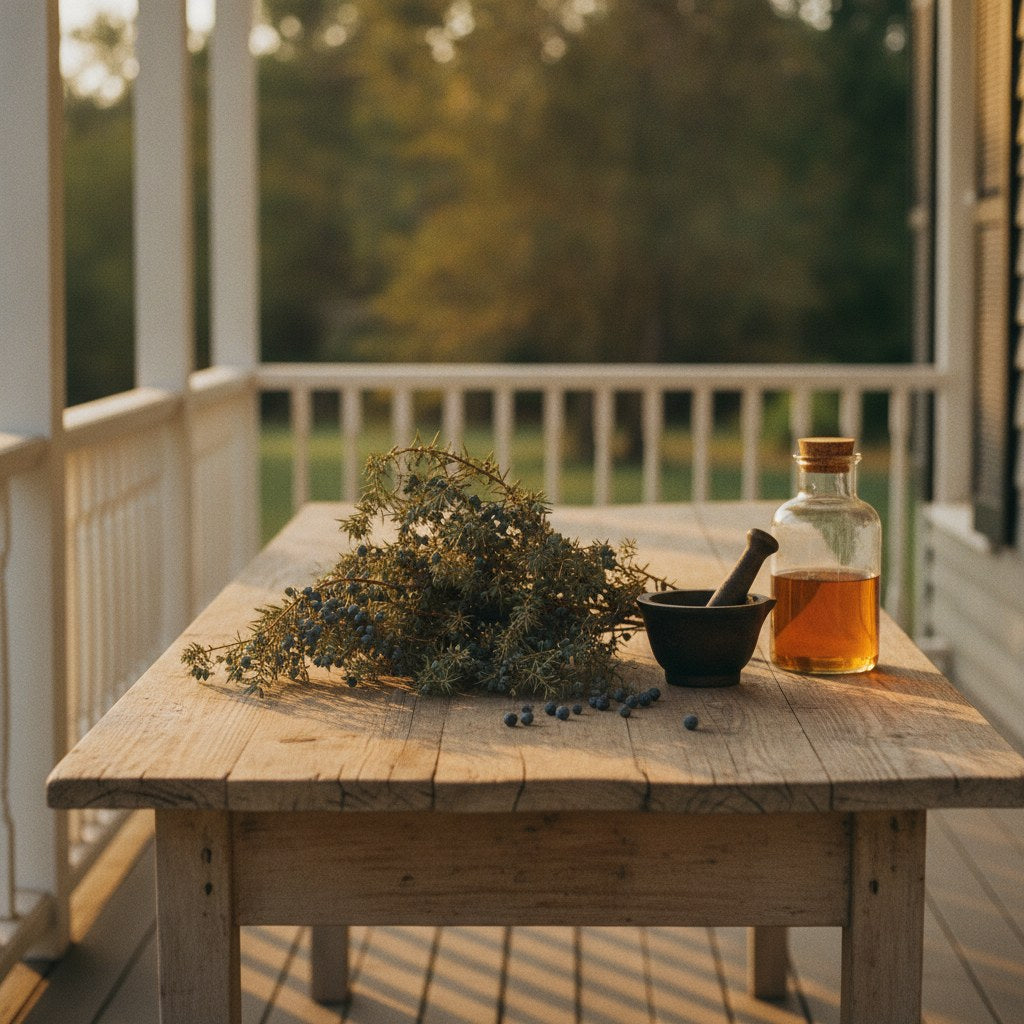
Around 1650, a Dutch physician named Franciscus Sylvius — or possibly his colleagues at the University of Leiden, history is flexible on this point — started redistilling grain spirits with juniper berries. Juniper had been used medicinally since at least the 11th century, mostly because it was believed to treat kidney ailments, gout, gallstones, and roughly everything else that could go wrong with a human body. The resulting liquid was called genever, and it was sold in pharmacies.
It was also, by all accounts, not great. Early genever was harsh, medicinal, and probably tasted like drinking a pine tree that had been soaked in grain alcohol. People drank it anyway, because the alternative was dying of the thing it was supposedly curing. This is a theme that will repeat.
British soldiers fighting in the Thirty Years' War encountered genever and brought the habit home. They called it Dutch Courage, which tells you everything you need to know about how they were using it. By the time William of Orange took the English throne in 1689, gin was already well on its way to becoming England's defining vice.
The Gin Craze Was Exactly as Bad as It Sounds
William III, newly crowned and not particularly fond of France, banned French brandy imports and removed the licensing requirements for domestic gin production. He was trying to boost English grain farmers. What he actually did was turn London into the most comprehensively drunk city in recorded history.
By the 1730s, London had one gin shop for approximately every 73 residents. Not one bar — one gin shop. Gin was cheaper than beer, cheaper than bread in some neighborhoods, and completely unregulated. Street vendors sold it from wheelbarrows. Gin was added to water to make it safer to drink, which was a real public health strategy at the time, because the water genuinely was trying to kill you.
- London's gin consumption peaked at roughly 11 million gallons per year in the 1740s — for a city of around 700,000 people.
- The death rate in London exceeded the birth rate for several years during the height of the craze.
- William Hogarth's 1751 engraving Gin Lane depicted mothers dropping infants, men pawning tools for a dram, and a general atmosphere of cheerful societal collapse.
- Parliament passed five separate Gin Acts between 1729 and 1751 trying to slow things down, with mixed results.
The craze eventually burned itself out through a combination of grain shortages, rising prices, and the slow realization that a workforce that couldn't stand up was not an economically productive workforce. Gin didn't go away. It just got more expensive and, gradually, more respectable.
◆ From the Workshop: When you're working with walnut and want to know where the heartwood ends and the sapwood begins, you don't need good light — you need your nose. Fresh walnut heartwood has a sharp, almost bitter, chocolate-and-ammonia smell that stops abruptly at the pale sapwood, which smells like almost nothing at all. Old furniture makers would smell a rough plank before they planed it, using the scent boundary to map exactly where the usable dark wood lived before a single shaving hit the floor. There's something honest about that — reading a material through its smell before you touch it, the way a good bartender reads a botanical blend before the first pour.
Frequently Asked Questions
What's the difference between London Dry gin and Old Tom gin?
Old Tom is the missing link between the sweeter Dutch jenever and the crisp, bone-dry London Dry style that dominates today. It's lightly sweetened — historically with licorice root or sugar — and was the dominant gin style in England through most of the 1700s and 1800s. London Dry came later, made possible by the column still, which produced a cleaner, more neutral spirit that didn't need sugar to mask the rough edges. Old Tom nearly vanished in the 20th century but has made a quiet comeback among bartenders who want to make historically accurate cocktails like the Tom Collins or the Martinez.
Which classic cocktails are built on gin, and why does it matter which gin you use?
The Martini, the Negroni, the Tom Collins, the Gimlet, and the Aviation are all gin-forward cocktails where the botanical profile of the gin is the whole point. A floral, cucumber-forward gin like Hendrick's will make a Martini taste completely different from one built on a juniper-heavy gin like Tanqueray. Unlike vodka cocktails, where the spirit is mostly a vehicle, gin cocktails are conversations between the botanicals and the other ingredients — so swapping gins isn't a neutral move. If a recipe calls for London Dry and you use a contemporary-style gin with light juniper, you're making a different drink.
Is gin actually making a comeback, or has it always been this popular?
Gin went through a genuine trough from roughly the 1960s through the 1990s, when vodka ate its lunch. The cocktail revival of the early 2000s brought it back, and the craft distillery boom — particularly in the UK, US, and Australia — accelerated it dramatically. The number of gin distilleries in the UK alone went from around 100 in 2013 to well over 800 by the early 2020s, according to the Wine and Spirit Trade Association. So it's both: gin has ancient roots and loyal drinkers throughout its history, but the current moment is genuinely a high point by almost any measure.

How Gin Got Respectable Enough to Serve at Dinner Parties
The column still, invented in the 1830s, changed everything. Before it, distillers were working with pot stills that produced spirits full of congeners — the compounds that give unaged grain spirits their rough, funky character. The column still produced a cleaner, more neutral base spirit, which meant gin makers could finally let the botanicals do the talking instead of using sugar and additives to cover up the base.
London Dry gin emerged from this technology. Juniper-forward, bone dry, precise. It was the gin that made the Martini possible, and the Martini is the cocktail that made gin the drink of people who considered themselves serious. By the late Victorian era, gin and tonic — gin mixed with quinine-laced tonic water that British officers in India were already drinking to prevent malaria — had become the drink of the Empire. Which is a remarkable rehabilitation for a spirit that, a century earlier, had been associated primarily with street-level destitution.
Queen Victoria reportedly enjoyed a gin and tonic. Whether or not that's precisely true, the British establishment found it useful to believe, and that's close enough. The history of gin is full of moments like that — the story that gets told because it's better than the actual story, and then becomes the actual story through sheer repetition. We wrote a piece on the history of the drinking toast and why we clink glasses that has a similar quality — the real origin is murkier than the legend, and the legend won.
The History of Gin in America Is Shorter and Wetter Than You'd Expect
Gin arrived in America early, but it never quite dominated the way it did in Britain. Bourbon was right there, made from American grain, aged in American oak, tasting like the continent itself. Gin had to compete with that, which is a hard sell in Kentucky.
Prohibition is where gin got its American character. Bathtub gin — grain alcohol redistilled with juniper oil and whatever botanicals were available — was genuinely terrible, but it was available, which counted for a lot between 1920 and 1933. The speakeasy culture that grew up around it produced the American cocktail tradition: drinks designed to make the spirit more palatable, built on balance and acidity and sweetness. The Bee's Knees, the Last Word, the Southside — all Prohibition-era gin cocktails, all designed to make the best of a difficult situation.
After Prohibition, gin held on through the mid-century cocktail era and then faded as vodka took over in the 1970s and '80s. The craft distillery movement brought it back, and the current gin renaissance — with its emphasis on unusual botanicals, regional ingredients, and small-batch production — is probably the most interesting the spirit has been since the London Dry era. If you're putting together a home bar and wondering where gin fits, our home bar setup guide covers the basics without making you feel like you need a degree to stock a shelf.
What the History of Gin Actually Tells Us About Gin
Every era of gin's history reflects exactly what people needed it to be. Medicine when they needed medicine. Cheap oblivion when they needed oblivion. A sophisticated mixer when sophistication was the point. A craft object when craft was what they were paying for. Gin is the most adaptable spirit in the cabinet precisely because its character — those botanicals, that juniper backbone — is strong enough to hold up under pressure but flexible enough to change with the room.
That's not a small thing. Most spirits have one story. Gin has about fourteen, and half of them involve someone making a very bad decision that somehow worked out.
The sign above a good home bar should probably acknowledge that. Something like a carved gin bar sign that leans into the absurdity — because the history of gin earns a little irreverence. The spirit has been a plague remedy, a public health crisis, an imperial accessory, and a Prohibition workaround. It can handle a joke on the wall. If you're building out a full bar space and want to see what else works on those walls, our bar sign collection has options carved from hardwood here in Kentucky — the kind of thing that holds up as long as the gin does.
Which, if history is any guide, is a very long time.
Share:
Witty Quotes About Family and the Inside Joke That Holds You Together | Bluegrass Gifts
Planting by the Moon: The Old-Timer's Southern Garden Calendar That Still Works | Bluegrass Gifts