

What Do Couples Argue About — and Why the Bedroom Is Ground Zero
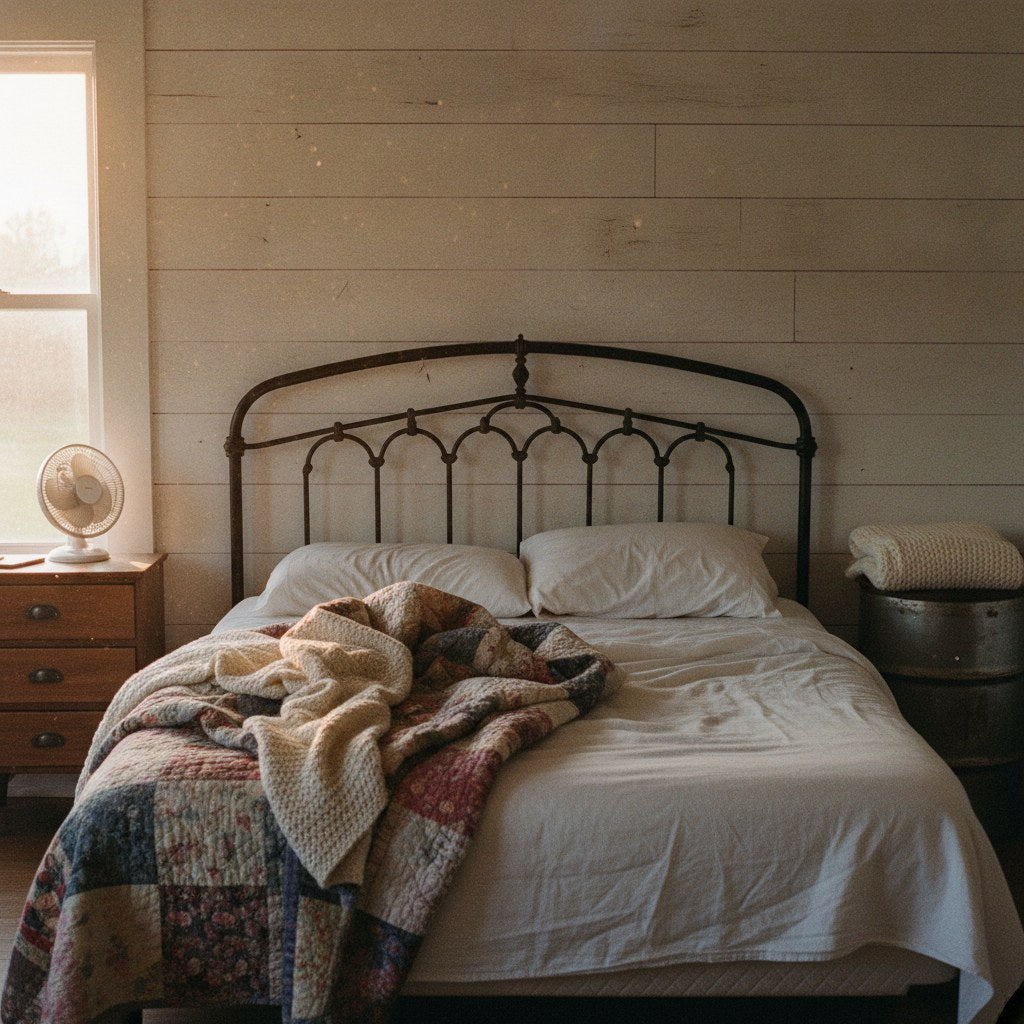
What do couples argue about most? Money gets the headlines. Chores get the think pieces. But walk into any bedroom shared by two people who've lived together longer than six months and you'll find the real front lines: the thermostat, the blanket, and whoever insists on leaving the closet light on. Couples argue about these things constantly — not because they're petty, but because sleep is biological, and two bodies rarely want the same conditions to get there.
The arguments feel trivial in daylight. At 2 a.m. when you're sweating through the sheets or shivering at the edge of the mattress, they feel like a referendum on the entire relationship. Neither reading is quite right. The research on sleep environments is specific enough to actually settle some of this — not all of it, but enough to stop the argument from being purely about who has better judgment.

The Temperature Fight — and Why the Cold Person Has a Stronger Case
The ideal sleep temperature for most adults, according to sleep medicine research published through institutions like the Sleep Foundation, sits between 65 and 68 degrees Fahrenheit. That range supports the core body temperature drop that triggers and sustains sleep. The person who keeps pushing the thermostat down isn't being dramatic — they're closer to the science.
The hot sleeper in the relationship usually argues that 65 degrees is fine for sleeping but miserable for everything else — getting out of bed, getting dressed, existing as a human being before 7 a.m. That's fair. The compromise most sleep researchers land on isn't a single temperature but a layering system: a cooler room with more blankets available, so the person who runs cold can add insulation without trapping heat for the person who runs hot.
What doesn't work is meeting in the middle at 71 degrees and both sleeping worse. That's the outcome couples argue their way into most often — a negotiated temperature that satisfies neither body.
The Blanket Situation Is a Separate Problem Entirely
Blanket theft is not a myth, and it's not malicious. During REM sleep, voluntary muscle control is suppressed — you're not consciously pulling the blanket. What happens is simpler: one person moves, the blanket follows, and the other person wakes up cold with no memory of how it happened and a spouse who looks suspiciously comfortable.
The Scandinavian solution — two separate duvets on one bed — has been circulating in American sleep discourse for years now, and the case for it is straightforward. Each person controls their own insulation. The midnight tug-of-war ends. Nobody has to prove intent because there's nothing to steal. The bed still looks like a shared bed. It just functions like two people who both get to sleep.
I'll admit I was skeptical of this until someone explained it to me as less of a sleep hack and more of a boundary drawn in linen. That framing made it make sense.
◆ From the Workshop: When you're splitting a green log into bowl blanks with a froe and mallet, you always split through the pith — never around it. The pith is the most unstable wood in the tree, and a blank that includes it will crack straight through the center as it dries, almost without exception. Old bowl turners roughed every blank so the pith ended up as a chip on the floor, not as the centerpiece of something they'd spent an hour hollowing. There's a lesson in there about building anything meant to last: identify the unstable element early and work around it, not through it.
Frequently Asked Questions
Is it actually bad for sleep to share a bed with someone who has a different temperature preference?
Yes, and the mechanism is specific. Your core body temperature needs to drop about 1–2°F to initiate sleep. If your partner radiates enough heat to keep the ambient temperature around you elevated, that drop is harder to achieve. Some sleep researchers suggest a dual-zone mattress pad or separate blankets as a structural fix — not a relationship fix, just a thermostat fix.
Why do some people always feel cold while others always feel hot, even in the same room?
Metabolic rate is the main driver. People with higher resting metabolic rates generate more body heat. Thyroid function, body composition, and even hormonal cycles all shift baseline temperature perception. Women in perimenopause, for instance, often experience dramatic swings — freezing one hour, overheated the next — which makes a fixed bedroom temperature a moving target no matter how carefully you set it.
Does the color or light temperature of a bedroom lamp actually affect sleep quality?
It does. Melanopsin-containing cells in the retina are most sensitive to short-wavelength blue light, which is why cool-white bulbs (5000K+) are more disruptive than warm amber ones (2700K or lower). Switching to a warm-toned bulb in a bedside lamp is a low-cost change that reduces suppression of melatonin without requiring anyone to sit in total darkness while their partner reads.
Light — Where Couples Argue About Something That Actually Has a Clear Answer
This one is less contested by the research. Light — specifically blue-spectrum light — suppresses melatonin production. The cells in the retina responsible for this response, called intrinsically photosensitive retinal ganglion cells, don't care whether the light is coming from a phone screen, a television, or a partner's reading lamp aimed at the ceiling. Bright light in the hour before sleep delays sleep onset and reduces slow-wave sleep depth.
The argument couples argue about here usually isn't whether light matters — most people accept that it does — but whose light use gets to count as reasonable. The person who reads before bed thinks their lamp is fine. The person who's trying to fall asleep thinks it's a spotlight. Both are partially right.
- Warm-toned bulbs (2700K or lower) cause significantly less melatonin disruption than cool white bulbs.
- A reading light aimed at a book rather than the ceiling reduces scatter considerably.
- A sleep mask costs about eight dollars and removes the argument entirely for the person trying to sleep.
- Phone screens held six inches from your face in a dark room are worse than most bedside lamps, regardless of night mode settings.
The person who falls asleep first doesn't automatically win the light argument. But the person still awake at midnight scrolling probably doesn't either.

Why These Arguments Keep Happening Even When You Know All This
Knowing the research doesn't dissolve the argument. Couples argue about bedroom conditions repeatedly not because they lack information but because the stakes feel personal. Temperature preference isn't chosen — it's physiological. Telling someone they run hot like it's a character flaw is about as useful as telling them they're too tall. The argument that lands is the one that treats both bodies as real, neither as the default.
What tends to actually help, based on what sleep researchers recommend and what people who've been married a long time seem to figure out on their own, is structural rather than conversational. Separate blankets. A programmable thermostat that drops at bedtime. A warm-spectrum reading lamp on a timer. These are not romantic solutions. They are, however, solutions — which is more than most bedroom arguments produce.
There's a whole post on this site about silly marriage advice and bedroom setup that gets into the funnier side of all this, and another on what actually helps when you're fatigued and can't get a full night's sleep — both worth reading if this topic has hit close to home.
The bedroom is the one room in the house where two people are supposed to be completely off duty at the same time. Getting the environment right is less about compromise and more about engineering — figuring out which variables you can actually control and adjusting them so neither person has to lose sleep arguing about the ones you can't. Our bedroom signs collection leans into exactly that room and what it means to the people who share it — sometimes with a little humor, which is usually the right tone for a space this loaded.
And if you want something on the wall that acknowledges the absurdity of all of it — the thermostat wars, the blanket negotiations, the 2 a.m. standoffs — this carved nap roulette sign says what most couples are actually thinking. Sometimes the right decor is just the thing that makes you both laugh instead of argue.
Two people, one bed, a thousand variables. The research helps. So does knowing when to stop negotiating and just buy the second duvet.
Share:
Wedding Welcome Sign Size: What Actually Works at the Venue
Sample Wedding Vows: Why We Still Say 'Forever' and Put It on the Wall | Bluegrass Gifts