
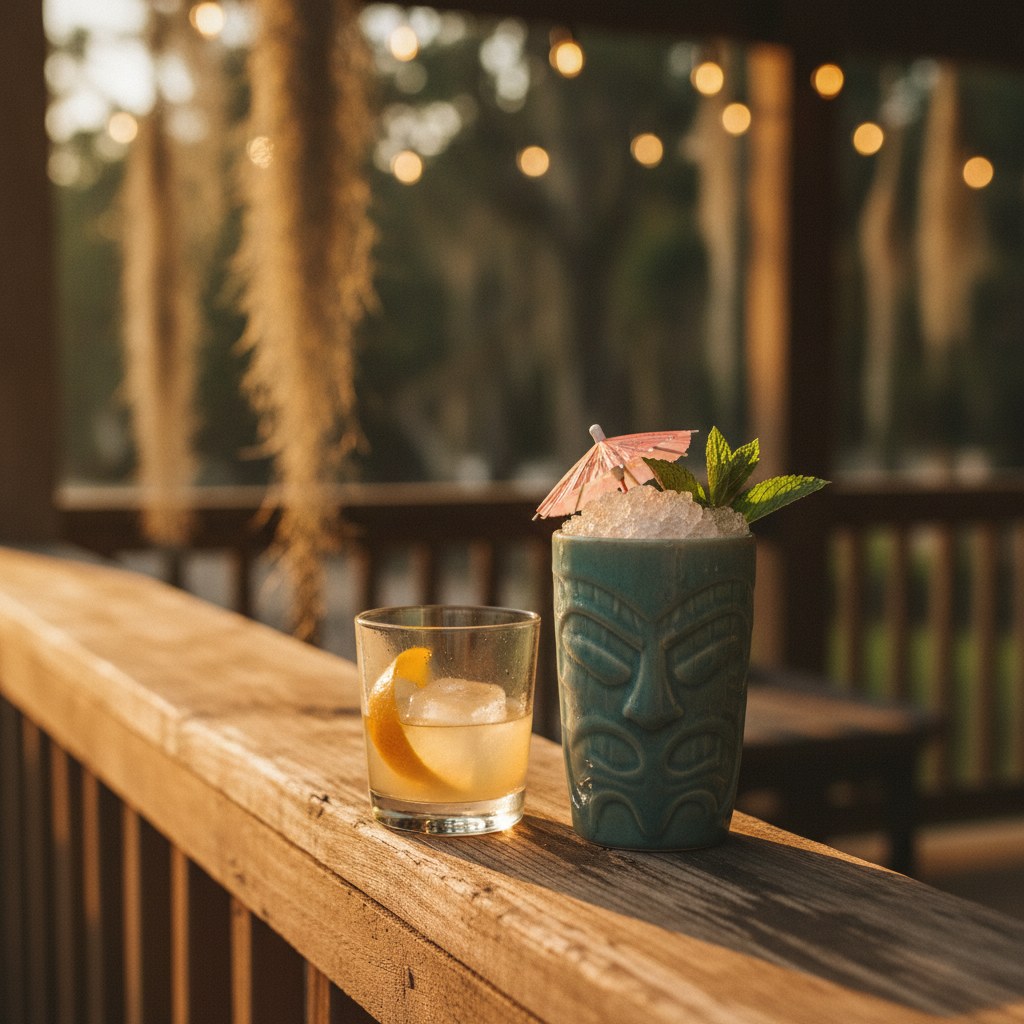
The Mai Tai Recipe Original vs. the Old Fashioned: How One Simple Bourbon Drink Became the Most Ordered Cocktail in America
The mai tai recipe original has its devoted following — tiki bars, beach vacations, that one friend who owns too many Hawaiian shirts. But while the mai tai was busy being complicated and photogenic, the bourbon Old Fashioned was quietly winning. It became the most ordered craft cocktail in America not by being flashy, but by being exactly right, every single time, for going on two centuries. That's the argument. Here's how it happened.

What the Tai Recipe Original Crowd Gets Right — and Where the Old Fashioned Still Wins
To be fair to the tiki tradition: the tai recipe original, as Trader Vic Bergeron built it in 1944, is a genuinely good drink. Two ounces of aged rum, lime juice, orange curaçao, orgeat, a float of dark rum on top. It's balanced, it's layered, and it takes real skill to make well. The tiki movement understood that cocktails could be an experience, not just a beverage, and that instinct wasn't wrong.
But here's the problem with complexity: it requires perfect execution every time. One bartender who's heavy on the orgeat, one well that's out of aged rum, one lime that's more pith than juice — and the whole thing falls apart. The Old Fashioned doesn't have that fragility. Bourbon, sugar, bitters, ice, orange peel. The margin for error is small because the ingredient list is small. That's not a limitation. That's engineering.
The Old Fashioned also ages better in the glass — literally. It opens up as the ice melts. The mai tai, by contrast, starts diluting the moment it's built. One is a drink you sip over twenty minutes. The other, you're racing the clock.
The Tai Recipe Original Timeline vs. the Old Fashioned's Two-Hundred-Year Head Start
The word "cocktail" appeared in print for the first time in 1806, in a New York newspaper called The Balance and Columbian Repository. The editor defined it as a stimulating liquor composed of spirits, sugar, water, and bitters. That's an Old Fashioned. Not a variation on one — that is one, before it even had a name.
The drink picked up the "Old Fashioned" label sometime in the 1880s, when customers at Louisville's Pendennis Club — and this is a detail that matters if you're from Kentucky — started ordering their whiskey cocktails the old-fashioned way, meaning without the newer additions like absinthe or liqueurs that were creeping into fashion. The name was a preference, not a recipe. It meant: keep it simple, keep it honest.
Compare that lineage to the tai recipe original, born in a California restaurant in 1944. A great drink, no question. But a toddler by comparison.
- 1806 — first print definition of a cocktail matches the Old Fashioned formula exactly
- 1880s — "Old Fashioned" becomes the common name at Louisville's Pendennis Club
- 1895 — the recipe appears in print in Modern American Drinks by George Kappeler
- 1920s — Prohibition nearly kills it, but bourbon goes underground, not away
- 1944 — Trader Vic invents the mai tai in Oakland, California
- 2000s — the craft cocktail revival brings the Old Fashioned back to every serious bar menu
◆ From the Workshop: When you're choosing wood for a carving mallet, go for a species with interlocked grain — lignum vitae or hornbeam — rather than straight-grained oak or ash. Interlocked grain means the fibers spiral in alternating directions through the wood, so when the mallet face takes thousands of strikes, there's no single clean path for a crack to run. Straight-grained wood splits along that path eventually; interlocked grain just shrugs it off. That's why old carvers' mallets outlasted the carvers themselves. Some things are built to last because of how they're made at the fiber level — the Old Fashioned works the same way.
Frequently Asked Questions
What's the difference between an Old Fashioned made with bourbon versus rye whiskey, and does it actually matter?
It matters more than most people admit. Bourbon brings a sweeter, rounder profile — corn-forward, with vanilla and caramel notes that play well with the sugar and bitters. Rye is spicier and drier, which makes the bitters pop harder and gives the drink a sharper finish. Neither is wrong, but they're genuinely different cocktails. If you're serving guests who say they 'don't really like whiskey,' start with bourbon. If they already know what they like, ask first.
Why do some bartenders muddle a cherry and orange slice in an Old Fashioned, and is that actually traditional?
That muddled-fruit style became popular in the Midwest — Wisconsin in particular turned it into something of a regional tradition, often adding brandy instead of bourbon. It's not the original recipe; the 1806 definition of a cocktail was strictly spirit, sugar, water, and bitters. The muddled version emerged later as bars tried to soften the drink for broader audiences. Whether it's 'wrong' depends entirely on who you're asking, but if someone orders an Old Fashioned at a craft bar and gets muddled fruit, they're probably going to say something about it.
What bitters should you actually use in a bourbon Old Fashioned, and are there real differences between brands?
Angostura is the default and has been since the 19th century — it's reliable, widely available, and works. But the bitters category has expanded considerably, and the differences are real. Angostura reads warm and spiced (clove, cinnamon). Peychaud's is lighter and more floral, originally a New Orleans staple. Orange bitters add a citrus brightness that works especially well with higher-proof bourbons. Some bartenders use two types together. For a home bar, start with Angostura, then add orange bitters once you've got the base ratio down.

How the Tai Recipe Original Era Actually Helped the Old Fashioned Survive
Here's the counterintuitive part: the tiki craze of the 1940s and 50s, and the sweet, syrupy cocktail culture that followed it through the 1970s and 80s, may have actually preserved the Old Fashioned's reputation by contrast. When everything on the menu was neon-colored and tasted like fruit punch, the bartenders who still knew how to build a proper whiskey drink were rare enough to be memorable.
The craft cocktail revival that started in the early 2000s — led by bartenders like Sasha Petraske in New York, who opened Milk & Honey in 1999 — was explicitly a rejection of the sweet-and-sour era. Those bartenders went back to pre-Prohibition recipes, to proper technique, to drinks with three or four ingredients instead of ten. The Old Fashioned was waiting for them. It hadn't changed. It didn't need to.
That revival is why, if you walk into any serious bar in America today and order an Old Fashioned, the bartender will nod. Not because it's trendy. Because it's the standard. It's the drink that tells a bartender you know what you're doing, and it tells the bartender what they're doing back.
We wrote a guide to setting up a home bar from scratch that covers the basics — what bottles actually earn their shelf space, what tools you need, how to stock without overcomplicating it. The Old Fashioned is a good reason to get that right.
How to Build One That's Actually Worth Drinking
The recipe hasn't changed in 140 years because it doesn't need to. Here's what works:
- The sugar: a single sugar cube or half a teaspoon of simple syrup. Muddle the cube with two or three dashes of Angostura bitters and a splash of water until it dissolves. Don't skip the dissolution — undissolved sugar sits at the bottom and the last sip tastes like candy.
- The bourbon: two ounces, something with enough proof to hold up. A 90-proof or higher Kentucky straight bourbon works well. High-rye mash bills give you spice; wheated bourbons give you softness. Pick based on who's drinking it.
- The ice: one large cube, or a few standard cubes if that's what you have. Large format melts slower and dilutes less. This is not a trivial detail.
- The finish: express an orange peel over the glass — hold it skin-side down over the drink and give it a firm twist so the oils spray across the surface. Run the peel around the rim. Drop it in or set it on the rim. Do not use a pre-cut dried orange wheel from a jar.
That's it. The whole thing takes about ninety seconds if you're not rushing. If you want to go deeper on building a bar around it, decorating a home bar on a budget is worth the read — it covers how to make the space feel intentional without spending like you're outfitting a speakeasy. And if you're putting together a spread for a party, the signature cocktail guide has practical advice on scaling drinks for a crowd.
The Wall Behind the Bar Matters More Than People Admit
There's something about a well-built home bar that's less about the bottles and more about the intention. The space tells people what kind of host you are before you've poured a single drink. A little thought goes a long way — a good glass, a proper ice situation, something on the wall that means something.
Our bourbon barware collection is where we put the things that belong in that space — the kind of pieces that say something without being loud about it. And if you want one specific thing that earns its place on a bar shelf or a bar wall, this carved bourbon bar sign is the one I'd point you toward — CNC-carved hardwood, made here in Kentucky, the kind of thing that looks like it's always been there.
The Old Fashioned has been the right drink for two hundred years. It's not going anywhere. Make it well, serve it in a good glass, and don't apologize for keeping it simple. Simple, done right, is the whole point.
Share:
The Art of the Polite No at Work: Creating Boundaries at Work Without the Awkward Aftermath | Bluegrass Gifts
How Halloween America Became the Second Biggest Decorating Holiday | Bluegrass Gifts