

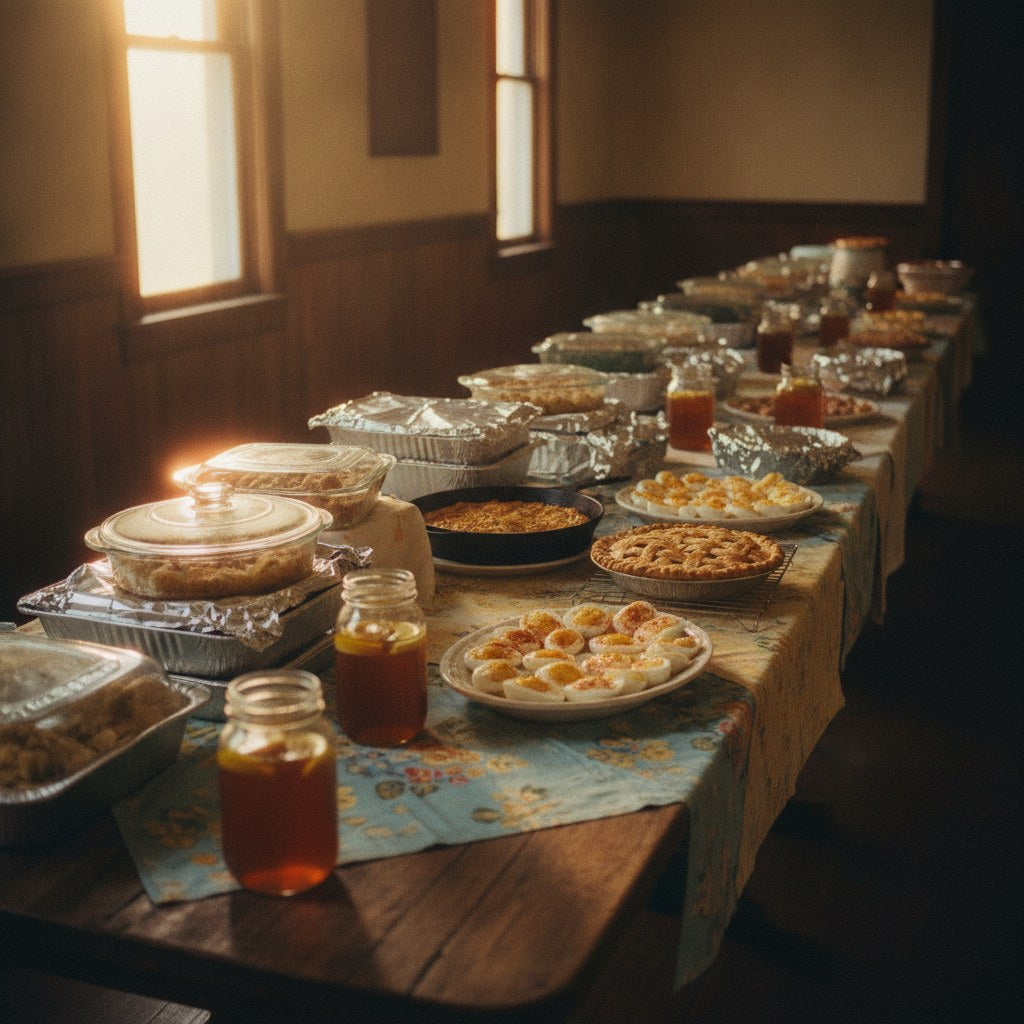
The Unwritten Rules of the Southern Potluck: What Every Bread of Life Fellowship Church Member Already Knows
Nobody at the bread of life fellowship church ever handed you a rulebook. There isn't one. But show up to the fellowship hall with a bucket of store-bought fried chicken and a two-liter of off-brand cola, and you will feel the silence before you even set it down on the table. The rules are real. They are simply communicated through decades of casserole dish side-eye and the particular way Sister Marlene says, "Well, isn't that convenient."
Here's the honest truth about the Southern potluck: it is a social institution with more structure than most people give it credit for, and that structure is what makes it work. The counterargument — that potlucks are casual, low-pressure, bring-whatever affairs — is technically true in the letter and completely wrong in the spirit. The whole thing functions because people take it seriously without ever admitting they do. Once you understand the logic underneath it, the rules stop feeling arbitrary and start feeling like exactly what they are: a community holding itself together one covered dish at a time.

The Fellowship Church Potluck Has a Hierarchy, and Everybody Knows Their Rank
Every fellowship church potluck runs on an unspoken assignment system. Nobody coordinates it out loud. It self-organizes, the same way every time, because everyone has been doing this long enough to know their place in the order.
The women who have been attending the longest bring the anchor dishes — the things the meal is built around. The slow-cooked green beans with ham hock. The chicken and dumplings that require a Dutch oven the size of a small tire. The macaroni and cheese that has been made the same way since 1987 and will not be changed. These women do not ask if they should bring these things. They simply show up with them, because they always have, and the meal would feel wrong without them.
Newer members — say, anyone who has been attending less than three years — bring the supporting cast. Rolls. A vegetable side. A fruit salad that nobody will touch but everyone appreciates being there. This is not a slight. It's an apprenticeship. You're learning the ecosystem before you stake a claim in it.
The men, in most fellowships, bring the drinks and sometimes a dessert their wife made and handed to them in the parking lot. This is fine. Everyone knows it. Nobody says anything.
- Anchor dishes: earned by tenure, not volunteered by newcomers
- Desserts: the one category where ambition is always welcome
- Drinks: typically the domain of whoever was asked last-minute
- Paper goods: the deacon's wife has already handled it, don't bring duplicates
Why You Never Bring Store-Bought to a Fellowship Church Meal
This is the rule people push back on most, and I understand why. It sounds like snobbery. It sounds like the kind of thing that excludes people who are busy, or who can't cook, or who are going through something hard. And here's where I'll concede the counterargument honestly: there are absolutely situations where store-bought is not just acceptable but kind. A family in crisis. A new mother. Someone who just lost a job or a spouse. In those cases, showing up at all is the thing that matters, and nobody with any sense is going to dock you for the Kroger label on the pie.
But that's the exception, and it proves the rule rather than replacing it. The reason store-bought carries a stigma in the fellowship hall isn't about food quality. It's about what the potluck actually is. A potluck is not a catered event where the goal is adequate food. It's an act of care made visible. When you cook something and carry it through the door, you are saying: I spent time on this. I thought about what people here would like. I put my hands into it. That's the currency of the whole transaction, and a shrink-wrapped rotisserie chicken doesn't spend the same way, no matter how good it tastes.
If you genuinely cannot cook, bake something simple and make it yourself. A box of brownies you actually baked is worth more than a bakery cake you bought, because the effort is what's being offered. This is not a hard line — it's a soft one. But it's real.
◆ From the Workshop: Temperature matters more than most people realize, and not just in the kitchen. When you're gluing a wood joint in a cold shop — anything below 50°F — most PVA wood glues won't just set slowly, they may never fully cure at all. The joint can feel solid by morning and then peel apart under stress a week later because the adhesive never properly polymerized. Old furniture makers kept a thermometer nailed right to the glue shelf, not the wall, because the wall temperature and the workbench temperature in a drafty shop can differ by ten degrees, and the joint doesn't care what the wall says. Getting the conditions right is the whole job — in the shop and, it turns out, at the potluck table.
Frequently Asked Questions
What should I bring to a potluck if I'm a new member of a church or fellowship?
Bring a dessert your first two or three times — it's the lowest-stakes category and the least likely to step on someone's signature dish. A good pound cake or a pan of brownies signals that you showed up prepared without claiming territory you haven't earned yet. Once you've been around long enough to know who owns what (the mac and cheese, the green beans, the chess pie), you can start staking your own claim.
How do you keep a casserole hot during transport to a church fellowship meal?
Wrap the dish tightly in foil, then wrap the whole thing in a thick bath towel and set it in a laundry basket or cardboard box to hold the heat. It'll stay hot for 45 minutes to an hour that way. If you're traveling more than 30 minutes, consider undercooking it slightly at home and finishing it in the church kitchen oven — most fellowship halls have at least one working oven and someone who knows where the mitts are.
Is it rude to ask what someone is bringing before a potluck so there are no duplicates?
Not rude at all — it's actually considered responsible organizing in most church circles. The politely Southern way to do it is to frame it as a question about what they make best rather than a coordination exercise: 'Are you thinking about bringing your potato salad?' gives them an out if they were planning something else. A group text or a simple sign-up sheet on the church bulletin board handles it without any awkwardness.

Who Sets Up, Who Serves, and Who Gets to Eat First
Setup at a fellowship church potluck is not random. The church-basement folding tables get arranged by the same two or three people every single time, because they know where the electrical outlets are, which table has the wobbly leg, and how to angle the dessert table so it doesn't create a traffic jam in front of the kitchen door. Do not rearrange their work. They have thought about this more than you have.
Serving order is where the real grace of the Southern potluck lives. The elderly go first. Always. This is non-negotiable and requires no announcement, because everyone simply steps aside when Miss Loretta picks up her plate. After that, it's children, then the general congregation, then the people who cooked — who will spend the first ten minutes of their own meal being told how good everything is and deflecting compliments with practiced humility.
The person who cooked the most does not eat first. They eat last and they eat standing up, usually near the kitchen, because someone always needs something and they are the one who knows where it is. This is the quiet tax on competence, and they pay it without complaint because they have been paying it for years and they would not have it any other way.
We wrote about how this same spirit of unspoken hosting order shows up in Southern homes more broadly — the unwritten rules of Southern hospitality run deeper than most people from outside the region expect, and the potluck is just one expression of a much older instinct.
The Dishes That Define a Community and the Ones That Start Arguments
Every fellowship has its contested categories. Potato salad is the most dangerous. There are mustard-based camps and mayonnaise-based camps, and they have been at a low-grade cold war since before most current members were born. Nobody argues out loud. The argument happens entirely in the way people do or don't take a second helping.
Sweet tea is its own category of seriousness. If you are responsible for the tea and you make it wrong — too weak, not sweet enough, or God forbid served without ice — you will be quietly relieved of that duty before the next gathering. Nobody will say why. You will simply notice that someone else brought the tea.
The dishes that define a community are the ones with a story attached. The coconut cake that came from someone's grandmother's handwritten recipe card. The Brunswick stew that only gets made in the fall. The chess pie that has been at every funeral, every homecoming, and every fifth-Sunday dinner for forty years. These dishes are not just food. They are the fellowship's memory made edible, and treating them casually is a mistake.
If you want to understand what a community values, look at what it puts on the potluck table. The kitchen is where a lot of that identity lives — which is something we've thought about in our piece on why the kitchen has always been the heart of the home, and it holds just as true in a fellowship hall as it does in a farmhouse.
The Practical Upshot: How to Show Up Right
Here's what all of this adds up to, practically speaking. If you're new to a fellowship church community and you want to earn your place at the table — literally and figuratively — these are the things that matter.
- Cook something. Anything. Make it yourself, even if it's simple.
- Bring enough for the whole room, not just your family plus a few extra.
- Label your dish if it contains common allergens. This is newer than the other rules but it's now part of the code.
- Don't hover over your dish waiting for compliments. Set it down and walk away.
- Stay to help clean up. The people who stay to fold the tables and wash the serving spoons are the ones who get remembered.
- Bring your dish in something you don't need back immediately — chasing down your casserole dish at the end of the night is awkward for everyone.
The fellowship church potluck is not complicated once you understand what it actually is. It's not about the food, exactly. It's about the act of showing up prepared, contributing something of yourself, and making the people around you feel fed in more than one sense of the word. The food is just the medium.
The kitchens that produce these meals tend to have a certain character to them — warm, a little worn, full of things that mean something. If your kitchen wall could use a little of that same personality, our kitchen signs collection runs the full range from deadpan funny to genuinely warm. And if you want something specific — the kind of sign that says the kitchen has opinions and isn't shy about them — this carved hardwood kitchen sign tends to resonate with anyone who has ever defended their potato salad recipe.
The meal ends. The tables get folded. Someone finds a serving spoon that doesn't belong to anyone and puts it in the lost-and-found box that has been sitting on the same shelf since 2003. And next time, everyone shows up and does it again, without being asked, because that's what the community decided it was going to be. That's the whole rule, really. The rest is just detail.
Share:
Funny Grandparent Quotes and the Unwritten Rules Every Grandparent Eventually Learns | Bluegrass Gifts
The Guest Bathroom: What Your Kitchen and Bathroom Design Says the Moment Company Walks In | Bluegrass Gifts