

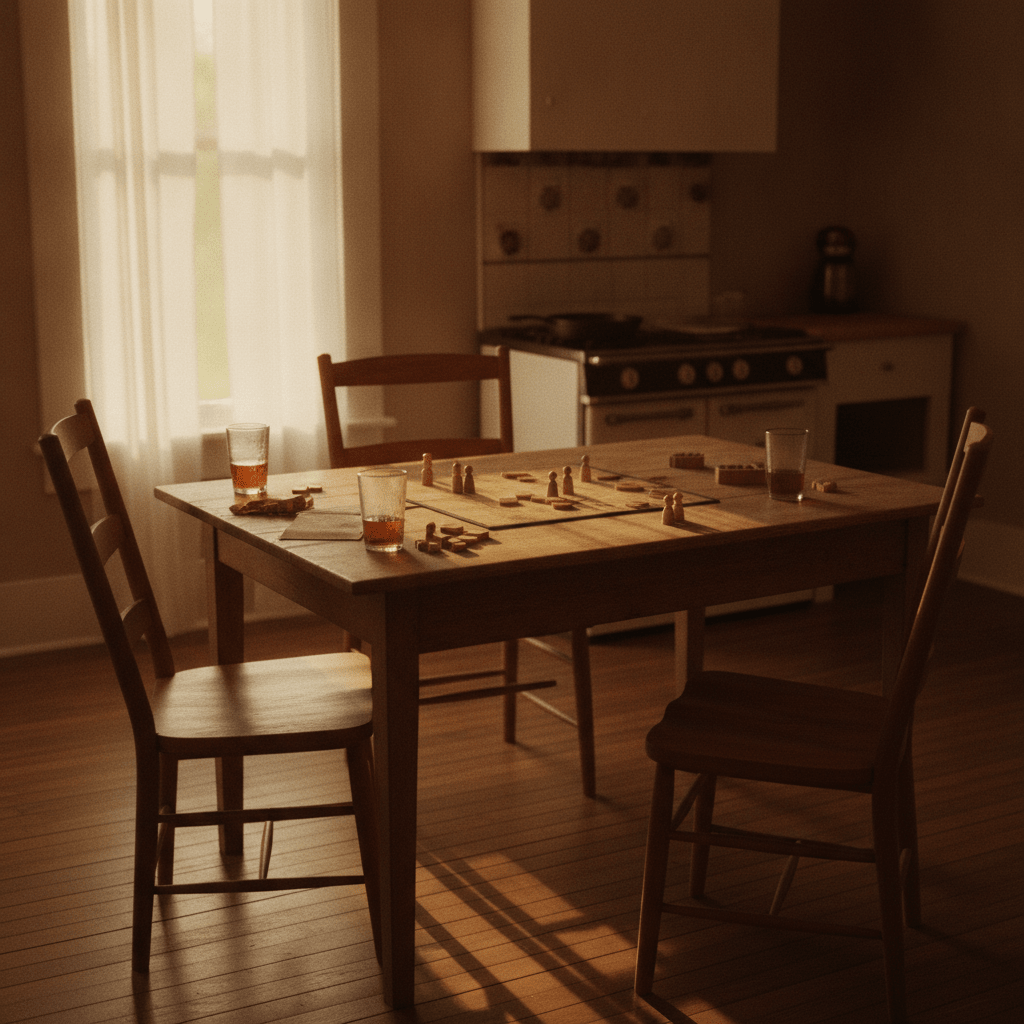
Sibling Fighting Was Never Just Fighting
You called your brother a name over a board game. Your sister told your parents something she absolutely was not supposed to tell. You fought over the remote, the last biscuit, the front seat, the bathroom, the thermostat, and at least one thing so minor neither of you can remember what it was. Sibling fighting, in other words, was basically your full-time job from ages four to seventeen.
Here's what nobody told you at the time: you were in training.
The research on sibling relationships has gotten surprisingly rich over the last two decades, and the picture it paints is not what most parents hoped for when they were separating kids across the backseat. All that conflict — the negotiating, the losing, the scheming, the grudging apologies — was doing something real. It was building a person.

What Sibling Fighting Actually Teaches Your Brain
Siblings are the only relationship most of us have where we can be genuinely awful to someone and still see them at dinner. That's not a small thing. It means the stakes are real but the relationship is essentially indestructible, which creates a very specific kind of learning environment.
Psychologists call it the sibling dynamic for a reason — it's its own category. Here's what the science says it actually develops:
- Emotional regulation. You had to learn to come down from a full boil, because the alternative was getting grounded. That's not a small skill. Adults who struggle to regulate emotion in the workplace often didn't have enough practice doing it somewhere safe first.
- Theory of mind. Knowing what your sibling was thinking — so you could outmaneuver them, or occasionally comfort them — required you to model another person's internal state. That's the same cognitive tool that makes someone good at reading a room as an adult.
- Conflict repair. Most sibling fights end. You figured out, without a manual, how to move from screaming to watching TV together in the same afternoon. That's a skill most workplaces desperately need more of.
- Negotiation under pressure. You wanted the window seat. They wanted the window seat. Mom was not going to solve it. You had to work something out. That's a negotiation, and you ran dozens of them before you were ten.
None of this required the fights to be pleasant. It just required them to be real.
The Specific Skills That Show Up Decades Later
Ask a therapist what they notice about clients who grew up with siblings, and a few themes repeat. People with siblings tend to be faster at reading social tension. They're more comfortable with imperfect resolutions — the kind where nobody fully wins but everyone moves on. They're also, on average, more likely to apologize without being asked, because they had so much practice doing it as kids that it lost most of its sting.
Sibling fighting also builds something that's harder to name but easy to recognize: a tolerance for being wrong. You were wrong in front of someone who knew you well and would remember it. You survived. That experience — being fully seen in a bad moment and coming out the other side — is part of what makes some people genuinely unafraid of failure later in life.
There's a reason family dinner table research consistently shows that kids who grow up in homes with regular, messy, honest family interaction tend to develop stronger social intelligence. Siblings are a big part of that equation.
◆ From the Workshop: When finishing bare wood with a water-based stain, softwoods like pine and alder will blotch badly — certain patches drink the stain fast and go dark while the rest stays pale, because the grain density is wildly uneven. The fix is a pre-stain conditioner, a thin sealer that partially closes the thirsty spots so the color absorbs more evenly across the whole surface. Skip it on pine and you'll spend an hour staining and five minutes regretting it. Some prep work just isn't optional.
Frequently Asked Questions
Is there a difference in how sibling conflict affects older versus younger siblings?
Yes, and it's more nuanced than most people expect. Older siblings tend to develop stronger leadership and negotiation instincts from sibling conflict because they're usually the ones expected to 'handle it' by parents. Younger siblings, on the other hand, often develop faster social reading skills — they learned early to anticipate moods, find angles, and work around a bigger opponent. Both skill sets are genuinely useful in adult life, just in different arenas.
At what point does normal sibling conflict cross into something that needs intervention?
Researchers draw the line at aggression that's consistent, one-sided, and leaves one child feeling genuinely unsafe — that pattern is closer to bullying than healthy conflict. Normal sibling fighting tends to be mutual, episodic, and followed by a return to baseline. If one child is always the target and never the initiator, or if the conflict involves real fear rather than frustration, that's worth a conversation with a family counselor.
Do only-children miss out on these conflict-based skills, or do they develop them elsewhere?
Only-children aren't at a disadvantage so much as they develop the same skills through different channels — close friendships, cousins, team sports, and school group dynamics. The research on only-children actually shows they tend to score higher on self-regulation in some studies, possibly because they had more adult interaction and less low-stakes chaos to navigate. The skills aren't exclusive to siblings; siblings are just one very efficient, very loud way to get there.

Why the Hard Moments Are the Ones That Stick
Memory is selective in a very specific way: it keeps the intense stuff. The afternoon you two built a fort together fades. The afternoon one of you said something genuinely cutting — and then had to figure out how to come back from it — that one stays. Not because it was traumatic, but because it required something from you.
Neuroscience has a term for this: emotionally tagged memories consolidate faster and deeper. The fights you had with your sibling weren't just unpleasant — they were the moments your brain decided were worth keeping. And what it kept, along with the sting, was the resolution. The pattern of rupture and repair, repeated over years, becomes a kind of emotional muscle memory.
This is why adults who grew up with siblings often describe their relationship in terms that sound almost paradoxical. They'll say things like "we fought constantly and I'd do anything for her" in the same breath, without noticing the tension. There's no tension, actually. The fighting was part of how the bond got built.
That's the thing about sibling relationships — they're one of the few places in life where conflict and love aren't opposites. They're ingredients. The way families hold onto each other over decades almost always has a few good arguments woven into the fabric of it.
Sibling Fighting Grown Up: What It Looks Like Now
The skills don't disappear when you leave home. They just change context. The person at work who can de-escalate a tense meeting without making anyone feel dismissed — there's a decent chance they spent years negotiating with a sibling who had a very different personality and the same amount of stubbornness.
The friend who knows exactly when to push back and when to let something go. The partner who can fight fair, say sorry, and mean it. The manager who doesn't fold under pressure but also doesn't bulldoze. These aren't personality traits people are born with. They're practiced skills, and a lot of that practice happened in a shared bedroom with someone who borrowed things without asking.
None of this means sibling relationships are easy, or that every fight was healthy, or that the hard parts should be minimized. It means that the ordinary chaos of growing up alongside someone — the rivalry, the irritation, the loyalty, the weird shorthand only the two of you understand — was doing more work than it looked like at the time.
If you want something on the wall that says the quiet part out loud, a carved solid-wood sibling sign has a way of landing exactly right — the kind of gift that makes someone laugh and then go a little quiet. And if you're browsing for the right words, the full sibling signs collection is where we keep the ones that say what's hard to say out loud. We make them out of real wood, here in Kentucky, because some things are worth making to last.
You and your sibling fought. You figured it out. You're both better for it, even if neither of you will ever fully admit that to the other's face — which is, honestly, exactly how it should be.
Share:
Why Cooking Together as a Couple Is the Secret to a Stronger Marriage | Bluegrass Gifts
Why Is the Bathroom the Funniest Room in the House? The Real Psychology Behind Bathroom Sign Humor | Bluegrass Gifts