
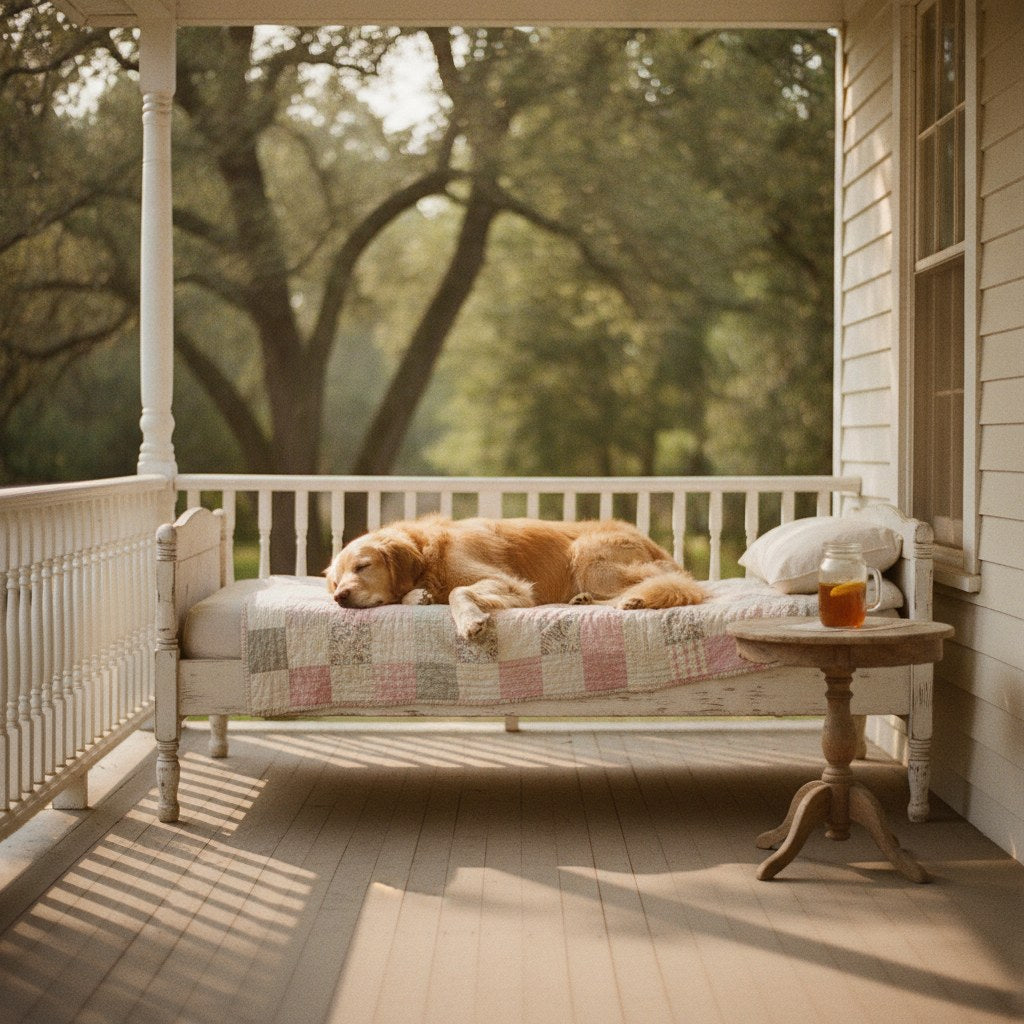
How Much Do Dogs Sleep, and Why Does It Look Like a Full-Time Job?
Your dog is asleep again. Same couch, same position, same expression of absolute zero concern for anything happening in the world. You've been up since six, you've answered forty emails, and he hasn't moved since breakfast. The question of how much do dogs sleep sounds almost too simple — but the answer is legitimately interesting, and it says something real about what dogs are and how they work.
Adult dogs sleep somewhere between twelve and fourteen hours a day on average, according to the American Kennel Club. Puppies and senior dogs push that closer to eighteen or twenty. That's not laziness. That's biology doing exactly what it was built to do.
The claim I'd stake here: most people underestimate how much dogs sleep because they feel guilty about it, when they should just be curious about it. Your dog isn't broken. He's running a system that's been optimized over thousands of years, and it runs on a lot of downtime.

Why Dogs Sleep So Differently From the Way We Do
Here's where it gets interesting. Dogs sleep a lot, but they don't sleep the way we do. Humans run on a single long sleep cycle — roughly ninety minutes of light sleep, deep sleep, and REM cycling through the night. Dogs sleep in short, fragmented bursts. They drop in and out of sleep quickly, which is why your dog can be unconscious on the floor and then standing at the door barking thirty seconds later.
This is a holdover from their pre-domestic ancestors, who needed to be alert to threats even while resting. The nervous system learned to sleep lightly and often rather than deeply and long. The result is a dog who logs fourteen hours of sleep but is genuinely ready to sprint at any moment during most of them.
Dogs do reach REM sleep — the deep, dreaming stage — but they get there faster than we do and spend less total time there. When you see your dog's legs paddling and his eyes moving under closed lids, that's REM. That's when memory consolidation happens, when the brain sorts the day's experiences into long-term storage. The squirrel from this morning is being filed right now.
There's a companion piece on the blog about what happens when you can't sleep — being exhausted but wide awake — and reading it alongside this one is a little humbling. Your dog's sleep architecture is, by most measures, more efficient than yours.
What Dogs Sleep Cycles Actually Accomplish
Sleep isn't rest in the passive sense. It's maintenance. During sleep, dogs (like all mammals) consolidate memories, regulate hormones, repair tissue, and run immune system processes that can't happen efficiently while the body is active. A dog who doesn't get enough sleep shows it — irritability, slower learning, reduced coordination, increased anxiety. The research on sleep deprivation in dogs mirrors what we know about sleep deprivation in humans pretty closely.
What's specific to dogs is how much their sleep needs vary by breed and body size. Larger breeds tend to sleep more than smaller ones. Working breeds — herding dogs, hunting dogs — often sleep less during active periods and crash hard afterward. Brachycephalic breeds (bulldogs, pugs, anything with a smooshed face) can have disrupted sleep due to breathing issues, which is worth knowing if your dog snores loud enough to rattle the windows.
- Puppies: 18-20 hours — their brains are developing at a rate that demands it
- Adult dogs: 12-14 hours — the baseline for a healthy, active dog
- Senior dogs: 16-18 hours — slower metabolism, more recovery needed
- Large working breeds after a hard day: they will sleep wherever they land
◆ From the Workshop: When you're jointing a long edge and the plane keeps taking a deeper bite at the start and skating off the end, the culprit is almost always your grip. Old hand-tool teachers fixed it with a simple drill: start the stroke with deliberate downward pressure on the toe, shift it to the heel as you pass the midpoint, and suddenly the plane stops diving and surfing and starts cutting level. It feels theatrical the first few times, but your edges will come out straight without ever touching a straightedge to check.
Frequently Asked Questions
Should I wake my dog up if he's twitching or whimpering in his sleep?
Most veterinary behaviorists recommend letting sleeping dogs lie — literally. Twitching and whimpering during sleep are signs of active REM dreaming, and waking a dog mid-REM can cause a startle response that's disorienting and occasionally leads to a reflexive snap, even in the gentlest dogs. If the episode lasts more than a minute or two, or the dog seems unable to wake himself, that's worth a vet call. But a few seconds of leg-paddling? Let him finish the rabbit chase.
Do dogs dream about their owners specifically, or just general activity?
Research from MIT and Harvard (studying rats first, then extrapolated to dogs by Matthew Wilson and Kenway Louie) suggests animals replay specific experiences during REM sleep — not just generic 'running' but the actual route, the actual smells. Dog brains are structurally similar enough that most animal sleep researchers believe dogs dream about specific people and specific events, not abstract scenarios. Your dog probably does dream about you. That's either sweet or mildly alarming depending on what you've been up to.
Can a dog sleep too much — and when is it actually a health warning sign?
Yes, though the threshold is higher than most owners think. A sudden increase in sleep — especially paired with reduced appetite, difficulty waking, or disinterest in things the dog normally loves — can signal hypothyroidism, anemia, infection, or pain. The key word is 'sudden.' A dog who has always slept 14 hours a day is probably fine. A dog who slept 10 hours last month and now sleeps 16 is worth a vet visit. Tracking your dog's baseline sleep over a few weeks gives you a useful reference point before anything changes.

How Dogs Sleep Changes Based on Their Environment
Here's the counterargument worth taking seriously: some people look at a dog sleeping fourteen hours a day and conclude the dog is bored, understimulated, or depressed — and sometimes they're right. Boredom and depression in dogs do manifest as increased sleep. So does chronic pain. So does hypothyroidism. The sleep itself isn't the problem; it's whether it's the dog's baseline or a departure from it.
The honest dismantling of that concern is this: context matters more than the number. A dog who gets a good walk, eats well, greets you at the door, and then sleeps for six hours straight is a dog whose body is doing exactly what it should. A dog who sleeps through the walk, skips the greeting, and seems impossible to rouse is a different conversation. Know your dog's normal. The number is less important than the pattern.
Environment shapes dogs sleep in other ways too. Dogs are social sleepers by nature — they sync their activity cycles to the people around them. If you work from home, your dog probably sleeps more during your focused work hours and wakes when you move around. If you leave for eight hours, he likely sleeps most of it. This isn't depression; it's adaptation. Dogs are extraordinarily good at reading the rhythm of a household and matching it.
We wrote a piece about how dogs express love through following and presence that gets at this same idea from a different angle — the sleep syncing is part of the same attachment behavior. Your dog isn't just sleeping near you. He's orienting his whole day around you.
What Dogs Sleep Tells You About the Dog You Have
There's a practical upshot to all of this. If you understand why dogs sleep the way they do, you stop fighting it and start working with it. You don't guilt-trip yourself for leaving a dog who's going to sleep most of the time you're gone anyway. You don't wake a dreaming dog because it looks alarming. You notice when the pattern shifts, because that's the actual signal worth paying attention to.
You also start to appreciate what the sleeping dog in the corner of the room actually represents. A dog who sleeps deeply, comfortably, in your house is a dog who feels safe. That's not nothing. That's the whole point of having a home that feels like one.
If you're the kind of person who thinks about that — who wants the house to say something about the people and animals who live in it — our pet signs collection is full of carved hardwood pieces that do exactly that. And if you want something specific, this carved dog hair welcome sign says the quiet part out loud in the best possible way. We make them here in Kentucky, on real hardwood, and they hold up about as well as the dogs they're made for.
Your dog is asleep on the couch right now, probably. He's fine. He's actually doing something. Let him finish.
Share:
Top 7 Teacher Retirement Presents (Rated by Actual Usefulness)
Top 7 Teacher Retirement Presents (Rated by Actual Usefulness)