

What Does Blessed Mean? How One Word Went From the Sermon to the Kitchen Wall
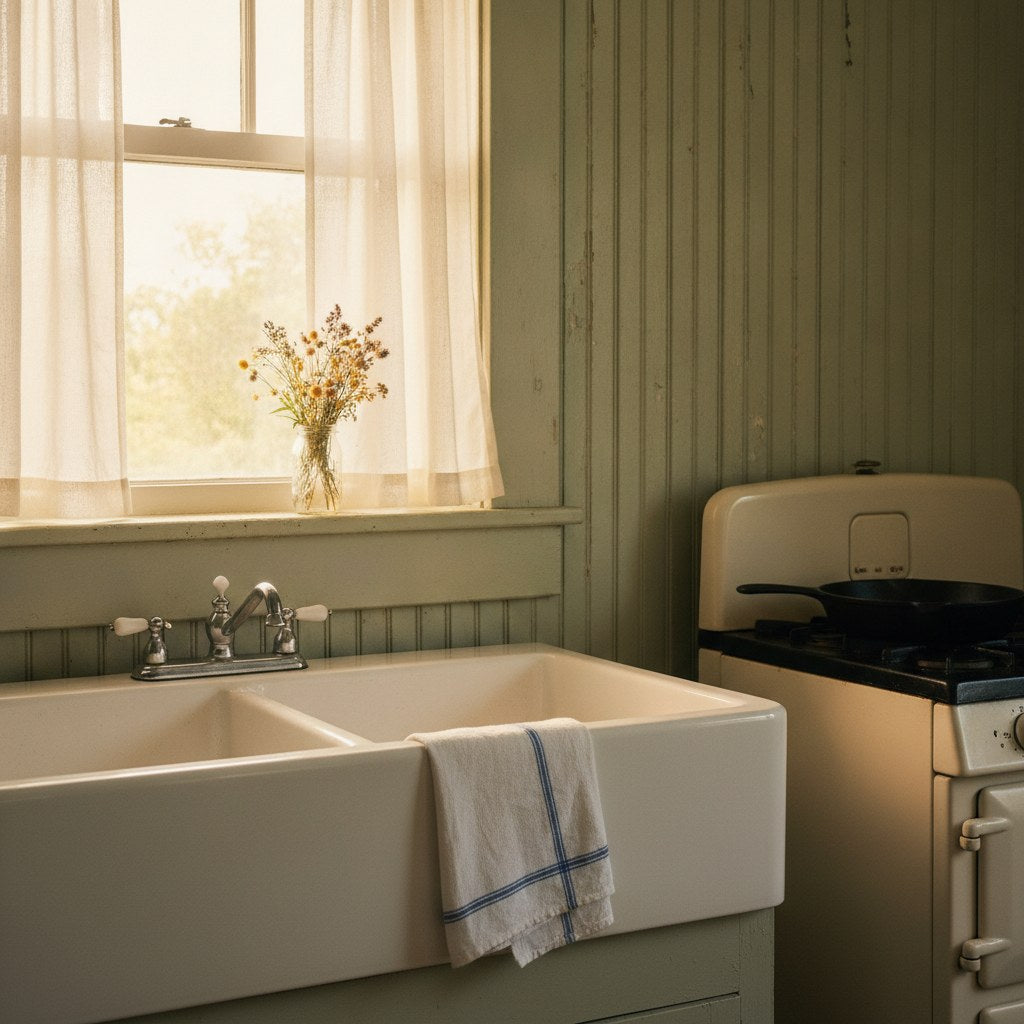
My grandmother kept a small wooden plaque above her kitchen sink for as long as I can remember. It said one word: Blessed. She never explained it. It wasn't decorative to her — it was a statement of fact, the same way a thermometer is a statement of fact. She'd lost a husband young, raised four kids on a schoolteacher's salary, and still set an extra place at the table on Sundays in case someone showed up hungry. That plaque wasn't aspirational. It was a reckoning.
So when I started seeing the word everywhere — on shiplap gallery walls, in Instagram captions next to vacation photos, on throw pillows at TJ Maxx — I found myself wondering what we actually mean when we say it. Understanding what does blessed mean requires going back further than Pinterest, further than church bulletins, further than the King James Bible. The word has been working for a long time. It deserves a fair look.

What Does Blessed Mean in Its Oldest Roots — and Why That Still Matters
The English word comes from the Old English blēdsian or blētsian, which most etymologists trace to blōd — blood. Early Germanic and Anglo-Saxon religious rites involved consecrating something by marking it with blood, making it holy, setting it apart. To bless something was to sanctify it through sacrifice. That's a long way from a hashtag.
In the Hebrew scriptures, the word most often translated as blessed is asher — sometimes rendered as happy, but closer in meaning to something like on the right path or walking rightly. It's the word that opens Psalm 1: Ashrei ha'ish — blessed is the man who does not walk in the counsel of the wicked. The Greek New Testament uses makarios in the Beatitudes, which carries a similar weight: not just happy, not just lucky, but flourishing in the deepest sense — aligned with something true.
None of those words mean things are going well right now. They describe a condition of the soul, not a condition of the bank account. That distinction is worth holding onto.
What Does Blessed Mean When the Sermon Becomes a Sign — and Does That Make It Shallow?
Here's where I'm willing to be disagreed with: I don't think putting blessed on a kitchen wall automatically drains it of meaning. I think it depends entirely on who hung it there and why.
Words move. They always have. Awful once meant full of awe — worthy of reverence. Nice came from the Latin nescius, meaning ignorant. Language doesn't stay in one place, and treating etymology as a purity test is its own kind of snobbery. The question isn't whether the word has drifted. It has. The question is whether the person using it is letting it do real work or just filling wall space.
There's a version of blessed that's essentially a humble brag dressed in scripture clothes. We've all seen it. That version probably does water things down. But there's another version — the one my grandmother meant — where the word is a daily act of accounting. Where it means: I have been given more than I earned, and I know it. That version still has teeth.
If you're curious how gratitude language actually functions in everyday spaces, we explored that territory in a piece on gratitude sayings and the words you see daily — it goes somewhere unexpected.
◆ From the Workshop: When you're driving a mortise chisel through dense hardwood and the handle starts to feel spongy under the mallet, the wood is telling you the handle is about to fail — not the blade. Traditional mortise chisel handles are made from hornbeam or boxwood and bound with a steel ferrule at the top specifically because they take thousands of direct mallet blows; a handle without that ferrule will mushroom and split from the top down within a season of heavy use. Old joiners inspected the ferrule before the iron, because a loose ferrule is a handle on its way out, and a handle on its way out takes your accuracy with it.
Frequently Asked Questions
Is there a difference between 'blessèd' (two syllables) and 'blessed' (one syllable) in religious texts?
Yes, and it's not just poetic flourish. In older liturgical English, 'blessèd' (two syllables) was typically reserved for divine or sacred contexts — 'the blessèd Virgin,' 'blessèd are the meek' — while 'blessed' (one syllable) functioned as an everyday past tense: 'she blessed the meal.' The distinction has largely collapsed in modern speech, but in formal church settings and older hymns, you'll still hear the two-syllable form used deliberately to signal reverence rather than routine.
What's the difference between 'blessed' and 'fortunate' — aren't they basically the same thing?
Philosophically, no, and the difference matters. 'Fortunate' is about luck — circumstances that happened to land in your favor. 'Blessed,' in its theological sense, implies a relationship: something was given to you by a source that intended it for you. That's why the Beatitudes don't say 'fortunate are the peacemakers' — the word choice is doing real work. The secular drift of 'blessed' has blurred this line, which is part of what makes the word feel hollow to some people today.
If someone isn't religious, can they still use the word 'blessed' meaningfully?
Most linguists and ethicists would say yes. Language evolves, and words carry meaning through use and intention, not just etymology. If 'blessed' communicates genuine, deep gratitude — the kind that acknowledges something beyond your own effort — it's doing real work regardless of whether the speaker frames it theologically. Where it gets thin is when it's used as a synonym for 'lucky' or 'doing well,' with no weight behind it at all. The word can survive secularization; what it can't survive is being used as filler.

What Blessed Can Mean in a House That's Actually Lived In
The Beatitudes — the passage most people associate with the word — are not a list of comfortable people. Blessed are the poor in spirit. Blessed are those who mourn. Blessed are the meek. That's not a prosperity gospel. That's a direct challenge to the idea that blessed mean things are going smoothly.
Which is maybe why the word lands differently when it's hung in a house with real history in it. A home that's seen illness, job loss, a child who struggled, a marriage that had to be rebuilt — that's a different context than a brand-new build with staged furniture. The word doesn't mean the same thing in both places, even if the sign looks identical.
We wrote something adjacent to this when we looked at the theology behind what "bless this mess" actually means — because that phrase is doing something more interesting than it first appears, too.
The honest answer to what does blessed mean in a home context is probably this: it means whatever the person who hung it is willing to back up with how they actually live. A sign doesn't make a claim. The people inside the house do.
The Object as Artifact: Why the Word Belongs on Something That Lasts
Here's where I land on this, for what it's worth.
If blessed mean anything real — if it's a word about being set apart, consecrated, marked by something beyond your own effort — then it probably belongs on something that was made with some care. Not printed on paper. Not ironed onto a dish towel. Something that took time to make and will outlast the trend cycle.
Wood has been the material of sacred objects for a long time. Not because it's pretty, but because it ages honestly. It shows the years. It doesn't pretend. A carved hardwood sign with that word on it is, in a small way, making the same argument the word makes: this is meant to last.
We carve signs out of solid hardwood here in Kentucky, and the ones that feel most right to me are the ones that carry words people actually mean. If blessed is one of those words for you, a rustic carved wood blessing sign made from real material is a different thing than a piece of mass-produced wall art — it's a decision, not a decoration.
And if you want to see more of what that looks like across a range of faith-based pieces, our religious signs collection is where those words live — the ones people hang because they mean them.
My grandmother's plaque was nothing fancy. Painted wood, probably from a church craft fair. It's gone now, along with the house and the kitchen and the woman who stood at that sink. But I remember exactly what it said and exactly where it hung. That's the thing about words that carry weight — they stay. The wall they're on doesn't matter much. Whether you meant it does.
Share:
The History of the Toast for Drinking: Why We Clink Glasses and Say Cheers | Bluegrass Gifts
Hearts and Home: The Surprisingly Personal History of Kitchen Wall Decor