

The Theology of the Messy House: Theology and the Body Behind 'Bless This Mess'
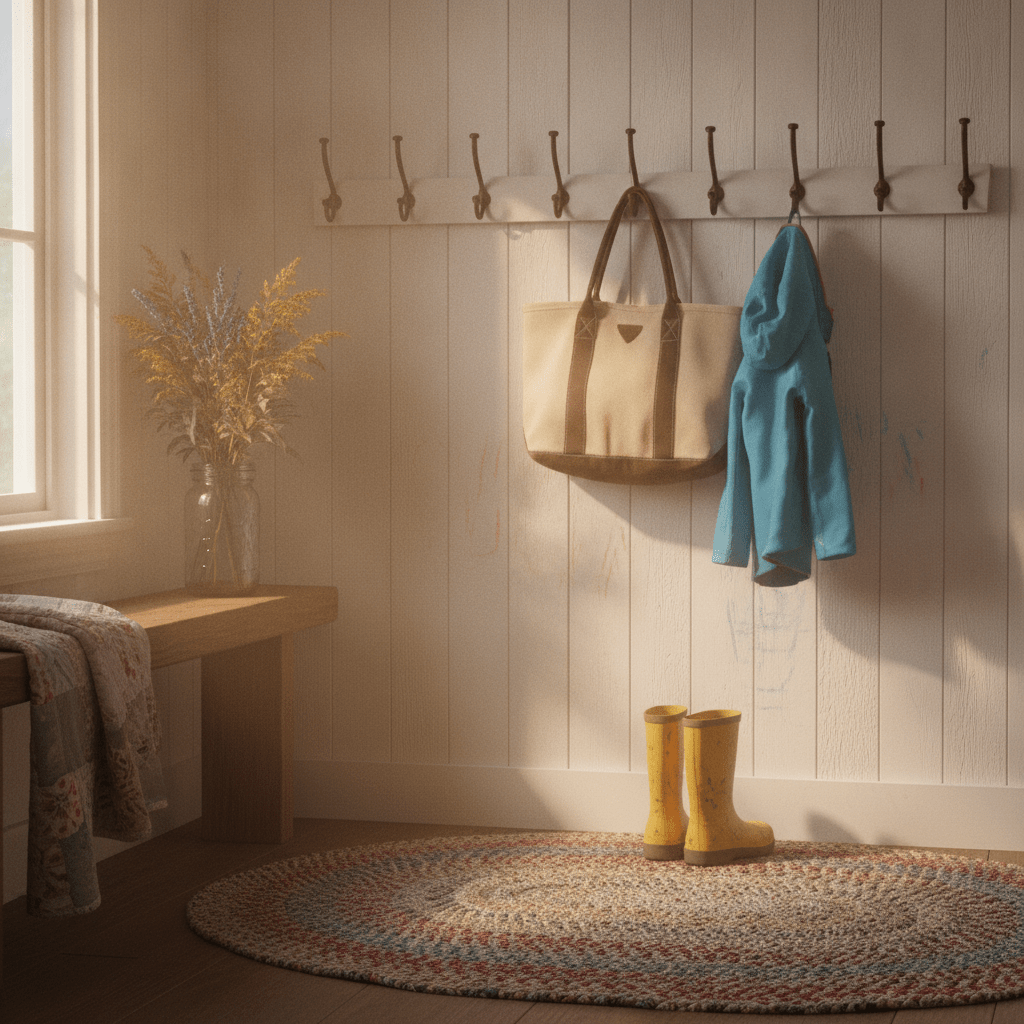
The theology body connection in your house is probably hanging on the wall right now, and you walk past it every morning without thinking twice. "Bless This Mess" — three words, usually carved into wood or printed on a distressed board, tucked somewhere between the coat hooks and the crayon marks. You bought it because it was funny. Or relatable. Or because your sister had one. But there is something older and stranger underneath that phrase, and once you hear it, you won't be able to unhear it.
This is not a sermon. It's just the honest story of a saying that carries more weight than most people realize when they say it out loud.

The Theology Body Has Always Lived in the House, Not the Church
Christian theology has spent two thousand years arguing about where the sacred lives. High church traditions put it in the altar, the sacraments, the ordained space. But there is a parallel current — quieter, older in some ways — that insists the sacred is just as present in the kitchen as in the sanctuary. Theologians call it "domestic theology" or "lived religion." Regular people called it something simpler: they put a cross above the door and prayed before supper.
The theology body framework here is about embodied faith — the idea that belief isn't just intellectual agreement with a set of propositions. It's something you do with your hands, your house, your daily mess. When the Israelites were told to write God's commands on their doorposts, that was theology body in action. The sacred instruction made physical, made domestic, made impossible to ignore because you had to walk past it every single day.
"Bless This Mess" sits in that same tradition. It's not decoration. It's a doorpost.
What 'Bless' Actually Does When You Say It
Here's where it gets interesting. The word "bless" in English comes from the Old English bletsian, which itself comes from a Proto-Germanic root related to blood — specifically, the act of marking something with blood to consecrate it. Before it meant "to make happy" or "to approve of," blessing was a physical act of setting something apart. Making it holy by marking it.
When you say "bless this mess," you are — whether you know it or not — asking for something to be set apart. Not cleaned up. Not fixed. Set apart as it is. The mess included.
That is genuinely radical theology. Most religious language around the home is aspirational: "As for me and my house, we will serve the Lord." A declaration of intention. "Bless This Mess" is different. It's not a declaration of what you plan to do. It's a request for grace over what already exists. The Legos on the floor. The dishes. The permission slips you forgot to sign. All of it, offered up as-is.
There's a piece we wrote about what the bless-this-mess sign means in a family home that gets into the practical side of where and why people hang it — worth a look if you're thinking about placement and what you actually want the sign to say about your household.
◆ From the Workshop: When you're flattening the back of a new chisel on a sharpening stone, the temptation is to press hard and work fast — but the back only needs to be flat right at the very tip, maybe the first quarter-inch of steel. That small zone is the only part that ever touches the wood; the rest is just handle. Old toolmakers called it 'the cutting back,' and once you stop trying to flatten six inches of steel and focus on just that front edge, a ten-minute chore turns into a two-minute one. There's something in that for the mess, too: you don't have to bless the whole house at once. Just the part that's actually in front of you today.
Frequently Asked Questions
Are there specific rooms where a 'Bless This Mess' sign tends to carry more meaning — or is it purely decorative wherever it lands?
Placement actually shifts the tone. In an entryway, it reads as a gentle warning to guests and a permission slip for the family. In a playroom or kids' bedroom, it functions more like a parental exhale — an acknowledgment that chaos is the point right now. In a home office or kitchen, it edges closer to a genuine prayer. The words don't change, but the room gives them context the way a hymn sounds different in a cathedral than on a back porch.
Is 'Bless This Mess' language rooted in any particular Christian tradition, or is it more broadly folk-religious?
It's broadly folk-religious, which is actually what makes it interesting. The phrase doesn't map cleanly onto Catholic, Protestant, or Orthodox liturgy. It belongs to the same informal spiritual vernacular as 'Lord willing,' 'traveling mercies,' and 'I'll pray on it' — expressions that developed outside formal church structures in rural and working-class communities where faith was woven into daily domestic life rather than reserved for Sunday. Scholars of American religious history sometimes call this 'lived religion,' distinct from institutional theology.
How do you style a 'Bless This Mess' sign so it doesn't look like an afterthought on the wall?
Treat it the way you'd treat any piece of text art: give it breathing room. A sign with that much personality tends to get lost in a gallery wall and overpower a bare wall if it's too small. Medium size on a single focal surface — above a mudroom bench, centered on a kitchen backsplash wall, or alone on an entryway shiplap — lets the words land without competing. Natural wood tones read warmer than painted finishes in lived-in spaces, which suits the sentiment. We wrote a full styling guide for the bless-this-mess sign in a playroom context that covers scale and hardware if you want the specifics.

The Mess as Proof of Life
Here is something the minimalist home magazines will never tell you: an empty, perfectly ordered house is not a sign of spiritual health. It might be a sign of loneliness. Or control. Or that the children have grown and gone and you're still adjusting to the quiet.
The mess — the real, lived-in, crayon-on-the-baseboards mess — is evidence that people are present. That meals are being made. That someone is learning to walk, or paint, or cook without supervision for the first time. Theologically speaking, the mess is incarnational. It's the Word made flesh, made muddy boots, made half-eaten sandwiches on the counter.
The theology body tradition has always understood this. Saint Benedict's Rule, written in the sixth century for monastic communities, treated manual labor — sweeping, cooking, farming — as equal in spiritual value to prayer. Not lower than prayer. Equal to it. The body doing its daily work was the body praying. The mess made in the course of that work was not an obstacle to holiness. It was part of it.
If you want to go deeper on how faith language ends up woven into everyday domestic objects and sayings, the guide to creating a faith corner at home covers how people are doing this intentionally — not as performance, but as a way of making the ordinary sacred again.
Why We Hang the Sign Instead of Just Thinking the Thought
You could, theoretically, just hold the sentiment in your heart. Remind yourself mentally that grace covers the chaos. Nobody's stopping you. But there is something specific that happens when you put words on a wall, and it's not nothing.
Research in cognitive psychology suggests that environmental cues shape behavior and mood in ways that internal reminders often don't. Seeing a phrase repeatedly — especially in a space associated with stress, like a kitchen or an entryway — creates a kind of ambient permission structure. The sign does the work of the reminder so your brain doesn't have to. It's the same reason people put Bible verses on the refrigerator. The refrigerator gets more traffic than the prayer journal.
But there's also something older going on. Humans have always used physical objects to externalize the things they most need to remember. Mezuzot. Relics. Icons. Crosses above the bed. The object holds the intention when the person is too tired or distracted to hold it themselves. "Bless This Mess" is a small, funny, vernacular version of that same impulse.
The sign is doing theology body work whether or not the person who hung it would use those words.
What You're Actually Saying When You Mean It
So here is the full weight of it, assembled: when you hang "Bless This Mess" and actually mean it — not as a joke, not as an apology to guests, but as a genuine request — you are saying several things at once.
- You are asking for grace over the imperfect, as-is condition of your actual life.
- You are declaring that the people who make the mess are worth blessing.
- You are participating in a very long tradition of making faith physical, domestic, and impossible to ignore.
- You are refusing the lie that holiness requires order.
That is a lot of theology for three words on a piece of wood. But that's the thing about the best sayings — they carry more than they appear to.
If this is the kind of sign that belongs on your wall, the carved solid-wood Bless This Mess sign we make here in Kentucky is the one we'd point you toward — solid wood, built to last, and honest about what it's saying.
For everything in that same spirit — signs that say something real about faith and daily life — the religious signs collection is where we keep them. No prosperity gospel, no empty inspiration. Just words that mean something when you walk past them every day.
The mess will still be there tomorrow. Might as well bless it.
Share:
Funny Mugs Have a Weird, Wonderful History — And We're Here for It | Bluegrass Gifts
Bear Spirit Animal Meaning: Folklore, Science & Superstition Behind Wildlife Encounters | Bluegrass Gifts