
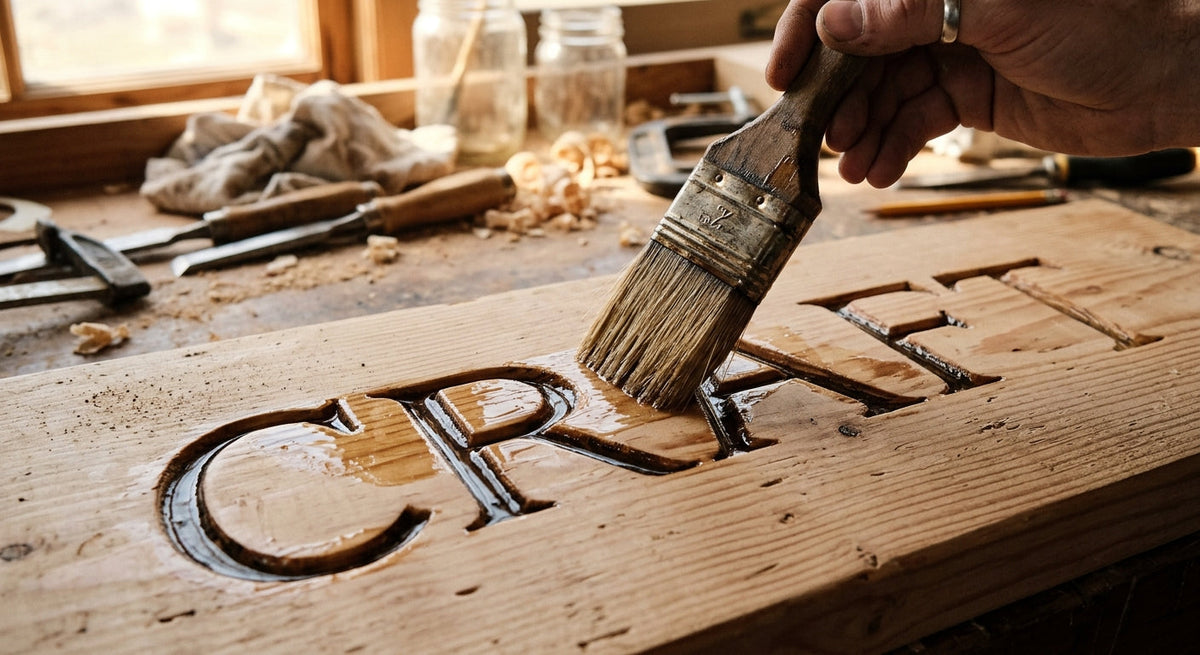

The best all-around finish for an outdoor wood sign is exterior spar urethane with UV inhibitors — three thin coats over every surface, including inside the carved lettering and across the end grain. Spar finishes stay slightly flexible, so they move with the wood through seasons instead of cracking the way interior polyurethane does. For lettering that must stay readable for years, exterior paint inside the carved letters under that clear topcoat is the most protective combination there is.
We finish signs for a living, and finishing is where outdoor signs are won or lost. Species matters — we cover that in our guide to the best wood for outdoor signs — but a well-finished pine sign under a porch roof will outlast a neglected oak sign in the open. Here's what works, what fails, and the process, honestly.
The three finishes that earn their keep
Spar urethane (exterior polyurethane). The workhorse. "Spar" comes from sailboat spars — these finishes were built to flex with wood that moves, and outdoor wood moves constantly. Modern spar urethanes add UV blockers, which matter as much as the water resistance: sunlight breaks down wood fibers at the surface, and it also breaks down finishes that lack inhibitors. Water-based versions stay clear; oil-based versions add a warm amber tone that flatters stained work and yellows painted white work. Expect to refresh a topcoat every two to three years in real exposure.
Penetrating exterior oil. Instead of building a film on top of the wood, oil finishes soak in and repel water from within the surface fibers. Their great virtue is graceful failure: when an oil finish wears, the wood just looks a little dry and you wipe on another coat — no sanding, no peeling. Their limit is that they protect less per application and want attention yearly. The right choice for someone who'd rather do ten easy minutes a year than a real refinishing job every few years.
Exterior paint. Nothing protects wood like paint — an opaque film that blocks water and virtually all UV. On carved signs the smart play is targeted: paint the carved lettering (which armors exactly the fresh-cut grooves weather attacks first), stain or paint the field, then clear-coat everything with spar for a unified surface. Full-paint signs are the longest-lived outdoor signs of all, which is why hundred-year-old painted farm signs still exist and clear-coated ones mostly don't.
What fails, so you don't have to learn it
Interior polyurethane is the classic mistake — it dries hard and brittle, and outdoor wood movement cracks it within a season or two; water then enters through the cracks and lifts the finish in sheets. Furniture wax and spray lacquer are surface cosmetics with no business outdoors. Plain linseed oil without exterior additives can feed mildew. And no finish at all is a choice too: bare cedar weathers to an even silver-grey that some people want — but bare pine or poplar outdoors doesn't weather gracefully, it just fails.

The process that makes any finish work
Finish quality is mostly preparation and coverage, not brand choice.
Sand to 150–180 grit and no finer — glass-smooth wood at 320 grit doesn't give finish enough tooth to grip. Vacuum the dust, especially out of carved lettering where it hides.
Coat every surface: both faces, all four edges, and — this is the one that separates signs that last — the end grain and the inside of every carved letter. Carving exposes fresh end grain in each groove, and end grain drinks water many times faster than face grain. A sign finished only on its front is a sponge with a nice face.
Thin coats beat thick ones. The first coat should soak in and look almost disappointing; it's the primer for the coats that build protection. Three thin coats with light scuffing between them outlast one heavy coat every time, because thick coats cure unevenly and crack first.
Let it cure, not just dry. Most exterior finishes are dry to the touch in hours and fully hardened in days to weeks. Hanging a sign into weather during the cure window shortens its life.
Then maintain on a schedule instead of on failure: a quick scuff and one refresh coat every couple of years costs twenty minutes; letting a finish fail through to grey wood costs a full strip-and-refinish. Southern and western exposures fail faster than northern ones; horizontal surfaces fail fastest of all, which is one reason signs should hang vertically and rain should be able to run off.
If you would rather not do any of this yourself, the porch and yard signs we carve arrive hand-stained in your pick of twenty finishes on solid pine or poplar. They are built for covered exposure rather than open sky, for exactly the reasons above.
Frequently Asked Questions
What is the best clear coat for outdoor wood signs? Exterior spar urethane with UV inhibitors is the most reliable clear coat for outdoor signs. Unlike interior polyurethane, spar formulas stay slightly flexible and move with the wood through seasonal changes instead of cracking. Apply three thin coats over every surface, including edges, end grain, and inside carved lettering, and refresh every two to three years.
How do you seal a carved wood sign for outdoors? Sand to 150–180 grit, remove all dust from the carved letters, then work finish into the lettering first — carving exposes fresh end grain inside every groove, and that's where water enters. Coat all six sides of the sign, not just the front. Three thin coats of exterior spar urethane, lightly scuffed between coats, is the standard treatment.
Do painted wood signs last longer outside? Yes. Opaque exterior paint blocks water and virtually all UV, which clear finishes only slow down. The longest-lived approach for carved outdoor signs combines both: exterior paint in the carved lettering, stain or paint on the field, and a clear spar topcoat over everything. Painted lettering also keeps the sign readable as the surrounding finish weathers.
Share:
How Deep to V-Carve Letters: Bit Angles, Stroke Width, and the Geometry That Decides
How to Hang a Wood Sign: The Right Hardware for Every Weight and Wall