

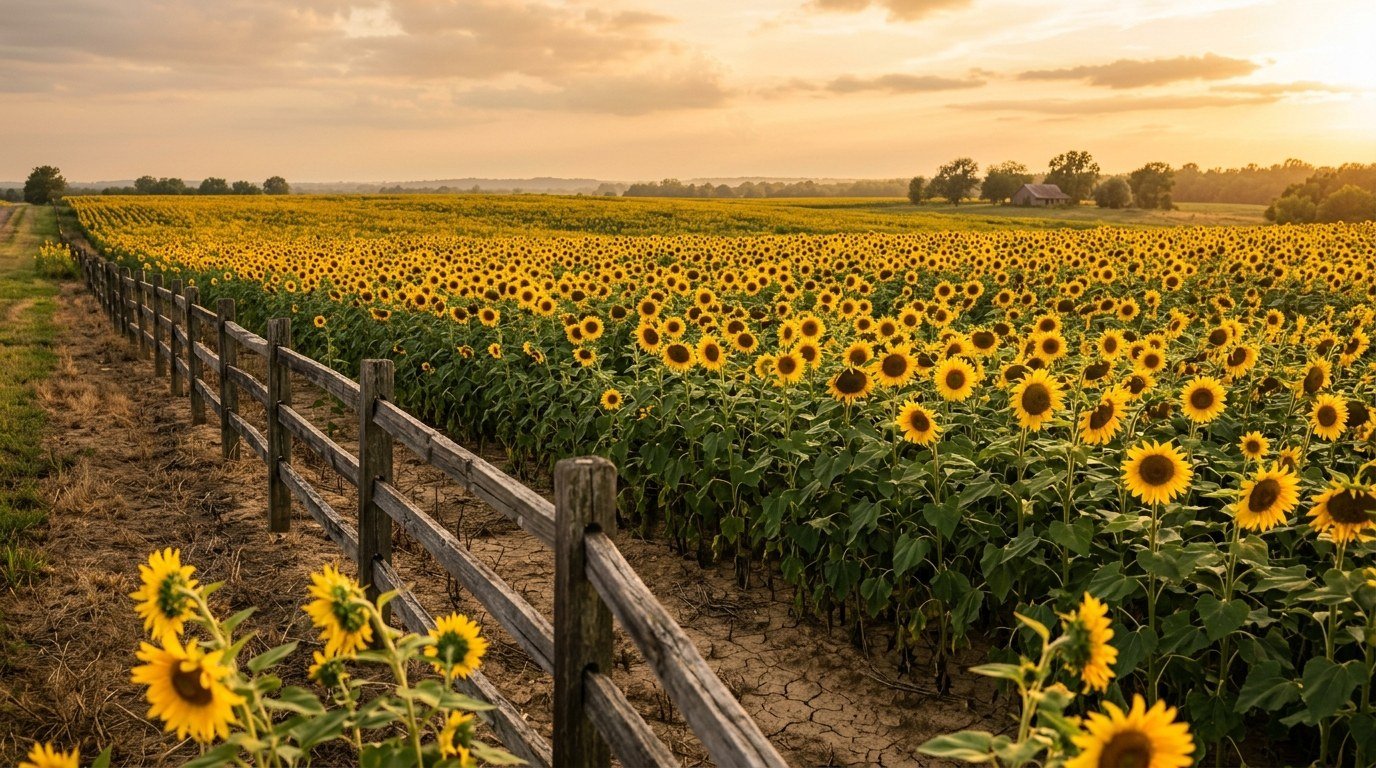
Resilience Quotes Had to Start Somewhere — Turns Out It Was a Field in Kansas
You have probably seen the phrase on a coffee mug, a throw pillow, or carved into a piece of wood hanging in someone's hallway: In a world full of roses, be a sunflower. It's one of those resilience quotes that feels so familiar you stop actually reading it. But the sunflower didn't earn that reputation by accident, and the story of how it got there is stranger and more interesting than the quote itself.
The short version: sunflowers are genuinely, almost stubbornly hard to kill. They grow in soil that would discourage most plants. They track the sun when they're young, then lock facing east when they mature — a fixed orientation that turns out to be a calculated move, not a limitation. They've been used as symbols of loyalty, endurance, and survival across cultures that never spoke the same language. The flower made the metaphor. The metaphor didn't make the flower.
So here's the actual history, told straight.

Three Thousand Years Before Anyone Put Resilience Quotes on a Wall
The sunflower is native to North America. Indigenous peoples of the Great Plains and the American Southwest were cultivating Helianthus annuus as far back as 3000 BCE — long before European contact, long before the word resilience existed in English. The Hopi used sunflower seeds as food and the pigment from the petals and seeds for dye. The Lakota used the plant medicinally. The Havasupai grew it as a staple crop alongside corn and squash.
What those early cultivators understood, practically rather than poetically, was that the sunflower would grow where other things wouldn't. Rocky soil. Dry stretches. The edge of a field that got too much wind. The plant didn't need coddling. It needed a general direction and a little time.
When Spanish explorers brought sunflower seeds back to Europe in the early 1500s, the plant spread fast — through Spain, France, and eventually into Russia, where Peter the Great reportedly developed a particular fondness for it. By the 1800s, Russia was producing sunflower oil on an industrial scale. The plant had traveled from the high desert Southwest to the Russian steppes and thrived in both places. That's not symbolism. That's a track record.
The deeper meaning behind the sunflower saying has roots in that same long history — the flower was already doing the work before anyone wrote the words down.
What the Heliotropism Story Gets Wrong (and Why the Truth Is Better)
Here's the part most people know: sunflowers follow the sun. East in the morning, west by evening, reset overnight. It's called heliotropism, and it's real — but only in young plants. Once a sunflower matures and its stem stiffens, it stops moving. It locks facing east, permanently.
For a long time, botanists assumed this was just a structural limitation. The stem gets rigid, so the plant can't track anymore. End of story. But researchers at UC Davis published findings showing that the east-facing orientation is actually an advantage. East-facing flowers warm up faster in the morning sun. Warmer flowers attract more bees. More bees mean more pollination. The sunflower doesn't stop moving because it loses the ability — it stops because it has found the right position and holds it.
That is a better resilience metaphor than most resilience quotes manage to capture. Not constant motion. Not relentless optimism. Just finding your orientation and holding it with purpose.
◆ From the Workshop: Choosing the right lumber matters for the same reason orientation matters in a sunflower — it determines how the thing behaves over time. When you're picking between flatsawn and quartersawn boards, the end grain tells the whole story at a glance: flatsawn shows rings running nearly parallel to the face, quartersawn shows rings nearly perpendicular to it. That orientation means quartersawn boards move dramatically less across their width as humidity changes — sometimes half as much as flatsawn from the same species. It's why quartersawn flooring stays tight through seasons that would gap a flatsawn floor open wide enough to lose a coin in.
Frequently Asked Questions
Are there specific sunflower varieties that are more drought-tolerant than others?
Yes. Wild Helianthus annuus — the ancestor of most garden sunflowers — handles drought far better than the large-headed hybrid varieties bred for seed production. Perennial species like Helianthus maximiliani, sometimes called Maximilian sunflower, are especially tough: they go dormant in dry spells and come roaring back when rain returns, which is part of why they naturalized so successfully across the Great Plains.
What's the difference between heliotropism and solar tracking, and do mature sunflowers actually follow the sun?
Heliotropism is the general term for a plant bending toward light; solar tracking is the specific daily east-to-west movement sunflowers do while young. Once a sunflower matures and the stem lignifies, it stops tracking and locks facing east permanently. Researchers at UC Davis found that east-facing flowers warm up faster in the morning, which attracts more pollinators — so the plant trades flexibility for a strategic fixed position. That's a different kind of resilience: knowing when to stop moving and hold your ground.
How do you keep a 'Be a Sunflower' wood sign from fading if it hangs near a window with direct sunlight?
The enemy is UV, not heat. A coat of oil-based wipe-on finish with UV inhibitors — Waterlox or a quality tung-oil blend — will slow color shift dramatically on hardwood. Reapply every year or two on pieces that get direct afternoon sun. If the sign is already carved and painted, a matte UV-protective topcoat spray works as a maintenance layer without changing the look. Keeping it out of direct afternoon sun is still the single most effective thing you can do.

Why the Rose Lost the Resilience Quotes Competition
The rose is not a bad flower. It's beautiful, it smells extraordinary, and it has about four thousand years of literary prestige behind it. But as a symbol of resilience, it has a fundamental problem: it requires a lot of help.
Roses are particular about soil pH. They need regular pruning or they get leggy and stop blooming. Black spot fungus, aphids, Japanese beetles — the list of things that can take down a rose bush is genuinely long. A neglected rose doesn't quietly persist. It declines visibly and dramatically. That's not a criticism; it's just a different kind of plant with different needs.
The sunflower, by contrast, is what gardeners call a low-input plant. Drop seeds in average soil, give it sun, and mostly leave it alone. It doesn't need staking until it gets very tall, it's not particularly susceptible to the diseases that plague ornamental flowers, and it will self-seed in a way that means next year's plants often show up without any help from you at all.
So the comparison in the quote isn't really about beauty or worth. It's about what kind of conditions a thing needs to survive. The rose needs the right environment. The sunflower makes do with what it finds. Both are valid ways to live. The resilience quotes just tend to remind you which one most of us actually need to be on a hard Tuesday in February.
If you're looking for something to hang on the wall that holds that thought without being preachy about it, this carved hardwood sunflower sign says it plainly — the kind of thing you glance at when you need it and don't notice when you don't.
The Wartime Chapter Nobody Mentions in Resilience Quotes
In Ukraine, the sunflower is the national flower. It has been since long before the country's recent history made that fact land differently for international audiences. But the plant's connection to Ukrainian soil runs deep — the country sits in some of the most fertile sunflower-growing land in the world, and sunflower oil has been a staple of Ukrainian cooking for generations.
When images of sunflowers growing over tank tracks circulated in early 2022, they weren't staged for symbolism. Sunflowers genuinely grow in disturbed soil. They were some of the first plants used in phytoremediation efforts after the Chernobyl disaster — the plants absorb heavy metals and radioactive contaminants through their roots, pulling toxins out of soil that most plants can't survive in. Scientists used them in cleanup efforts at Chernobyl and later at Fukushima.
That's not metaphor. That's a plant that cleans up after catastrophe. It's hard to think of a more literal version of the resilience idea than a flower that grows in contaminated ground and comes out holding the poison so the soil behind it can recover.
The resilience quotes that use the sunflower image are drawing on something real, even when the people writing them don't know the backstory. The flower built the reputation honestly.
Putting a Resilience Quote on Your Wall Is an Old Idea
People have been putting words on walls for as long as they've had walls. Roman households painted moral sayings in entryways. Medieval craftsmen carved scripture into doorframes. The Kentucky woodcraft tradition of carving words into hardwood — which is what we do here — sits in a line that goes back further than most people realize.
The reason resilience quotes work as wall art isn't that they're decorative. It's that the right words in the right place function as a kind of environmental nudge. You see them in the morning when you're not fully awake. You see them when you're stressed and walking past the hallway. You stop noticing them consciously after a few weeks, but the message is still there, doing its quiet work.
There's a good piece on the psychology of words on walls that gets into the research behind why this actually functions — it's not wishful thinking, and the findings are more practical than you'd expect.
The sunflower became the face of resilience because it earned it — three thousand years of growing in hard places, tracking the light when it could and holding its position when it couldn't, cleaning up messes it didn't make. The quote on the wall is just the short version. The full story is worth knowing.
If you want to browse the range of carved hardwood pieces built around this kind of thinking, the inspirational signs collection is where that lives — words chosen because they hold up, cut into wood that does the same.
Share:
Top 10 Retirement Gifts That Won't End Up in a Closet
What Duck Hunting Dogs Actually Know That Their Owners Don't: The Science Behind the Retrieve | Bluegrass Gifts