

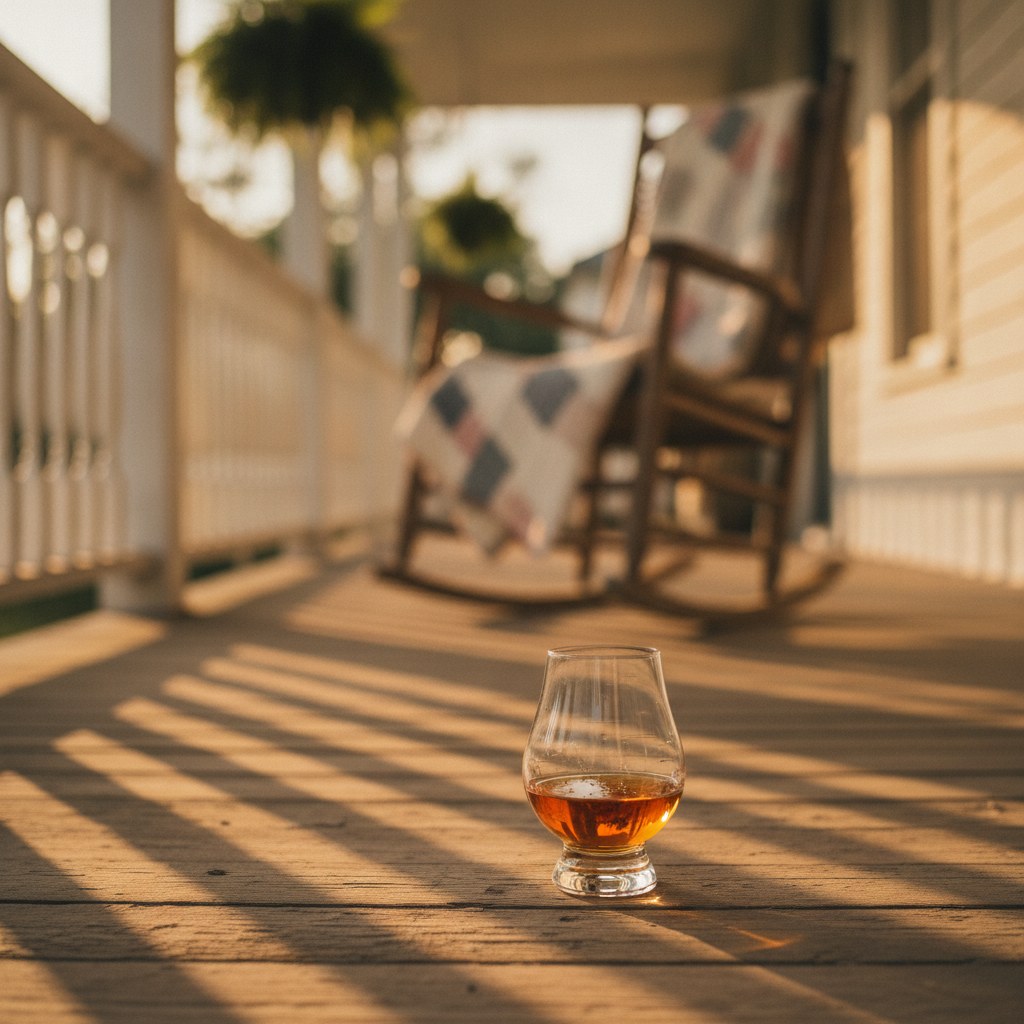
How to Enjoy Bourbon Without Performing It for the Room
The question of how to enjoy bourbon has spawned approximately ten thousand YouTube videos, a small industry of branded glassware, and at least one guy at every party who will tell you, unprompted, that you're doing it wrong. That guy has never worked a single day at a distillery. The people who actually make bourbon — the master distillers, the rickhouse workers, the blenders who taste forty samples before lunch — drink it however they feel like drinking it. Some use a Glencairn. Some use a coffee mug. One well-known Kentucky distiller has been photographed drinking his own product from a Styrofoam cup at a county fair, and he seemed fine.
The rules around bourbon are mostly social theater. The actual rules — the legal ones, the ones that make bourbon bourbon — are about grain and barrels and time. Everything after that is preference, and preference is not a moral failing.

What the Mashbill Actually Tells You (And Why It Matters More Than the Price Tag)
Bourbon must be made from a grain mixture that's at least 51% corn. That's federal law, codified in the 1964 Congressional resolution that designated bourbon a distinctive product of the United States. The rest of the mashbill — the remaining grains — is where distilleries make their character decisions. Rye as the secondary grain gives you spice and a drier finish. Wheat softens everything and pushes the sweetness forward. Barley is mostly there to help with fermentation, but it adds a faint nuttiness some people can pick out.
This matters for one practical reason: if you know what you like, you can find more of it without relying on a price point. A wheated bourbon like Maker's Mark or W.L. Weller and a high-rye bourbon like Bulleit or Four Roses Single Barrel are not better or worse than each other. They're different instruments. Knowing which one you reach for is not snobbery — it's just paying attention.
- High-corn mashbills (75%+): sweeter, rounder, easier on the finish — think Elijah Craig or Evan Williams Single Barrel
- High-rye mashbills: spicier, drier, more complex mid-palate — Knob Creek, Basil Hayden's
- Wheated bourbons: soft, caramel-forward, longer finish — Pappy Van Winkle's whole family, Larceny
None of these require a special glass. None of them require ice or the absence of ice. The mashbill is the blueprint; how you enjoy bourbon from that blueprint is entirely your business.
Water, Ice, and the People Who Will Judge You for Both
Master distillers add water to their bourbon. This is not a secret. When a barrel comes off the rickhouse at cask strength — sometimes 130 proof or higher — it gets cut with water before bottling. The distiller is literally diluting the product on your behalf, and they do it because a small amount of water opens up the aromatic compounds and makes the whiskey more expressive. This is called proofing down, and it is considered skilled, professional work.
When you add a few drops of water to your glass, you are doing the same thing. You are not ruining it. You are finishing the distiller's job to your own specification.
Ice is the same story. Cold suppresses some of the volatile aromatics, which is why serious tasters prefer room temperature for evaluation. But you are not always evaluating. Sometimes you are sitting on a back porch in August in Kentucky and you want a cold bourbon, and the correct response to that situation is to put ice in the glass. A large cube or a sphere melts slowly and dilutes less — that's the one practical tip worth keeping. A glass full of crushed ice will water your drink down fast. Beyond that, do what you want.
To enjoy bourbon on your own terms, you need exactly one piece of equipment: a clean glass. Everything else is optional.
◆ From the Workshop: When you're cutting across the end grain of a carved relief panel with a gouge, the chisel either slices cleanly or blows out a chunk — and it comes down entirely to which side of the curve you're on. Cut with the curve sweeping down into the wood and it glides; cut with it sweeping up and the unsupported fibers ahead of the edge lift and tear. Old carvers called it cutting uphill, and the fix isn't a sharper tool. It's turning the work 180 degrees so the grain is always falling away from the edge, not rising into it. Bourbon tasting works the same way — the technique that fights the material always loses to the one that works with it.
Frequently Asked Questions
Does the shape of a bourbon glass actually change what you taste?
Yes, meaningfully so. A Glencairn or tulip-shaped glass concentrates the vapor toward the nose, which amplifies the aromatics before the liquid ever reaches your tongue. A wide-mouth rocks glass lets the alcohol dissipate faster, which some people prefer because it softens the heat on the nose. Neither is wrong — they're just different instruments playing the same song. If you drink bourbon regularly from a standard pint glass and enjoy it, you're not missing some hidden layer; you're just not chasing it.
What's the actual difference between bourbon and Tennessee whiskey?
Tennessee whiskey — Jack Daniel's being the famous example — goes through what's called the Lincoln County Process: the new spirit is filtered through sugar maple charcoal before it ever enters the barrel. That step is what legally separates it from bourbon, even though Tennessee whiskey otherwise meets every bourbon requirement. Whether that charcoal filtration makes it better or worse is a matter of taste, not prestige. Both are American whiskeys, both are aged in new charred oak barrels, and both will do just fine in a cocktail.
How long can an opened bottle of bourbon last before it goes off?
A long time — longer than most people expect. Bourbon doesn't continue aging once it's bottled, and the high alcohol content (at minimum 40% ABV by law) keeps bacteria from taking hold. An opened bottle stored upright, away from direct sunlight and heat, will stay good for one to two years easily, and many people report no meaningful change for three or four. The real enemy is oxidation: once the bottle gets below about a quarter full, the larger air-to-liquid ratio starts to flatten the flavors noticeably. At that point, drink it or share it.

How to Actually Taste Bourbon If You Want To Enjoy Bourbon More Deeply
This is the part where most guides get theatrical. You don't need to be theatrical. Tasting bourbon deliberately is just slowing down and paying attention, which is a thing you already know how to do.
Here's what a working taster actually does, stripped of the ceremony:
- Nose it before you sip. Hold the glass a few inches from your face and breathe in through your mouth slightly open — this keeps the alcohol from overwhelming your nose. You're looking for the base notes: vanilla and caramel come from the barrel, fruit and grain from the fermentation, spice from the rye or the char level.
- Take a small first sip and let it sit. Don't swallow immediately. Let it coat your tongue. The front of your tongue picks up sweetness, the sides pick up salt and acid, the back picks up bitterness. A good bourbon hits all of them in sequence.
- Notice the finish. How long does the warmth last after you swallow? Does it fade clean or does it linger? A long, evolving finish is generally the mark of quality aging. A short, sharp finish isn't bad — it's just different.
- Add water and taste again. Seriously. Even a quarter teaspoon changes the profile. This is not a test of the bourbon's strength; it's a tool for exploration.
That's it. That's the whole process. The people who make bourbon for a living do a version of this every day, and they don't do it with their pinky raised.
If you want to go deeper on building out the space where you enjoy bourbon, we wrote a practical guide on decorating a home bar on a budget — it's less about spending money and more about making the space feel intentional. And if you're putting together a gift for the bourbon drinker in your life who already has every bottle, the post on gifts for bourbon lovers that aren't another bottle is worth your time.
The One Thing You Can Stop Apologizing For Immediately
Bourbon in a cocktail. Specifically, the Old Fashioned, the Manhattan, and — brace yourself — the Whiskey Sour made with bourbon instead of rye.
There is a persistent idea that mixing good bourbon is wasteful, that the complexity gets lost behind the sugar and the bitters. This idea is wrong, and the distillers know it's wrong, because many of them have signature cocktail recipes on their own websites. The aromatics in a well-made bourbon don't disappear in a cocktail — they anchor it. A mediocre bourbon makes a mediocre Old Fashioned. A good bourbon makes a good one. The relationship is direct.
The only cocktail rule worth honoring is this: don't use a bourbon you actively dislike on its own. If the spirit is unpleasant to you neat, mixing it won't fix that. But if you enjoy bourbon from a particular bottle and you want to put it in a drink, that is not a crime against Kentucky. It is, in fact, the point.
We carve hardwood signs out of a shop in Kentucky, and the ones that end up in people's home bars tend to say the quiet part out loud — the kind of thing the bourbon barware collection was built around. If you want something on the wall that matches the way you actually feel about the pour in your hand, this carved bourbon state-of-mind sign says it without needing to explain itself. Neither should you.
Share:
Gifts for Bourbon Lovers, From a Shop That Lives in Bourbon Country | Bluegrass Gifts
Christian Humor on a T-Shirt: What the Words You Choose Say About Your Faith | Bluegrass Gifts