

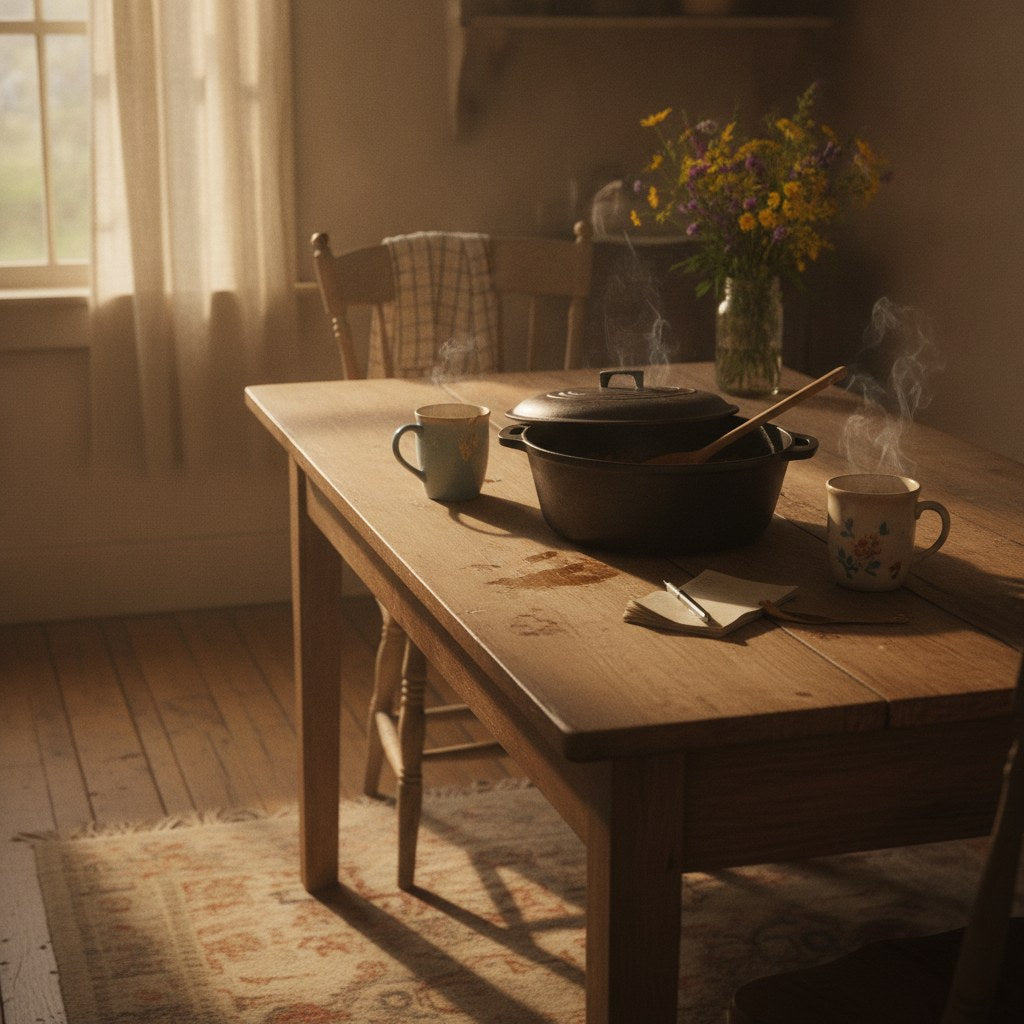
Parents of Teenagers Deserve a Medal, a Casserole, and Possibly a Lawyer
Parents of teenagers are operating under conditions that would qualify as a workplace hazard in any other context. You live with someone who can explain the geopolitical history of a video game in forty-five minutes but cannot locate a clean towel hanging eighteen inches from their face. You provide food, shelter, Wi-Fi, emotional labor, and a ride — and in exchange you receive a series of sighs, a door closed with just enough force to communicate contempt without being technically slammable, and the occasional grunt that might be 'thanks' or might be the sound of a person who resents your existence. It's hard to tell. You've stopped trying.
This is not a phase that passes quietly. It is a season, and it is long, and the only people who truly understand it are the ones currently living it. Which is why parents of teenagers need a support group. Not a Facebook group with inspirational quotes about cherishing every moment. A real one. Folding chairs in a church basement, bad coffee in a styrofoam cup, and someone across the table nodding slowly while you describe the argument you had over whether your child's bedroom constitutes a biohazard. That kind of support group.

The Specific Indignities That Only Parents of Teenagers Will Recognize
There's a particular kind of exhaustion that belongs to this season and no other. It's not the bone-tired of a newborn's 2am feeding, though that was its own catastrophe. It's something more psychological — the fatigue of being simultaneously needed and resented by the same person, sometimes within the same ten-minute window.
The indignities stack up in ways nobody catalogues properly:
- You ask a simple question — 'how was school?' — and the response is a look that suggests you've asked them to explain quantum mechanics in Mandarin.
- You make dinner. Good dinner. Dinner you spent actual effort on. They eat it while staring at a phone, say nothing, and leave the table with their plate still sitting there because apparently the sink is theoretical.
- You attempt a joke — a solid joke, a joke that would land at any dinner party — and they look at you with the flat, patient expression of someone waiting for a bus that is already forty minutes late.
- You find out something important about your child's life not from your child, but from another parent, who heard it from their child, who heard it at school, which means the information has traveled through approximately six people before reaching you, the one who pays for everything.
- They tell you you're embarrassing them. In your own house. With nobody else present.
Every one of these is a small thing. Together they form something that requires a name and a meeting schedule.
What the Support Group Would Actually Sound Like
I think about this meeting sometimes. The agenda writes itself.
Someone opens by describing the morning routine — the seventeen-times-called name, the missed bus that somehow becomes a character flaw of the parent who was standing at the door with keys in hand since 7:42. Heads nod around the room. Not politely. The deep, slow nod of people who have lived this exact morning, this very week, and are relieved to know it wasn't just them.
Someone else brings up the phone. There's always a phone conversation. It goes sideways in a direction nobody predicted, ends with a door closing, and is followed by twenty minutes of the parent standing in the kitchen wondering if they said the wrong thing or if the wrong thing is simply that they exist and have opinions. The group does not offer solutions. The group offers the specific comfort of collective bewilderment, which turns out to be enough.
Then someone says something genuinely funny about it — the kind of line that only works because it's true, delivered flat, with no setup — and the whole room laughs the laugh of people who needed it. That's the meeting. That's the whole thing. We wrote a bit about parenting a teenager in your forties, and the comments section alone reads like a transcript of this exact meeting.
◆ From the Workshop: There's a woodworking principle that applies here, and I think about it every time I'm working with lumber from a hillside: trees that grow on slopes develop what old timber buyers called 'hill timber' — wood wound with internal stress from a lifetime of correcting against gravity. A board cut from a mountain log looks identical to one from flat-grown timber at the yard, but the moment you resaw it, it springs or bows in a direction you never asked for. You treat every piece as guilty of hidden stress until proven innocent. Teenagers grew on a hillside. Every single one of them. They look manageable right up until you resaw them, and then something moves that you didn't see coming, and you just have to work with the grain you've got.
Frequently Asked Questions
At what age do teenagers actually start acting like humans again?
Most developmental psychologists point to the mid-twenties as when the prefrontal cortex — the part of the brain responsible for impulse control and long-term thinking — is fully developed. So if your fifteen-year-old seems to operate on pure instinct with zero regard for consequences, that's not a parenting failure. That's biology running its course, right on schedule, in your kitchen.
Is it normal to feel like you don't even recognize your kid during the teenage years?
Completely normal, and there's a name for it: identity development. Adolescents are actively constructing a self that's separate from their parents, which means they'll try on personalities the way other people try on hats at a flea market — fast, with no commitment, and sometimes with alarming results. The child who loved family movie night at twelve may spend three months convinced they're a loner at fourteen. They usually come back.
What actually helps parents maintain their own mental health during the teenage years?
Humor is genuinely documented as a coping mechanism — not as avoidance, but as a way of reframing stress into something manageable. Beyond that, connection with other parents in the same season matters more than most people expect. Isolation makes the hard parts feel singular and shameful; shared laughter makes them feel survivable. Finding even one other parent who'll text you 'mine just told me I breathe too loud' at 10pm is worth more than most parenting books.
The Humor Is Not a Coping Mechanism — It's the Point
There's a version of parenting advice that takes all of this very seriously. It has chapters. It has worksheets. It uses the phrase 'attachment framework' in a way that makes you feel like you've already failed before you've read the second paragraph. I'm not here to tell you that advice is wrong. I'm here to tell you that at 9:30 on a Tuesday night, after the third disagreement of the day about something that started as a question about laundry, what actually keeps you functional is not a framework. It's laughing about it.
Parents of teenagers who can find the joke in it — not at their kid's expense, but at the absurdity of the whole arrangement — are doing something real. They're not minimizing the hard parts. They're surviving them with their sanity and their sense of self intact. There's a difference between laughing because nothing matters and laughing because you've decided that this particular Tuesday will not break you. The second one is an act of will.
We wrote a piece on funny mom survival mugs and the parent support group mentality that gets at exactly this — the idea that a mug with the right line on it isn't just a joke. It's a small daily reminder that you're not alone in this, and that someone else found it funny enough to put on an object you'll hold every morning before the house wakes up and the negotiations begin.

What Actually Gets Parents of Teenagers Through It
Not advice. Not a five-step plan. Here's what I've seen actually work, stated plainly:
- Other parents who don't pretend. The ones who will text you something honest at an unreasonable hour and not dress it up. Find those people. Keep them.
- A sense of your own history. You were also fifteen once. You also knew everything and communicated it primarily through silence and door-closing. Your parents survived you. This is worth remembering, ideally before the argument escalates.
- The long view, held lightly. The research on adolescent brain development is genuinely reassuring — the prefrontal cortex, the part responsible for impulse control and consequence-thinking, isn't fully online until the mid-twenties. Your teenager is not broken. They're running on hardware that hasn't finished installing. This doesn't make Tuesday easier, but it makes Tuesday make sense.
- Something that makes you laugh before the house wakes up. This one matters more than it sounds. The first ten minutes of your morning sets a tone. A mug that says something true and funny about your current situation is a small thing, but small things are what days are made of.
If you're in the market for that last one, our funny sarcastic magic mugs exist precisely for the person who needs their coffee to come with a little acknowledgment that life is absurd and they're handling it anyway.
There's a specific sign I'd point you toward if you want something to hang where you'll actually see it — a funny rustic farmhouse sign made for parents who recognize themselves in every line — the kind of thing that makes you feel seen without requiring anyone to sit in a circle and share their feelings.
The teenagers will be fine. They usually are. And so will you — especially if you find someone to laugh about it with. That's the one true thing underneath all of this: the parents who make it through with their humor intact didn't get lucky. They decided, somewhere in the middle of the hard part, that the whole situation was too absurd not to find funny. That decision is available to you right now, today, even if someone in your house just told you that you're breathing wrong. Especially then.
Share:
The Unwritten Rules of the Family Nickname: Where They Come From, Why They Stick, and What They Actually Mean | Bluegrass Gifts
Quotes About Wildlife and What's Actually Moving in the Southern Outdoors by Season