

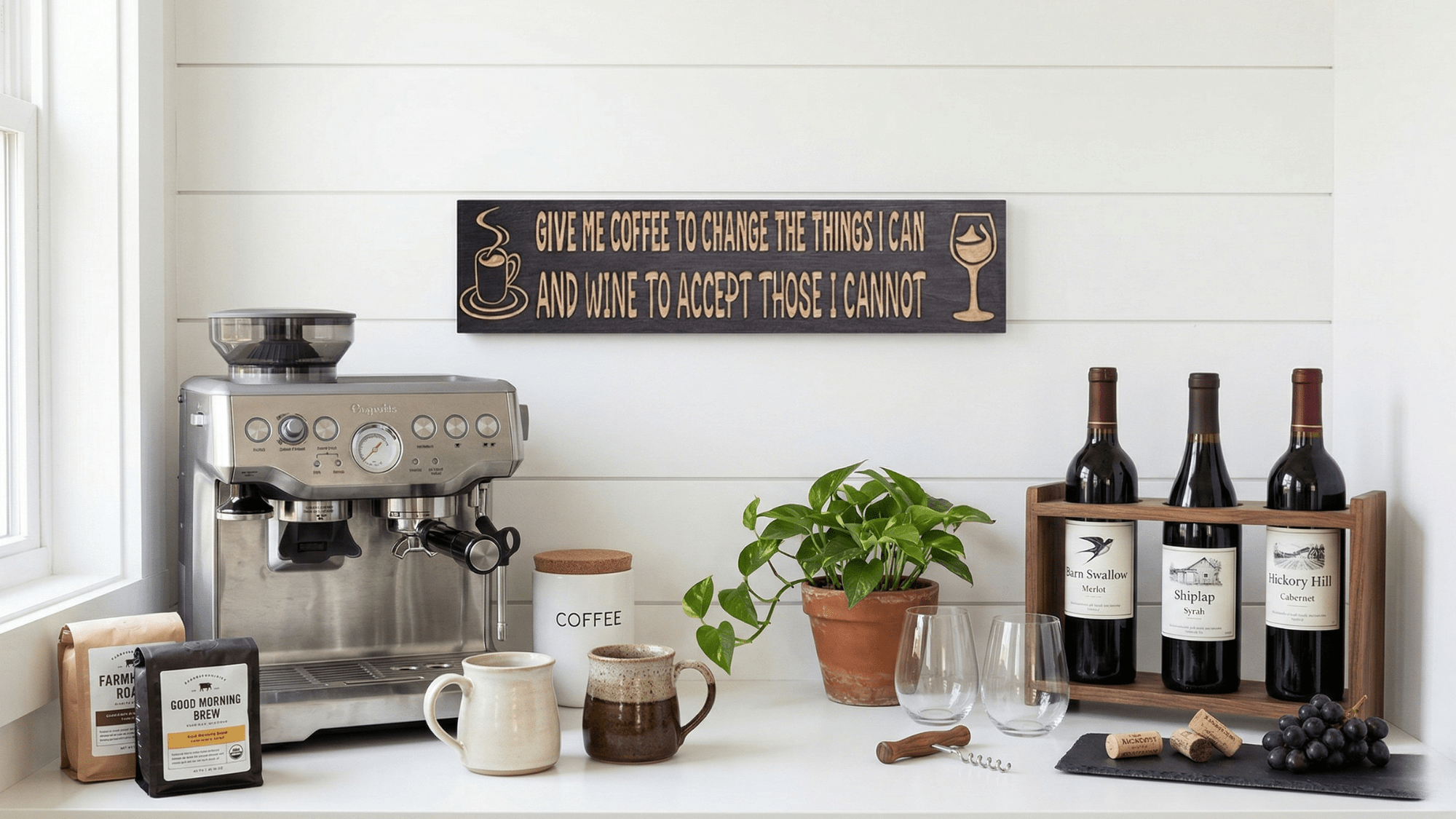
How to Create Farmhouse Coffee and Wine Bar Ideas for Small Spaces
That awkward sliver of countertop between the stove and the wall isn't just dead space; it's an opportunity. Right now, it’s likely a collection of mail, a stray phone charger, and maybe a bottle of olive oil. But in a home that works hard, every square inch has potential. The challenge is creating a dedicated spot for life's daily rituals—the morning coffee that fuels you and the evening wine that settles you—without adding to the clutter.
You don't need a sprawling kitchen or a dedicated butler's pantry. The solution is simpler and more honest: a consolidated station that serves both purposes with grace and a bit of humor. It’s about carving out a functional, charming corner that makes your day a little smoother. This is how you reclaim that space, turning it from a catch-all into a deliberate destination. For more ideas on maximizing your home, our guide to The Complete Farmhouse Home Decor Guide is a good place to start.
Why This Corner Feels So Cluttered
The struggle is real because most homes weren't designed with a dedicated coffee and wine nook in mind. We try to force the idea by letting the coffee maker, grinder, mugs, wine bottles, and opener sprawl across any available surface. The alternative—hiding everything in a cabinet—makes the morning routine a frantic search and the evening wind-down a chore. Neither approach feels right.
The answer lies in creating a visible, contained station that celebrates these daily bookends. It’s about acknowledging that the tools for coffee and wine deserve a permanent, organized home. By giving them one, you transform a cluttered surface into a feature that brings a quiet sense of order and personality to your kitchen or dining area.
Rule 1: Define Your Zone with Vertical Space

In a small home, you build up, not out. The wall above your chosen counter or tabletop is the most valuable real estate you have. Using it wisely is the first step in creating a bar that feels intentional rather than accidental. Forget adding another piece of furniture; claim the space you already own.
A pair of simple floating shelves can hold mugs, glasses, and canisters. Even simpler, a single piece of art or a well-placed sign can anchor the area, drawing a visual boundary around your station. It tells the eye, “This space right here has a purpose.” A sign with a bit of personality sets the tone for a space that works hard but doesn’t take itself too seriously. The horizontal format of our 24x5.5 inch Funny Coffee And Wine Sign is perfect for this, creating a clean sightline that neatly contains the zone.

Rule 2: Consolidate and Curate Your Tools
This station is a display, not a storage closet. The goal is to keep your daily essentials within reach while editing out the excess. Choose your favorite mugs, your most-used wine glasses, and the tools that make you happy. Everything else can live in the cupboard.
A few simple tricks can make a world of difference:
- Use a tray. A simple wooden or metal tray is the single best tool for fighting clutter. It corrals everything—sugar bowl, coffee grinder, corkscrew, a small plant—into one cohesive unit.
- Decant your supplies. Coffee beans look better in a glass or ceramic canister than in the bag they came in. The same goes for sugar, tea bags, or pods.
- Limit the inventory. Keep two to four of your favorite mugs and wine glasses out. This encourages you to use and wash them, rather than letting a collection pile up in the sink.
This isn't about achieving magazine-level perfection; it's about making your daily life more pleasant. It’s about personality. Claim your corner with the Funny Coffee And Wine Sign and give it a voice.
Rule 3: Master Dual-Purpose Storage Solutions
Creating a station that works for both morning and night requires clever thinking. The best farmhouse coffee and wine bar ideas for small spaces rely on items that can serve double duty or transition easily. Your goal is to reduce the total footprint by making every component work harder.
Consider a tiered stand; it can hold mugs and a sugar bowl by day, then wine glasses and a bottle by night. A small set of drawers can organize K-cups and tea bags alongside corkscrews and wine stoppers. Since we started our Kentucky workshop in 2020, we've seen how homes value decor that is both beautiful and functional. That’s why we carve our signs from solid, Amish-sourced lumber—they are built to be part of these real-life, hardworking spaces for years to come.
Putting It All Together in Your Home
This principle of a combined bar can adapt to nearly any home. It’s not about the specific location, but the approach.
- In the Kitchen: This is the most natural fit. Use a corner of your counter, define it with a tray, and hang your sign on the backsplash or the wall just above it. It keeps everything central to your daily workflow.
- In the Dining Room: A small console table or buffet can become a sophisticated beverage station. This separates it from the bustle of cooking and creates a more relaxed, intentional spot for pouring a drink. See our tips on styling a romantic Southern entryway for more inspiration.
- In the Living Room: A small, well-styled bar cart is a classic for a reason. It’s mobile and compact. Stock the top with coffee essentials in the morning and transition to wine and cocktail tools in the evening. The sign hangs on the wall above, anchoring the cart to its designated spot.
How to Know When You've Got It Right
You'll know you've succeeded not when it looks like a picture, but when it feels right. It’s right when your morning routine feels a little less chaotic. It’s right when pouring a glass of wine in the end feels like a small, deliberate pleasure, not a scramble through a cluttered drawer for a corkscrew. The perfect coffee and wine station isn’t about aesthetics alone; it’s about the quiet efficiency it brings to your day.
The space should feel like a reflection of a well-lived life—one that requires coffee to get things done and wine to appreciate the results. It's a balance of energy and ease, a theme that runs through our entire collection of funny and heartfelt kitchen signs.
Shop
Shop all BluegrassGifts Kitchen & Pantry Signs — witty and warm solid wood signs for the heart of your home.
Keep the Story Going
→ The Complete Farmhouse Home Decor Guide — Room by Room — Hub Post
→ How to Style a Romantic Southern Entryway That Feels Like Home
→ Farmhouse Kitchen Decor Ideas That Don't Require a Renovation
New from the workshop: we now engrave bourbon barware — whiskey glasses with original Kentucky sayings, hidden bottom messages, and personalized groomsmen sets. A home bar deserves glassware with an opinion.
Frequently Asked Questions
How much space do I need for a farmhouse coffee and wine bar?
You need less than you think. A narrow countertop sliver, a small side table, or even a 24-inch stretch of wall works fine. The key is height, not width. Use vertical space with a shelf or sign above a compact surface below, and you have a real station instead of a pile of appliances on the counter.
What is the best way to organize coffee and wine supplies together?
Group by daily use, not by category. Keep the coffee maker, mugs, and wine opener within arm's reach on the counter, then move backup supplies like extra filters or wine racks into a nearby cabinet. A tray helps corral small items like sugar packets or a corkscrew, so the surface reads as tidy rather than crowded.
Do I need floating shelves for a small coffee and wine nook?
No, shelves are one option, not a requirement. A single piece of art or a horizontal sign, like a 24x5.5 inch design, can anchor the space just as well by giving the eye a clear boundary. Shelves add storage if you need it, but the real goal is signaling that this spot has a purpose.
Share:
How to Create a Faith Corner at Home: A Guide to Your Personal Sanctuary | Bluegrass Gifts
25 Hilarious Anniversary Gift Ideas That Actually Celebrate Real Marriage | Bluegrass Gifts