

Caffeine and Anxiety Walk Into a Monday Morning
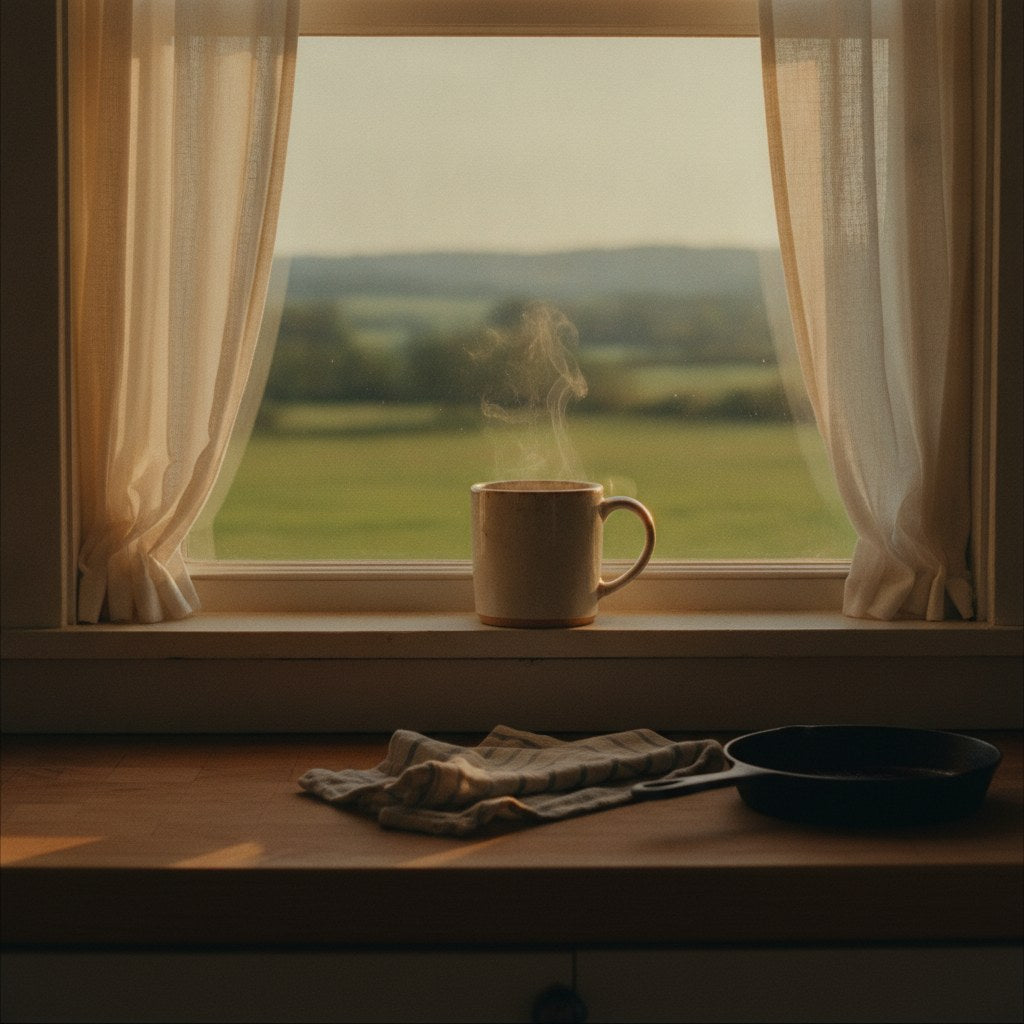
The mug is already in your hand before you're fully awake. You poured it on autopilot, the same way you've done every day for years — and somewhere between the first sip and the second, your chest does that thing. Not quite a flutter. Not quite dread. Just a low hum of something that sits right below the surface of your morning. You drink the rest of the cup anyway, because of course you do.
That's the thing about caffeine and anxiety: they've been sharing the same address for so long that most of us stopped noticing the arrangement. The joke — fueled by anxiety and coffee — is funny because it's accurate in a way that takes about three seconds to recognize and a lot longer to actually sit with.
This isn't a post telling you to quit coffee. I drink it every morning out in the shop before the CNC machine warms up, and I have no plans to stop. But there's something worth understanding about why that joke lands the way it does, and what's actually happening when it does.

What Caffeine and Anxiety Are Actually Doing to Each Other
Caffeine works by blocking adenosine receptors in your brain. Adenosine is the chemical that builds up over the course of a day and makes you feel tired — caffeine essentially sits in the receptor's seat and refuses to move, which is why you feel alert instead of sleepy. That part you probably knew.
What's less discussed is what happens downstream. When caffeine blocks those receptors, your brain compensates by releasing more dopamine and norepinephrine. Norepinephrine is the same neurotransmitter your body uses during a stress response. It raises your heart rate. It sharpens your focus. It also, in the right dose, feels almost indistinguishable from the early edge of anxiety.
For people who are already running a little hot — a little wound up, a little prone to that background hum — caffeine doesn't create the anxiety so much as it amplifies what's already there. The research on caffeine and stress responses suggests the effect is dose-dependent and highly individual, which explains why your coworker drinks four cups and seems fine while you're vibrating after two.
The relationship between caffeine and anxiety isn't a bug in the system. It's the system working exactly as designed — just in a direction you didn't request.
◆ From the Workshop: When you're peeling a log for a timber frame, the tool for the job is a spud — a long-handled blade that slides between the bark and the cambium layer rather than cutting through either one. It looks like you're doing nothing, and then suddenly a four-foot sheet of bark just falls away clean. The best time to use one is spring, when the sap is running and the cambium is so slick the bark practically peels itself; in winter, the same log will fight you for an hour. There's something in that about timing — the same task, wildly different resistance depending on conditions you didn't control.
Frequently Asked Questions
Does switching to tea actually reduce anxiety, or does it just feel that way?
Tea contains caffeine too — a standard black tea runs roughly 40-70mg per cup compared to coffee's 80-100mg range, so you're not eliminating the stimulant, just dialing it back. The difference is that tea also contains L-theanine, an amino acid that research from the University of Shizuoka suggests may moderate caffeine's more jagged effects by promoting a calmer kind of alertness. So yes, the switch can genuinely help — but it's not caffeine-free, and it won't eliminate anxiety if the anxiety has other causes.
Is there a time of day when caffeine is less likely to spike anxiety?
Cortisol — your body's primary stress hormone — peaks naturally in the first 30-60 minutes after waking, then again around midday. Consuming caffeine during those peaks essentially stacks stimulants, which is why many sleep researchers suggest waiting 90 minutes after waking before your first cup. Afternoon caffeine has its own problem: it can linger in your system for 5-6 hours, disrupting sleep and raising baseline anxiety the next morning. Mid-morning, after the cortisol peak settles, tends to be the sweet spot most people don't use.
Can you build a tolerance to caffeine's anxiety effects the same way you build tolerance to its alertness effects?
Partly, but not symmetrically. Regular coffee drinkers do develop tolerance to some of caffeine's stimulant effects — the alertness boost diminishes over time, which is why the same cup that wired you in college barely moves the needle now. However, tolerance to the anxiety-amplifying effects appears to develop more slowly and incompletely, particularly in people who already have a predisposition toward anxiety. In other words, your body gets used to the energy part faster than it gets used to the jittery part, which is a genuinely unfair arrangement.
Why We Put Caffeine and Anxiety on a Mug and Called It Relatable
Humor about caffeine and anxiety isn't new. But the specific framing — fueled by, as if these two things are a power source rather than a problem — that's a more recent development, and I think it says something real about how people are coping right now.
There's a long tradition of using objects to name what we can't quite say directly. A sign on the wall, a phrase on a mug — these things work because they do the admission for you. You don't have to explain to every person who walks into your kitchen that you're tired and strung out and running on fumes. The mug does it. They laugh. You laugh. The thing that was true a second ago is still true, but now it's also a shared joke instead of a confession.
That's not avoidance, exactly. It's more like compression. You take a complicated emotional state — the particular exhaustion of being a functioning adult who is also quietly anxious most of the time — and you reduce it to eleven words on a ceramic mug. And somehow that reduction is accurate enough that strangers recognize themselves in it.
We wrote a piece on how coffee and wine humor captures something real about adult life that gets at this same territory — the way certain jokes become shorthand for entire emotional seasons.

The Specific Comfort of Naming the Thing
There's a reason certain phrases stick around long enough to become decor. Don't talk to me before coffee. Coffee: because adulting is hard. Fueled by anxiety and coffee. These aren't profound statements. They're not trying to be. What they are is honest in a way that a lot of our daily communication isn't.
Most of us spend a significant portion of our day performing composure. You answer emails in a calm tone when you're not calm. You say "I'm fine" in the break room when you're not fine. You show up and do the thing and hold it together because that's what the situation requires. And then you pour a cup of coffee and look at the mug and it says the actual true thing, and there's a small release in that.
I've noticed this in the pieces that come out of our shop in Kentucky — the ones that get the most use aren't the ones that say something aspirational. They're the ones that say something accurate. The morning struggle is well-documented in coffee humor, and the reason it keeps showing up is that the struggle is still real every single day regardless of how many times you've laughed at it.
Naming the thing doesn't fix it. But it does make you feel less alone in it, which is its own kind of useful.
What to Actually Do When Caffeine and Anxiety Start Feeding Each Other
Since this is a post that's supposed to help and not just observe, here's the practical part. If you've noticed that caffeine and anxiety seem to be in a feedback loop for you — the coffee sharpens the edge that makes you want more coffee — a few things are worth trying:
- Watch the timing, not just the amount. Caffeine consumed when your cortisol is already elevated (first thing in the morning, or during a stressful stretch of the day) hits harder. Waiting 90 minutes after waking before your first cup is a genuine adjustment, not a wellness myth.
- Hydration is not optional. Dehydration mimics anxiety symptoms — racing heart, difficulty concentrating, general unease. If you're drinking coffee and not much else, some of what you're feeling may not be caffeine at all.
- Taper, don't quit cold. Abrupt caffeine withdrawal causes headaches, irritability, and fatigue that can look a lot like anxiety. If you want to reduce your intake, slow is less miserable than sudden.
- Notice what the anxiety was doing before the coffee. Caffeine amplifies what's already present. If the anxiety is there before the first cup, the coffee isn't the root cause — it's just the accelerant.
None of this is a prescription. It's just what I've noticed, and what the people I know who've made peace with their coffee habit seem to have figured out over time.
If you want to go deeper on the actual physiology, the Harvard T.H. Chan School of Public Health's overview of coffee and health is thorough and doesn't try to sell you anything.
The Mug as an Honest Object
There's something I find genuinely appealing about objects that tell the truth. Not in a heavy-handed way — not a manifesto on the wall — but in the quiet, specific way of a mug that says the thing you were already thinking before you were awake enough to think it.
The caffeine and anxiety joke works because it doesn't pretend. It doesn't say rise and grind or good morning, beautiful. It says: here's what this morning actually is. Here's what you're running on. And somehow that honesty, delivered in ceramic at 6:47 a.m., is more comforting than any of the alternatives.
If that specific brand of morning honesty is something you want on your counter, the funny and sarcastic magic mugs collection has a few that say the quiet part out loud. The mugs that sell the most aren't the ones with the cleverest jokes. They're the ones where someone picks it up, reads it, and says — yeah, that's exactly right.
That's the whole thing, really. You don't need the mug to fix the anxiety. You just need it to acknowledge that the anxiety is there, standing next to the coffee maker at 6:47 a.m., waiting for the same thing you are.
Share:
Should Christians Wear a Cross — and Why Christians Wear Cross Symbols at All | Bluegrass Gifts
Sayings About Starting Over: What People Who Actually Did It Say About the First Step | Bluegrass Gifts