

Anniversary Meanings: The Strange, Sweet History of How Each Year Got Its Symbol
You have probably looked at a list of anniversary meanings at least once — maybe while trying to figure out whether copper is actually a romantic gift or just a plumbing material. Paper for one year, cotton for two, leather for three. Somebody made these up, and it wasn't the greeting card industry. The real story is older, stranger, and more interesting than that.
Anniversary symbols have roots that stretch back centuries, passed through Victorian parlors, reshaped by American retailers, and handed down to us in a form that somehow still feels meaningful even when it shouldn't. Here's how it actually happened.

The Anniversary Meanings Most People Think They Know
Ask anyone what the 25th anniversary symbol is, and they'll say silver. Ask about the 50th, and they'll say gold. Those two are so deeply embedded in the culture that we named the milestones after them — silver anniversary, golden anniversary — which tells you something about how long they've been around.
The earliest documented version of this tradition comes from medieval Germanic Europe. Communities would celebrate a couple's 25th year by presenting the wife with a silver wreath. At 50 years, the wreath was gold. That's essentially it. Two milestones, two metals, and a practical acknowledgment that surviving a quarter-century of marriage was worth marking publicly.
The idea that every single year deserved its own symbol? That came much later, and from a very different place.
How Victorian Etiquette Writers Turned Two Symbols Into a Full Calendar
The Victorians had strong feelings about rituals. They codified mourning dress, calling card etiquette, and the proper way to decline a dinner invitation. It's not surprising that they also got their hands on anniversary meanings and expanded them considerably.
By the mid-1800s, etiquette guides in Britain and the United States were publishing fuller lists — wood for five years, tin for ten, crystal for fifteen. The materials tended to follow a logic of increasing durability and value, which mapped neatly onto the Victorian belief that a good marriage, like a good piece of furniture, only got sturdier with time.
These lists weren't uniform. Different guides published different symbols for the same years, and nobody was particularly bothered by the inconsistency. The tradition was aspirational, not legislative.
The Year a Jewelry Trade Group Rewrote the Rules
Here is where the story takes a turn that should surprise no one.
In 1937, the American National Retail Jeweler Association published a standardized list of anniversary symbols. They filled in the gaps that earlier etiquette writers had left open, adding a symbol for nearly every year up to the fifteenth, then every fifth year after that. The list included a healthy number of gemstones — diamonds, pearls, rubies, sapphires — placed at intervals that made them commercially convenient.
This is the list that became the modern standard in the United States. It's not that the jewelry association invented the tradition from scratch. They took something genuine and old, tidied it up, and made sure it pointed toward a jewelry counter at regular intervals. You can't really blame them. That's just good retail.
The older, traditional list still exists alongside the modern one, and plenty of people prefer it. The traditional symbols tend to be more material and tactile — wood, wool, copper, linen — which arguably makes for more interesting gifts anyway. If you're curious about how couples have navigated these milestones with humor and grace, we wrote about how couples actually get to fifty years — mostly by laughing — in the first fifty years of marriage, if you want to keep going.

What the Early-Year Anniversary Meanings Actually Meant
The first few years of the traditional list are the ones that confuse people most. Paper, cotton, leather — these don't sound like celebration materials. But they made a kind of sense in context.
- Paper (1st year): The blank page of a new life together. Also, in practical terms, the legal documents and letters that formalized a household.
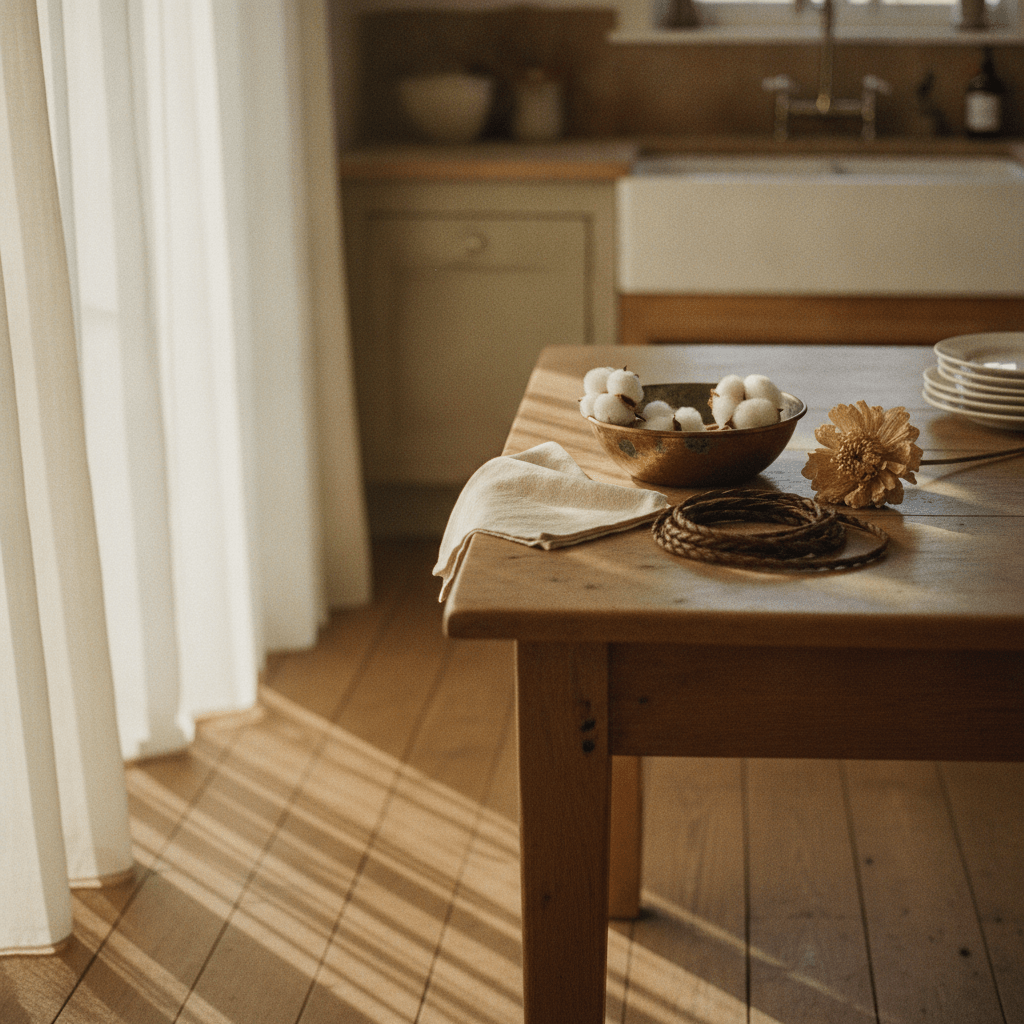
- Cotton (2nd year): Comfortable, woven together, soft enough to live with daily. Cotton was also a symbol of domestic life and the home being established.
- Leather (3rd year): Durable, flexible, broken in. The marriage has survived its first real tests and is starting to feel like something that fits.
- Linen or silk (4th year): A step toward refinement. The household is settled enough to have nice things.
- Wood (5th year): Solid. Rooted. Something that can weather a storm and still be standing. This one has always felt right.
The further down the list you go, the more the materials shift from household staples to precious things — which tracks with how a long marriage actually feels. The early years are about building something functional. The later years are about recognizing what you've built.
◆ From the Workshop: Bamboo flooring is technically made from grass, not wood — but that's not the interesting part. When bamboo strips are boiled during manufacturing, the natural sugars caramelize, which is what gives carbonized bamboo its warm, toasty brown color. It's the same chemistry as browning butter: heat plus sugar equals color. Nature has been doing fancy woodworking long before we got involved.
Why Anniversary Meanings Still Hold Weight Today
It would be easy to dismiss all of this as a retailer's invention or a Victorian affectation. But the symbols have lasted because they do something useful: they give people a framework for marking time in a way that feels intentional rather than arbitrary.
A couple hitting their tenth anniversary isn't just celebrating ten years. They're marking a decade with tin or aluminum — materials that are humble and useful, not glamorous, which is maybe the most honest thing you could say about ten years of real marriage. There's something in that worth honoring.
The anniversary meanings that have stuck around the longest are the ones that feel true rather than just expensive. Wood at five years. Silver at twenty-five. Gold at fifty. These aren't just materials. They're metaphors that people keep choosing because the metaphors still work.
Wood is kind of our whole thing around here — our wedding and anniversary signs are carved from hardwood right here in Kentucky, so the fifth-anniversary symbolism arrives already built in. And if you want more ideas for making a milestone feel genuinely memorable rather than just obligatory, we put together some thoughts on personalized farmhouse anniversary gifts that are worth a look.
The list of anniversary meanings has been revised, commercialized, and argued over for the better part of two centuries. What hasn't changed is the impulse behind it — the very human need to look at a span of years and say: that mattered, and this is how we mark it.
Frequently Asked Questions
Can we choose the traditional anniversary symbol instead of the modern one, or is one more widely accepted?
Either list is completely valid — there is no official governing body that mandates one over the other. The traditional list tends to appeal to people who want something more tactile and handmade, while the modern list skews toward jewelry and gemstones. Choosing based on what the couple actually enjoys receiving is a better guide than which list is more popular.
What do you give for anniversary years that don't appear on the standard list, like the 7th or 11th?
The traditional list only covers select milestones, so years like the 7th (wool or copper) and 11th (steel) appear on some extended versions but not all. When a year isn't clearly defined, most people either look up an extended modern list or simply lean into the theme of the nearest named year — there's no wrong answer, and a thoughtful gift tied to the couple's own story will always outrank a technically correct material.
Is it better to give a gift that literally uses the anniversary material, or is something inspired by it acceptable?
Inspired-by gifts are widely considered just as meaningful, and often more so — a hand-carved wooden keepsake for a fifth anniversary carries the symbolism without requiring you to hand someone a plank. The material is meant to be a starting point for the sentiment, not a strict specification. What matters is that the gift reflects the milestone and the people celebrating it.
Share:
The Sisterhood Meaning Behind Every Unwritten Rule Sisters Live By | Bluegrass Gifts